CM Sai Highlights Rail Expansion Driving Chhattisgarh Growth
Synopsis
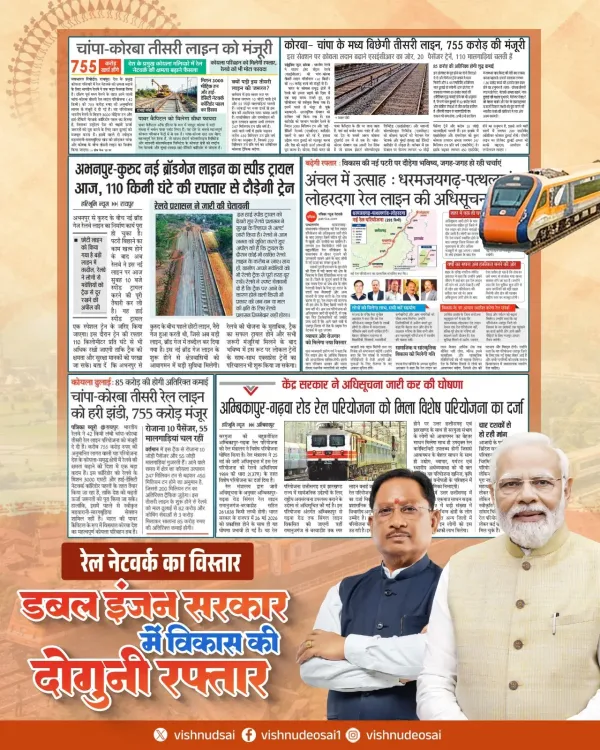
Chhattisgarh Chief Minister Vishnu Deo Sai on 17 June 2026 credited the 'double engine' government for unprecedented rail expansion in the state, saying new lines and modernised stations are unlocking trade, tourism, and employment opportunities, including in remote tribal districts.
Key Takeaways
CM Vishnu Deo Sai on 17 June 2026 highlighted rapid rail infrastructure expansion across Chhattisgarh .
New rail lines and modernised stations are cited as drivers of trade, industry, tourism, and employment growth.
The 'double engine' framework refers to coordinated action between the BJP-led state and Union governments.
The Amrit Bharat Stations scheme covers 1,275 stations nationally, with several in Chhattisgarh included.
Rail projects are specifically aimed at connecting remote and tribal districts to the economic mainstream.
The approach mirrors similar rail-connectivity pushes in neighbouring states Jharkhand and Odisha .
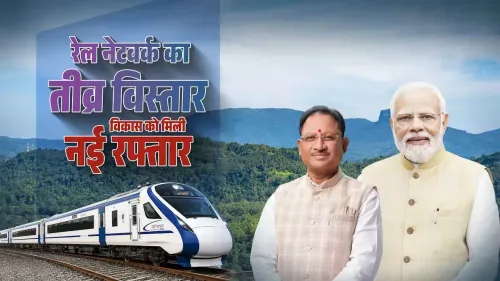
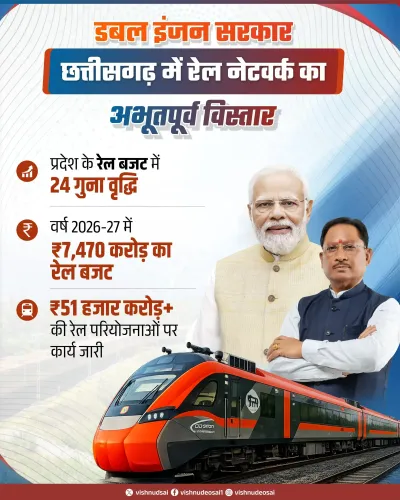
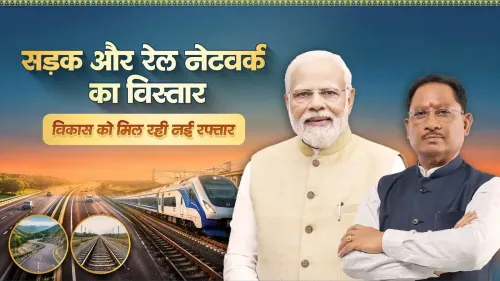
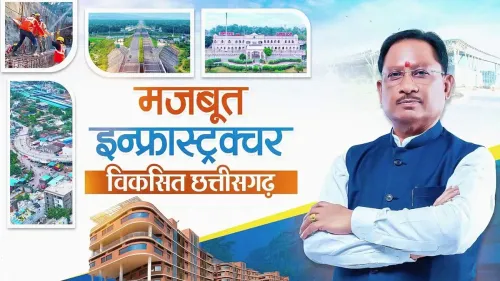
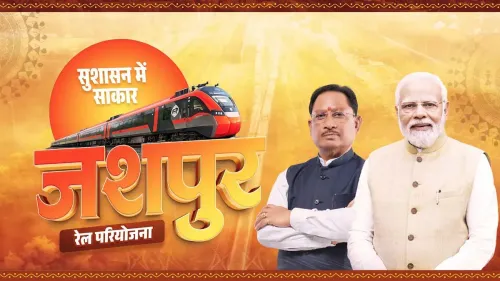
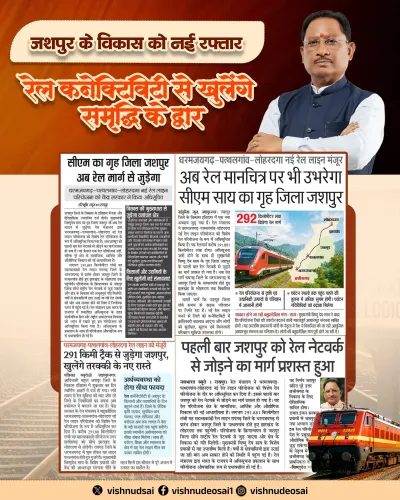
Chhattisgarh Chief Minister Vishnu Deo Sai on Wednesday, 17 June 2026, highlighted the rapid expansion of rail infrastructure across the state, crediting the 'double engine' government's coordinated efforts for creating new economic opportunities in remote districts.
Context
In his post, CM Sai wrote: 'जहां पहुंचती है रेल, वहां पहुंचता है विकास' — 'Where the train reaches, development follows; where connectivity grows, opportunities multiply.' He stated that new rail lines, modernised stations, and improved connectivity are generating fresh avenues in trade, industry, tourism, and employment across Chhattisgarh.
The Chief Minister also noted that new rail projects are integrating remote regions into the development mainstream, imparting fresh momentum to economic activity. He concluded that with a stronger rail network, Chhattisgarh is establishing new benchmarks in prosperity, investment, and growth.
Policy Backdrop
The post draws on a well-established BJP governance narrative: the 'double engine' framework, which refers to aligned priorities between a BJP-led state government and the BJP-led Union government. CM Sai, who took charge in December 2023, has consistently positioned rail connectivity as a pillar of the state's development agenda.
The Amrit Bharat Stations scheme, launched in February 2023, targets the redevelopment of 1,275 railway stations nationwide, with several stations in Chhattisgarh included under the programme. Separately, the 2023-24 Railway Budget allocated funds for new rail lines and track-doubling projects in the state under the PM Gati Shakti framework, which seeks to integrate multi-modal transport and logistics planning.
Chhattisgarh is a mineral-rich state in central India with large tribal populations concentrated in districts that have historically lacked adequate transport infrastructure. Improving rail access to these areas has been a stated policy priority at both state and central levels.
Stakeholders and Impact
The populations most directly affected by rail expansion are residents of remote and tribal districts, who gain better access to markets, health services, and employment centres. The mining and industrial sectors — central to Chhattisgarh's economy — also stand to benefit from improved freight connectivity that reduces logistics costs.
Tourism operators in the state, which is home to several natural and cultural heritage sites, are another key stakeholder group. Enhanced rail access can lower travel barriers for domestic tourists, supporting the sector's growth alongside broader economic activity.
The push mirrors similar rail-connectivity drives in neighbouring mineral-bearing states such as Jharkhand and Odisha, where integration of peripheral regions with national transport corridors has been a recurring policy objective.
What's Next
Attention will now focus on the implementation timelines of sanctioned rail projects in the state, including progress on new lines and station modernisation work under the Amrit Bharat Stations scheme. State-level review meetings and updates in the 2025-26 Railway Budget cycle will be key indicators of on-ground progress.
As Chhattisgarh positions itself as a destination for investment and industrial growth, the pace of rail infrastructure delivery will be a significant measure of whether the 'double engine' promise translates into verifiable outcomes for citizens in the state's most underserved regions.
Point of View
Framing infrastructure delivery as the direct product of political alignment between Raipur and New Delhi. By anchoring the message in rail connectivity — a tangible, visible form of development — the Chief Minister speaks simultaneously to industrial investors, tribal communities in remote districts, and urban voters who associate rail modernisation with national progress. The post fits a broader pattern across BJP-governed states of using railway budget allocations as proof points for the party's governance dividend. The real test, however, will be whether sanctioned projects translate into commissioned lines and operational station upgrades within credible timelines.
NationPress
18 Sept 2026
Frequently Asked Questions
What rail projects are being expanded in Chhattisgarh?
Chhattisgarh is seeing expansion under multiple central schemes including new rail lines, track-doubling projects funded through the PM Gati Shakti framework, and station redevelopment under the Amrit Bharat Stations scheme, which covers 1,275 stations nationally with several in the state.
What is the 'double engine' government CM Sai refers to?
The 'double engine' government is a BJP political term describing a state where both the state government and the Union government are led by the BJP, implying coordinated policy priorities and faster fund flows for development projects.
What is the Amrit Bharat Stations scheme?
The Amrit Bharat Stations scheme was launched in February 2023 by the Union government to redevelop and modernise 1,275 railway stations across India, improving passenger facilities, accessibility, and connectivity.
How does rail expansion help Chhattisgarh's tribal districts?
New rail lines in remote and tribal areas of Chhattisgarh connect communities to markets, employment centres, and health services, bringing them into the economic mainstream and reducing geographic isolation.
Who is Vishnu Deo Sai?
Vishnu Deo Sai is a BJP leader who became Chief Minister of Chhattisgarh in December 2023. He has focused on infrastructure development, connectivity, and attracting investment to the mineral-rich central Indian state.