CM Sai Pushes Irrigation Expansion to Boost Chhattisgarh Farmers
Synopsis
Chhattisgarh Chief Minister Vishnu Deo Sai has reaffirmed the state government's drive to expand irrigation through new barrages, canals and pressurised systems, aiming to bring water to lakhs of hectares of farmland and strengthen the rural economy.
Key Takeaways
CM Vishnu Deo Sai on 6 June 2026 announced accelerated irrigation expansion across Chhattisgarh .
The government is building new barrages, canals, and modern pressurised irrigation systems to cover lakhs of hectares of agricultural land.
The initiative is framed as part of the 'double engine government' model, with aligned BJP administrations at the Centre and state level.
The push aligns with the national Pradhan Mantri Krishi Sinchayee Yojana (PMKSY) , launched in 2015 .
Completing pending irrigation projects was identified as a priority after the BJP's return to power in December 2023 .
The stated outcomes include higher farm productivity, stronger rural incomes, and reduced dependence on monsoon rains.
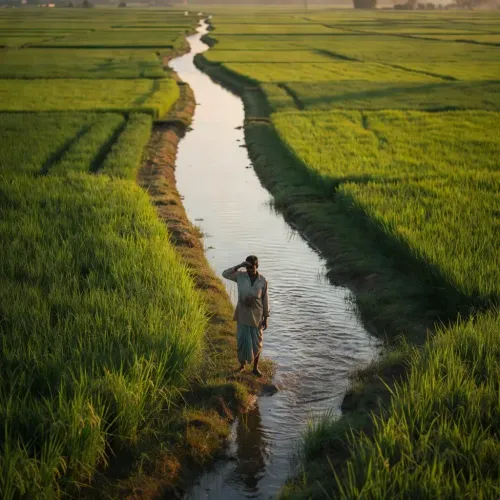
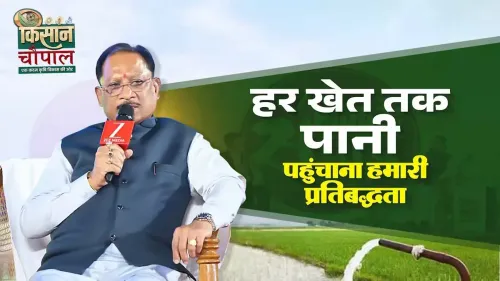
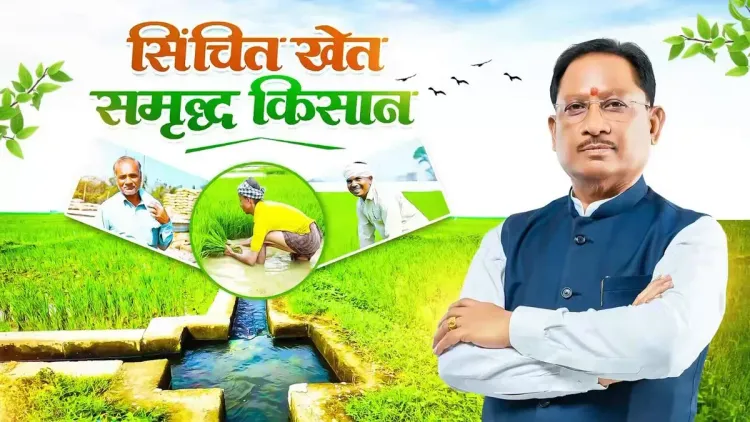
Chhattisgarh Chief Minister Vishnu Deo Sai on Saturday, 6 June 2026, reaffirmed his government's commitment to expanding irrigation infrastructure across the state, stating that water access to farmland is the foundation of rural prosperity and development.
In a post on X, CM Sai wrote: 'जब खेतों तक पानी पहुंचता है, तब गांवों में समृद्धि आती है' ('When water reaches the fields, prosperity comes to the villages'). He added that the 'double engine government' — a phrase referring to aligned BJP administrations at the Centre and in Chhattisgarh — is actively expanding irrigation facilities to secure farmers' wellbeing.
Context
The post highlights a multi-pronged infrastructure push involving new irrigation projects, barrages, canals, and modern pressurised irrigation systems. The stated goal is to bring water to lakhs of hectares of agricultural land across the state. CM Sai framed the drive as part of a broader resolve to make farming more productive and strengthen the rural economy.
Chhattisgarh is a predominantly agrarian state in central India where irrigation coverage directly determines rural household incomes. A large share of the state's farming population remains dependent on monsoon rains, making assured irrigation infrastructure a politically and economically significant priority.
Policy Backdrop
The push aligns with the Pradhan Mantri Krishi Sinchayee Yojana (PMKSY), the national irrigation programme launched in 2015 to expand cultivable area under assured water supply and improve water-use efficiency. Chhattisgarh has been a beneficiary state under the scheme, and the current BJP government identified completion of pending irrigation projects as a priority following its return to power after the December 2023 assembly elections.
The emphasis on pressurised irrigation systems — which deliver water directly to root zones with minimal wastage — reflects a shift from conventional flood irrigation toward more modern, water-efficient methods. This approach mirrors similar state-level initiatives in other BJP-governed states and fits within the party's broader agenda of linking water-resource development to farmer income targets.
Stakeholders and Impact
The primary beneficiaries of expanded irrigation are Chhattisgarh's farming communities, particularly smallholder farmers in rain-dependent districts. Assured irrigation allows farmers to plan double or triple cropping cycles, directly raising annual incomes and reducing vulnerability to erratic monsoons.
Rural households more broadly stand to benefit from the multiplier effect: higher farm output supports local trade, employment in agriculture-linked sectors, and improved purchasing power in village economies. The state government has framed irrigation expansion as a cornerstone of its 'sushasan sarkar' ('good governance government') narrative.
What's Next
Attention will now turn to the state budget's allocations for ongoing irrigation works and any mid-term progress review on new barrages and micro-irrigation clusters. The pace of physical completion — how quickly new canals and pressurised systems become operational — will determine whether the government's stated targets translate into measurable gains for farmers before the next election cycle.
If irrigation coverage expands at the scale the government envisions, Chhattisgarh could reduce its agricultural dependence on rainfall and position itself as a model for other central Indian states pursuing similar rural-development strategies.
Point of View
Ground-level agricultural infrastructure — the kind of work that resonates directly with the state's large rural voter base. The 'double engine government' framing is significant: it positions irrigation gains as a joint achievement of the state and central BJP administrations, reinforcing the party's coordinated governance narrative ahead of future electoral cycles. The emphasis on modern pressurised systems, rather than only conventional canals, suggests an attempt to align Chhattisgarh's approach with national water-efficiency goals under PMKSY. The real test will be the pace of physical delivery — whether barrages and micro-irrigation clusters become operational fast enough to produce measurable income gains that validate the political messaging.
NationPress
21 Oct 2026
Frequently Asked Questions
What is CM Vishnu Deo Sai's irrigation plan for Chhattisgarh?
CM Vishnu Deo Sai has announced an expansion of irrigation infrastructure in Chhattisgarh through new barrages, canals, and pressurised irrigation systems aimed at bringing water to lakhs of hectares of farmland and improving farmer incomes.
What is the 'double engine government' in Chhattisgarh?
The 'double engine government' refers to the alignment of BJP administrations at both the central government and the Chhattisgarh state level, which the party argues enables faster and more coordinated delivery of development projects.
What is Pradhan Mantri Krishi Sinchayee Yojana and how does it apply to Chhattisgarh?
Pradhan Mantri Krishi Sinchayee Yojana (PMKSY) is a national irrigation scheme launched in 2015 to expand cultivable area under assured water supply. Chhattisgarh is a beneficiary state, and the current BJP government has prioritised completing pending projects under this programme.
How does irrigation expansion help farmers in Chhattisgarh?
Assured irrigation allows farmers to plan multiple cropping cycles per year instead of relying on monsoon rains, directly raising annual incomes and reducing the risk of crop failure during dry spells.
When did the BJP come to power in Chhattisgarh?
The BJP returned to power in Chhattisgarh after the December 2023 state assembly elections, with Vishnu Deo Sai sworn in as Chief Minister.