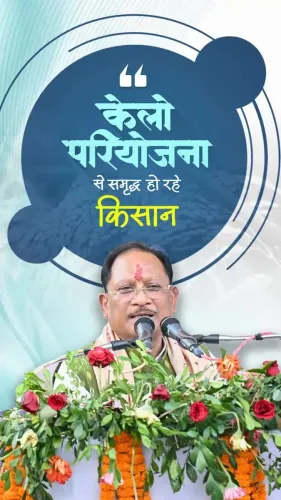
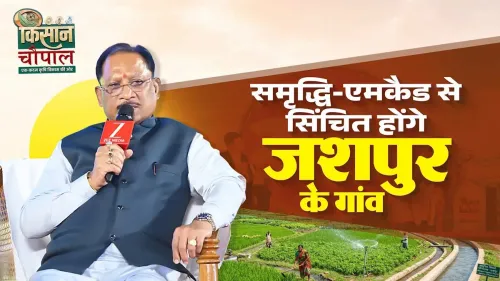
CM Sai: Kelo Project a 'blessing' for Chhattisgarh farmers
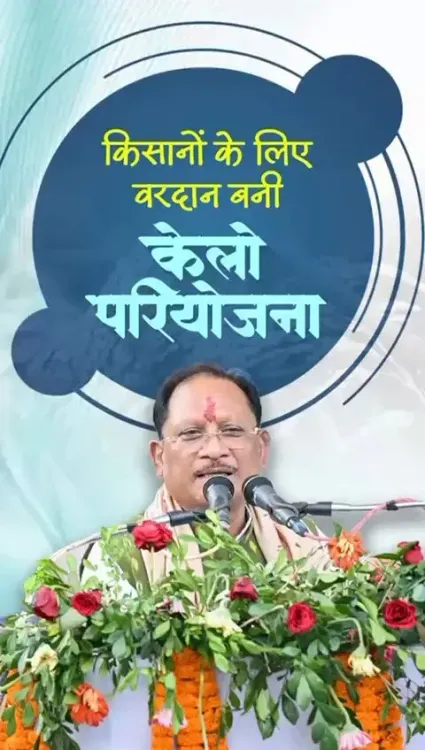
Synopsis
Chhattisgarh Chief Minister Vishnu Deo Sai has championed the BJP-launched Kelo Project as a 'blessing' for the state's farmers, underscoring the administration's push to ensure reliable irrigation and agricultural prosperity across the agrarian state.
Key Takeaways
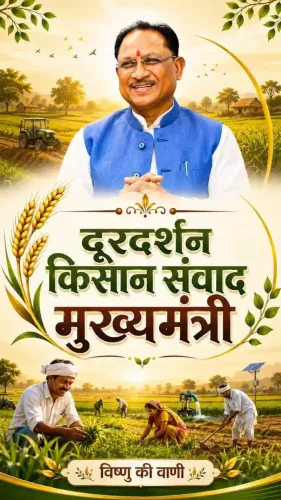
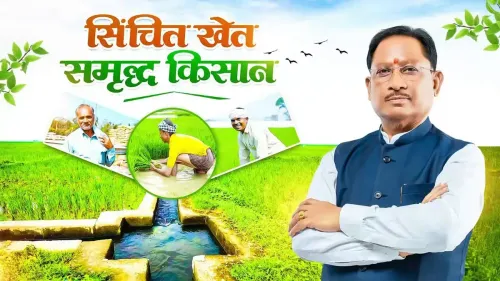
CM Vishnu Deo Sai called the Kelo Project a 'vardaan' (boon/blessing) for Chhattisgarh's farmers in a post on 15 October 2026 .
The Kelo Project is an irrigation scheme aimed at providing assured water supply to agricultural areas in Chhattisgarh .
The BJP government has framed rural irrigation as a core governance priority since returning to power after the 2023 assembly elections .
Chhattisgarh , a state formed in 2000 , has a large agrarian population heavily reliant on irrigation infrastructure.
The administration has pledged continuous efforts to expand irrigation facilities and boost farm prosperity across the state.
Water is the oldest promise a government can make to its farmers — and on Thursday, 15 October 2026, Chhattisgarh Chief Minister Vishnu Deo Sai declared that the BJP-backed Kelo Project is delivering on exactly that promise, calling it a 'vardaan' — a blessing — for the agrarian communities it serves.
Posting in Hindi, CM Sai said: 'BJP sarkar dwara shuru ki gayi Kelo Pariyojana aaj kshetra ke kisanon ke liye vardaan sabit ho rahi hai' — 'The Kelo Project launched by the BJP government is today proving to be a boon for the farmers of the region.' He added that the administration remains continuously engaged in ensuring adequate irrigation facilities so that farming becomes prosperous and happy.
What the Kelo Project is built to do
The Kelo Project is an irrigation scheme in Chhattisgarh designed to channel water to agricultural zones and reduce farmers' dependence on erratic rainfall. Chhattisgarh, a central Indian state carved out in 2000, has a predominantly agrarian economy where water access directly determines whether a harvest season thrives or fails. Irrigation infrastructure has been a policy priority for successive state governments since the state's formation.
The BJP administration, which returned to power after the 2023 assembly elections, has consistently foregrounded rural development and water infrastructure as central planks of its governance narrative. The Kelo Project fits squarely into that pattern — a tangible, field-level asset the ruling party can point to when making the case that governance reaches the last farmer in the last village.
Irrigation as the backbone of central India's farm economy
Across central India, governments have pursued multiple irrigation schemes to expand cultivable area and bring more land under assured water supply. The logic is straightforward: where rain is unreliable, a canal or reservoir can be the difference between a crop and a catastrophe. Chhattisgarh's agricultural communities have long demanded exactly this kind of infrastructure, making it both a development imperative and a political asset.
CM Sai's post, accompanied by a video, signals that the project has moved beyond paper to visible, on-ground impact — though exact coverage figures, water-release schedules, and measured yield changes remain figures to watch as the administration releases further data.
For a state where the farming calendar is everything, getting water to the field on time is not a bureaucratic milestone — it is the whole ballgame.
Point of View
Visible infrastructure asset rather than a budgetary figure, the administration anchors its welfare narrative to something tangible. The key test, however, will be independent data on coverage area and yield improvements — without that, the 'boon' framing remains a political claim rather than a verified policy outcome.
NationPress
15 Oct 2026
Frequently Asked Questions
What is the Kelo Project in Chhattisgarh?
The Kelo Project is an irrigation scheme in Chhattisgarh designed to supply water to agricultural areas, improve farming conditions, and reduce farmers' dependence on rainfall.
Who launched the Kelo Project?
The Kelo Project was launched by the BJP government in Chhattisgarh. Chief Minister Vishnu Deo Sai has credited the BJP administration with initiating the scheme.
What did Chhattisgarh CM Vishnu Deo Sai say about the Kelo Project?
CM Sai called the Kelo Project a 'vardaan' (blessing) for the region's farmers and said his government is continuously working to ensure adequate irrigation and prosperous farming.
How important is irrigation for Chhattisgarh's farmers?
Chhattisgarh has a large agrarian population and irrigation infrastructure is critical, as assured water supply directly determines crop yields and reduces vulnerability to erratic rainfall.
When did Vishnu Deo Sai become Chief Minister of Chhattisgarh?
Vishnu Deo Sai became Chief Minister of Chhattisgarh after the BJP's victory in the 2023 state assembly elections.