Pralhad Joshi backs PM Modi's Olympic vision, Talent Hunt drive
Synopsis
Union Minister Pralhad Joshi echoes PM Modi's vision of preparing India for the 2028 Los Angeles Olympics, hosting the 2030 Commonwealth Games, and bidding for the 2036 Olympics — anchored by a grassroots Talent Hunt campaign reaching every Indian village.
Key Takeaways
Minister Pralhad Joshi amplified PM Modi 's call on October 15, 2026 to strengthen India's Olympic and Commonwealth Games preparations.
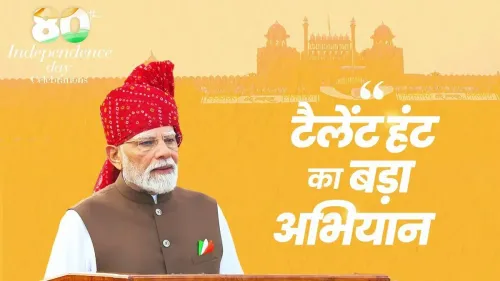
The Talent Hunt campaign , announced from the Red Fort on Independence Day, aims to scout medal-potential athletes from villages nationwide.
India is set to host the 2030 Commonwealth Games , serving as a large-scale rehearsal for international multi-sport event management.
The government's aspirational target is hosting the 2036 Summer Olympics — India has never hosted the Games before.
Existing programmes — Khelo India (2017) and TOPS (2014) — form the policy foundation on which the new campaign builds.
The sequenced calendar — 2028, 2030, 2036 — is designed as a cumulative talent and infrastructure pipeline, not isolated events.
From the villages of India to the podiums of Los Angeles — that is the arc Union Consumer Affairs Minister Pralhad Joshi is amplifying on Thursday, October 15, 2026, as he echoes Prime Minister Narendra Modi's call to steel India's sports machinery for three landmark events on the horizon.
Joshi quoted the Prime Minister directly: 'We must strengthen preparations for the 2028 Los Angeles Olympics, the 2030 Commonwealth Games in India, and our aspiration to host the 2036 Olympics.' The message is sequential and deliberate — each milestone a rung on a ladder India intends to climb.
The Talent Hunt: Modi's Red Fort pledge meets rural India
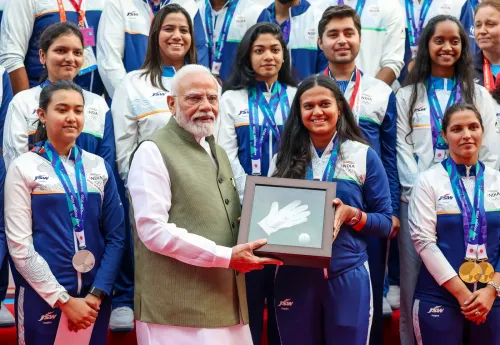
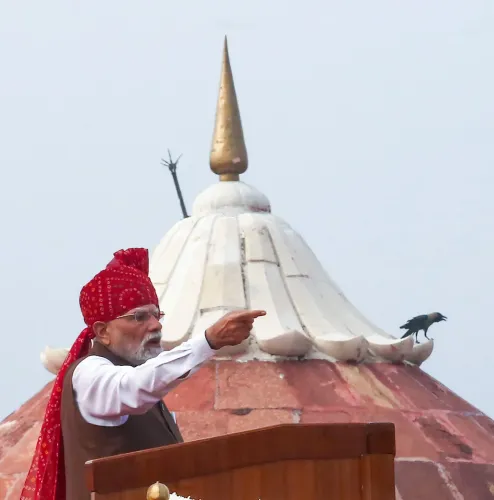
The centrepiece of the push is the Talent Hunt campaign, announced by PM Modi from the Red Fort during his Independence Day address — the most watched annual policy stage in the country. The campaign is designed to reach every village, scouting and nurturing athletes who might otherwise never enter a government programme. Rural youth — historically invisible to national sports selectors — are the explicit target.
The ambition is straightforward: cast the widest possible net so that raw talent does not wither for want of discovery. India's past Olympic cycles have exposed the cost of a thin pipeline; the Talent Hunt is the government's bet that the next Neeraj Chopra or P. V. Sindhu is waiting in a village courtyard, not a metro academy.
A sequenced calendar built on hard-won experience
India is not starting from scratch. The Khelo India programme, launched in 2017, seeded grassroots sports infrastructure across states. The Target Olympic Podium Scheme (TOPS), introduced in 2014, provided elite athletes with financial and high-performance training support. The 2010 Delhi Commonwealth Games, for all their controversy, gave India a template for managing a multi-sport event at scale.
The 2030 Commonwealth Games — to be hosted in India — now slot into that lineage as a domestic rehearsal before the bigger stage. A home Games builds infrastructure, tests logistics, and gives Indian athletes the crowd advantage. It is a calculated stepping stone, not just a trophy.
Why 2036 changes everything
The 2036 Olympic bid is the headline ambition, and it reframes every policy decision that precedes it. Hosting the Olympics demands a decade of preparation — venues, transport, security, broadcasting, and, above all, a competitive Indian squad that justifies the investment to a domestic audience. The Talent Hunt, the 2028 LA campaign, and the 2030 Commonwealth Games are not standalone events; they are the scaffolding around that single, towering goal.
India has never hosted the Summer Olympics. If the bid succeeds, 2036 would be the most consequential moment in Indian sports history — and the clock, effectively, is already running.
Point of View
The government signals sports as a sovereignty and soft-power issue, not just recreation. The 2030 Commonwealth Games hosting and the 2036 bid create hard external deadlines that make the grassroots pipeline a political deliverable, raising accountability above past schemes. The real test will be whether state-level identification camps and funding actually follow — or whether the vision outpaces its own execution, as previous sports reforms sometimes have.
NationPress
15 Oct 2026
Frequently Asked Questions
What is the Talent Hunt campaign announced by PM Modi?
The Talent Hunt campaign is a grassroots initiative announced by PM Narendra Modi from the Red Fort on Independence Day, aimed at identifying and nurturing future medal-winning athletes from villages across India to strengthen the country's Olympic pipeline.
When is India hosting the Commonwealth Games?
India is scheduled to host the 2030 Commonwealth Games , making it the second time the country hosts the event after the 2010 Delhi Commonwealth Games .
Is India bidding for the 2036 Olympics?
Yes, India has expressed an aspiration to host the 2036 Summer Olympics , as reiterated by PM Modi and echoed by senior ministers including Pralhad Joshi . India has never hosted the Summer Olympics.
What is India's preparation plan for the 2028 Los Angeles Olympics?
India's preparation for the 2028 Los Angeles Olympics builds on existing schemes like Khelo India and TOPS , and is now supplemented by the Talent Hunt campaign that targets grassroots athlete identification from villages.
What is the Khelo India programme?
The Khelo India programme was launched in 2017 to promote grassroots sports infrastructure and development across Indian states, forming a key pillar of the country's long-term Olympic preparation strategy.