PM Modi backs India's 2036 Olympics bid, cites world-class sports infrastructure
Synopsis
India's Olympic dream got its loudest political endorsement yet. PM Modi, addressing the 2026 Asian Games contingent, laid out a two-step roadmap — Commonwealth Games 2030, Olympics 2036 — and backed it with talk of 1,000+ Khelo India centres and village-level talent hunts. With six rival nations also in the IOC's sights, the 2030 Commonwealth Games will be India's real audition.
Key Takeaways
PM Modi reaffirmed India's aspiration to host the 2036 Olympic Games at an event in New Delhi on 15 October 2026 .
India is one of seven interested parties in dialogue with the IOC ; others include Germany, Qatar, South Korea, Hungary, South Africa, and Türkiye.
India submitted a Letter of Intent to the IOC's Future Host Commission on 1 October 2024 .
India finished fourth at the 2026 Aichi-Nagoya Asian Games with 85 medals (21 gold, 27 silver, 37 bronze).
More than 1,000 Khelo India centres have been established nationwide to support athlete development.
India is set to host the Commonwealth Games in 2030 , seen as a critical step before any Olympics candidacy.
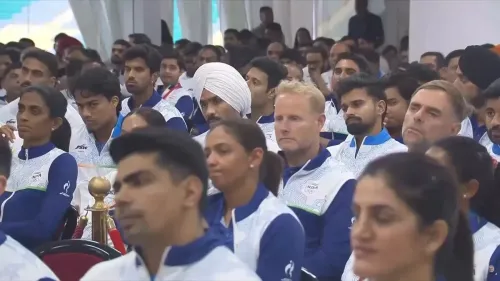
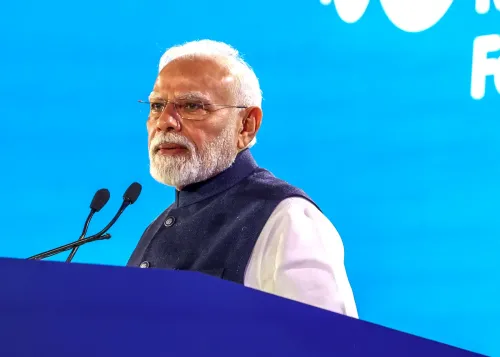
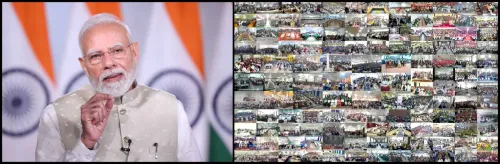
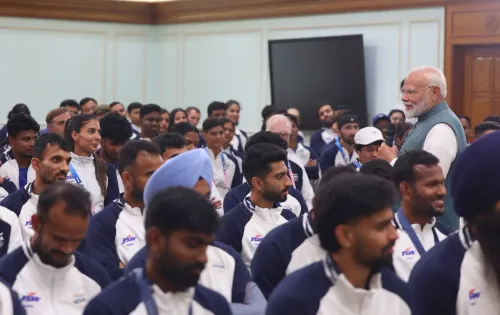
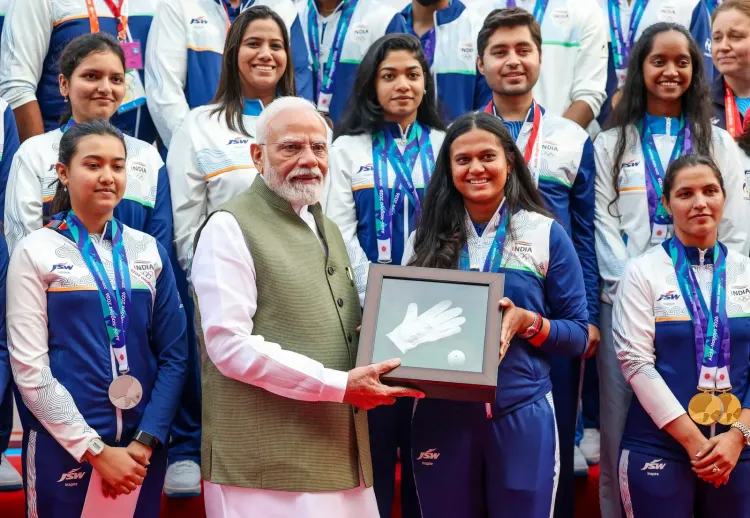
Prime Minister Narendra Modi on Thursday, 15 October 2026, voiced strong confidence in India's readiness to host marquee international sporting events, reaffirming the country's aspiration to stage the 2036 Olympic Games. Addressing members of India's contingent from the 2026 Aichi-Nagoya Asian Games at the Major Dhyan Chand National Stadium in New Delhi, Modi outlined a roadmap that includes hosting the Commonwealth Games in 2030 before targeting the Olympics six years later.
India's Hosting Roadmap
Modi laid out a clear sequence for India's global sporting ambitions. 'The next Olympic Games will be held in Los Angeles in 2028. India will host the Commonwealth Games in 2030. India also hopes to host the Olympics in 2036,' he said. India is currently among seven interested parties in dialogue with the International Olympic Committee (IOC) over the 2036 Games. The other contenders are Germany, Hungary, Qatar, the Republic of Korea, South Africa, and Türkiye. India formally submitted a Letter of Intent to the IOC's Future Host Commission on 1 October 2024, making its candidacy official.
Grassroots Talent Hunt and Khelo India Push
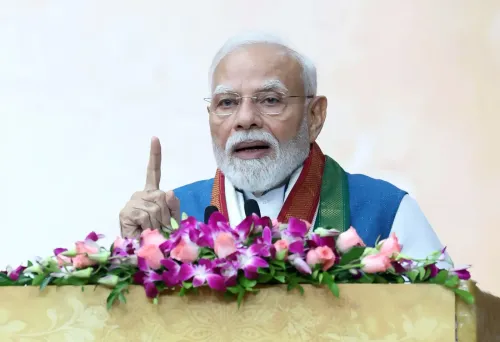
Modi emphasised that hosting alone was not the end goal — building a pipeline of medal-winning athletes was equally central to the vision. He recalled having called for a nationwide talent search from the ramparts of the Red Fort, focused on identifying promising youngsters in villages. 'Today, talent is being searched for by going to villages. These players will bring medals for India in the coming years,' he said. He noted that more than 1,000 Khelo India centres had been established across the country, supplemented by upgraded sports infrastructure — including athletic tracks, football and hockey grounds, swimming pools, and multipurpose halls — in cities of varying sizes.
Decade of Sports Investment
The Prime Minister pointed to a decade of sustained government effort, highlighting flagship programmes such as the Target Olympic Podium Scheme (TOPS) and Khelo India, which together support elite athletes and widen participation at the grassroots. He cited financial assistance covering out-of-pocket allowances, monthly support under TOPS, and facilitation of overseas training where required. 'In the past 10-12 years, the country has made continuous efforts with dedication and determination. Worked with a visionary vision. Created a transnational and modern sports ecosystem,' he said.
Asian Games Context and Athletes' Morale
The interaction was held in the backdrop of India's fourth-place finish at the 2026 Aichi-Nagoya Asian Games, where the country won 85 medals — comprising 21 gold, 27 silver, and 37 bronze. The event brought together athletes, coaches, support staff, and officials from the Indian Olympic Association (IOA), national sports federations, and the Sports Ministry. Modi used the occasion to stress that India's youth had both the ability and the national backing to pursue bigger targets. 'There is no goal that is beyond the capability of our youth. There is a boundless sky of possibilities,' he said.
What Comes Next
India's 2036 Olympic bid remains in the IOC's 'Dialogue Stage', competing against six other nations. The IOC's Future Host Commission is expected to narrow the field before a formal host announcement. Domestically, the 2030 Commonwealth Games will serve as a critical dress rehearsal — testing India's organisational capacity on a large-scale multi-sport platform before the higher-stakes Olympic candidacy comes to a head. How India performs on that front could significantly influence the IOC's final decision.
Point of View
Not just administrative readiness. But the IOC will judge on logistics, finance, and legacy planning, not rhetoric. India's 2030 Commonwealth Games hosting is the real test: if delivery is smooth, the 2036 candidacy gains credibility; if it stutters, six rival nations are waiting. The domestic record on large-event management — from the CWG 2010 controversies to smoother recent editions of Khelo India — is mixed, and the IOC will know that history.
NationPress
15 Oct 2026
Frequently Asked Questions
Is India officially bidding for the 2036 Olympics?
India is among seven interested parties currently in dialogue with the IOC over hosting the 2036 Olympic Games, having submitted a Letter of Intent to the IOC's Future Host Commission on 1 October 2024. The other interested parties are Germany, Hungary, Qatar, the Republic of Korea, South Africa, and Türkiye. A formal host decision by the IOC is pending.
What did PM Modi say about India hosting the Olympics?
Addressing India's 2026 Asian Games contingent at the Major Dhyan Chand National Stadium in New Delhi, Modi said India hopes to host the 2036 Olympics and already has world-class sports infrastructure to support such an ambition. He also confirmed India will host the Commonwealth Games in 2030 as an intermediate milestone.
How did India perform at the 2026 Aichi-Nagoya Asian Games?
India finished fourth at the 2026 Aichi-Nagoya Asian Games, winning 85 medals in total — 21 gold, 27 silver, and 37 bronze. The contingent was felicitated by PM Modi at the Major Dhyan Chand National Stadium in New Delhi on 15 October 2026.
What is the Khelo India programme?
Khelo India is a government scheme aimed at expanding grassroots sports participation and identifying elite talent across India. More than 1,000 Khelo India centres have been set up nationwide, supported by upgraded sports infrastructure including tracks, pools, and multipurpose halls.
What is the Target Olympic Podium Scheme (TOPS)?
TOPS is a government programme that provides financial and logistical support to elite Indian athletes with medal prospects at the Olympics and other top international competitions. Support includes monthly allowances, overseas training facilitation, and out-of-pocket expense coverage.