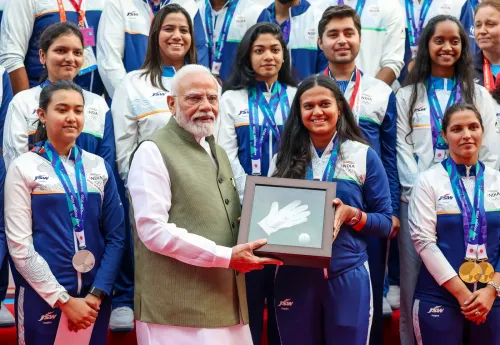
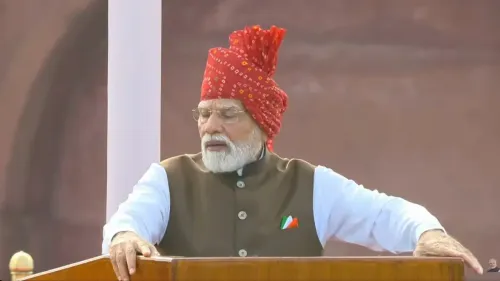
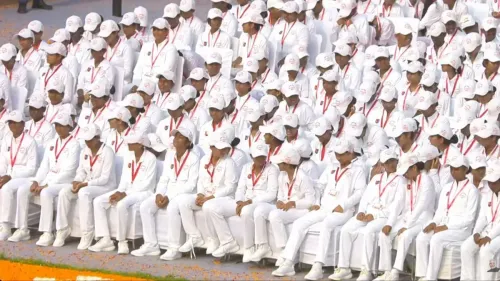
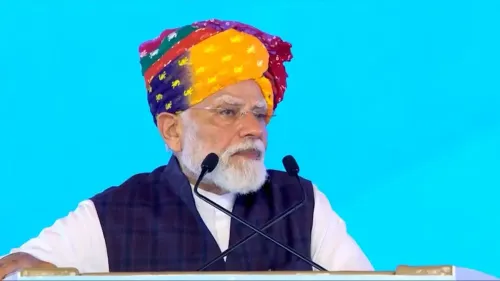
Mandaviya Highlights Modi's 2036 Olympics Hosting Ambition
Synopsis
Union Sports Minister Mansukh Mandaviya quoted PM Narendra Modi declaring India's aspiration to host the 2036 Olympic Games, a high-level signal that aligns with India's decade-long push to build sports infrastructure and global sporting credibility.
Key Takeaways
PM Narendra Modi has publicly stated that hosting the 2036 Olympics is India's aspiration.
Sports Minister Mansukh Mandaviya amplified the quote on 15 October 2026 , giving it official ministerial visibility.
India's last major multi-sport hosting experience was the 2010 Commonwealth Games in New Delhi.
The Khelo India scheme, launched in 2017 , underpins the long-term infrastructure investment needed to support a credible Olympic bid.
The IOC awards hosting rights through a multi-year Future Host Commission process requiring formal government guarantees and infrastructure plans.
A home Olympics could create a generational talent pipeline and substantially boost India's international medal performance.
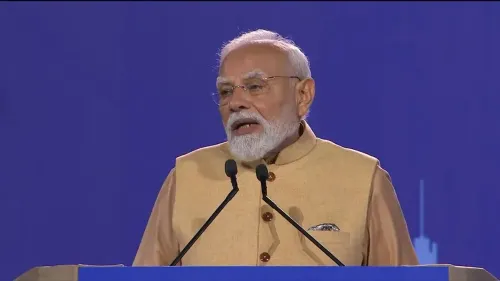
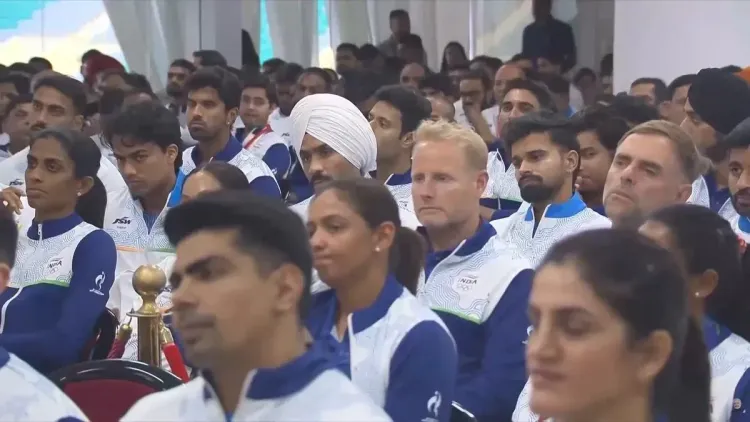
India's hunger to stand at the very centre of world sport has a date now: 2036. Union Minister of Labour and Sports Mansukh Mandaviya shared a pointed quote from Prime Minister Narendra Modi on Thursday, 15 October 2026, putting the country's Olympic hosting aspiration on the public record in unambiguous terms.
The minister quoted the Prime Minister directly — '2036 mein Olympics ki mezbaani karna bhi Bharat ki aakanksha hai' ('Hosting the Olympics in 2036 is also India's aspiration') — a single sentence that carries the weight of a national policy signal rather than a passing remark.
A Long Arc from Commonwealth Games to Olympic Ambition
India's last major multi-sport hosting experience came in 2010, when New Delhi staged the Commonwealth Games — an event that, for all its controversies, demonstrated the country's capacity to organise international competition at scale. In the sixteen years since, successive governments have invested in sports infrastructure, and the ambition has quietly grown from hosting regional tournaments to eyeing the biggest prize in global sport.
The Khelo India scheme, launched in 2017, forms the backbone of that longer-term infrastructure push — identifying grassroots talent, upgrading facilities across states, and building the kind of domestic sporting ecosystem that a viable Olympic host needs to demonstrate to the International Olympic Committee (IOC).
What an Olympic Bid Actually Requires
The IOC awards hosting rights through a multi-year evaluation process that scrutinises government guarantees, infrastructure readiness, transport, accommodation, and sustainability plans. India would need to submit a formal 'interested party' declaration and progress through the IOC's 'Future Host Commission' framework — a process that typically spans several years before a vote is held. The 2036 Games have drawn interest from multiple countries, making the field competitive.
For India, the political signal from the Prime Minister — amplified by the Sports Minister — serves a strategic purpose: it tells the IOC, the domestic sports ecosystem, and potential private investors that this is an official aspiration with top-level backing, not a bureaucratic talking point.
Sports as Soft Power — and the Stakes for Indian Athletes
Behind the infrastructure and diplomacy lies a simpler, more human argument: an Olympics on home soil would expose millions of young Indians to elite sport, create a decade-long talent pipeline, and potentially produce a medal haul that the country has never previously achieved. The Indian Olympic Association and national sports federations would need to align their athlete development timelines accordingly, building toward 2036 as an inflection point rather than a distant aspiration.
When a Prime Minister names a year and a minister amplifies it, the calendar has already shifted. The countdown to India's Olympic moment has quietly begun.
Point of View
Amplifying this quote positions the Sports Ministry as the institutional vehicle for that aspiration, reinforcing his portfolio's centrality in India's soft-power and youth-development agenda. The 2036 timeline is also politically convenient, falling within a planning horizon that spans multiple electoral cycles, making it a durable national-interest narrative rather than a partisan one. The real test will come when India moves from stated aspiration to the formal IOC process — a step that will require multi-billion-dollar infrastructure guarantees and cross-party consensus.
NationPress
15 Oct 2026
Frequently Asked Questions
Has India officially bid for the 2036 Olympics?
India has declared it an aspiration at the Prime Ministerial level, but a formal bid requires submission through the IOC's Future Host Commission process, which involves detailed infrastructure, financial, and legal guarantees. No confirmed formal bid submission has been announced as of this report.
Which city in India could host the 2036 Olympics?
No specific Indian city has been officially named as the proposed host. Decisions on the host city are typically part of the formal bid process and would require evaluation of infrastructure, venues, and logistical capacity.
What is the Khelo India scheme and how does it relate to an Olympic bid?
Khelo India is a national sports development programme launched in 2017 to build grassroots infrastructure, identify young talent, and increase participation. It forms the foundation of India's long-term sports ecosystem, which a credible Olympic hosting bid would need to demonstrate to the IOC.
How does the IOC select a host country for the Olympics?
The IOC uses a Future Host Commission that engages in continuous dialogue with interested parties, evaluates infrastructure and sustainability plans, and ultimately recommends a host to the IOC Session for a vote — a process that can span several years before a Games date is formally awarded.
When did India last host a major multi-sport international event?
India last hosted a major multi-sport event at the 2010 Commonwealth Games in New Delhi , which provided significant organisational experience for large-scale international sporting competition.