CM Sai joins shramdan for water conservation in Baloda Bazar
Synopsis
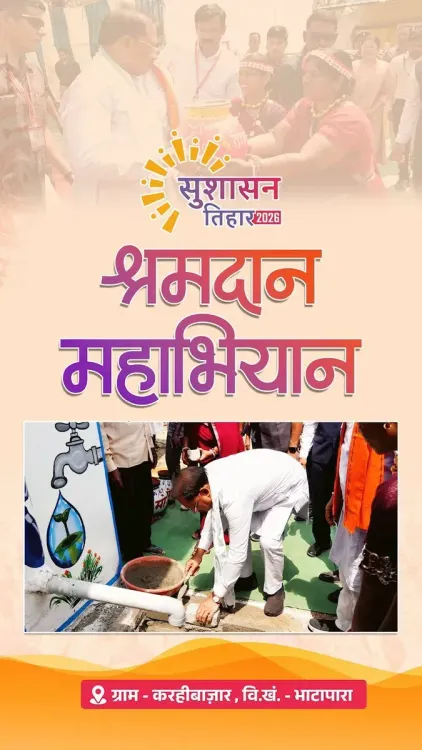
Chhattisgarh Chief Minister Vishnu Deo Sai joined a community shramdan at village Karhibazar in Baloda Bazar-Bhatapara on 22 May 2026, contributing to soak-pit construction under the 'Mor Gaon Mor Pani' campaign during Sushasan Tihar 2026 to boost rural groundwater recharge.
Key Takeaways
CM Vishnu Deo Sai personally participated in shramdan at village Karhibazar, Baloda Bazar-Bhatapara district on 22 May 2026 .
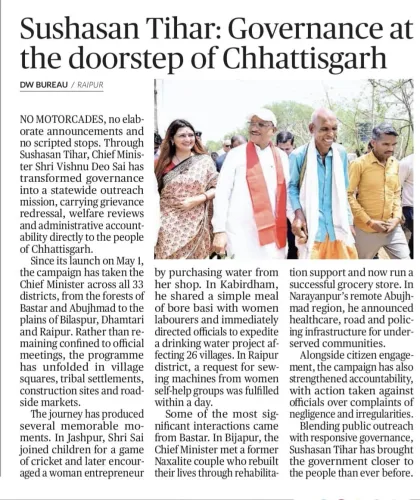
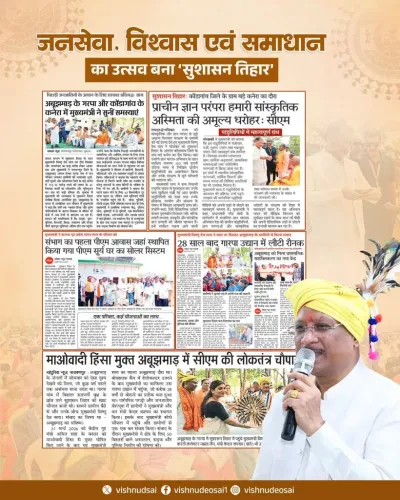
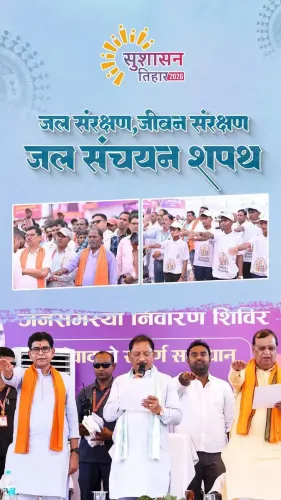
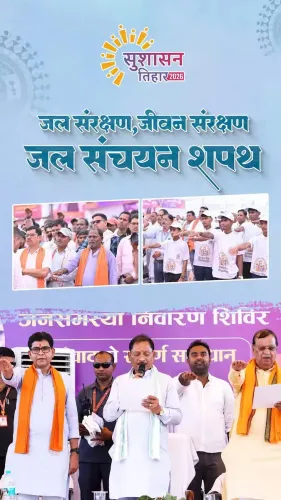
The activity was part of Sushasan Tihar 2026 , the state government's annual governance outreach programme.
A soak pit was under construction under the 'Mor Gaon Mor Pani' campaign, aimed at village-level water conservation and groundwater recharge.
The campaign emphasises community participation (janbhagidari) as a core delivery mechanism.
Chhattisgarh's approach aligns with the national Jal Shakti Abhiyan and Jal Jeevan Mission source-strengthening mandates.
District-wise groundwater assessments by the Chhattisgarh Water Resources Department are expected later in 2026 .
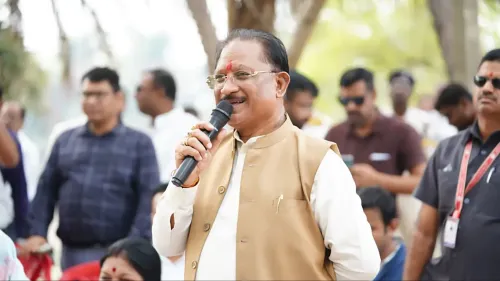
Chhattisgarh Chief Minister Vishnu Deo Sai participated in a community labour drive (shramdan) on Friday, 22 May 2026 at village Karhibazar in Baloda Bazar-Bhatapara district, contributing to the construction of a soak pit under the state's 'Mor Gaon Mor Pani' water-conservation campaign. The activity was held as part of the ongoing Sushasan Tihar 2026 governance outreach programme.
Context
Posting on X, CM Sai shared footage of the shramdan and wrote, 'Jal hai toh surakshit kal hai' — 'If there is water, tomorrow is secure.' He described the soak-pit construction as a step toward making villages water-rich through people's participation, groundwater recharge, and water conservation. The slogan underlines the state government's framing of water security as a long-term development priority.
Sushasan Tihar is an annual governance outreach programme run by the Chhattisgarh government that combines public events with on-ground scheme implementation. CM Sai, who took office in December 2023 after the BJP's assembly election victory, has used the festival format to highlight welfare and infrastructure work across districts.
Policy Backdrop
The 'Mor Gaon Mor Pani' ('My Village, My Water') campaign promotes village-level water conservation, groundwater recharge, and community ownership of water assets. Soak pits — subsurface structures that allow surface runoff to percolate into the ground — are a low-cost, proven tool for recharging shallow aquifers in rural areas.
Chhattisgarh has been a participant in the national Jal Shakti Abhiyan since 2019, which mandates construction of rainwater harvesting and recharge structures in water-stressed blocks. The state has also expanded community water-conservation drives building on MGNREGA-linked structures since the December 2023 elections. These efforts align with the central government's Jal Jeevan Mission, launched in 2019, which supports source-strengthening works alongside household tap connections.
Stakeholders and Impact
The primary beneficiaries of the Mor Gaon Mor Pani campaign are rural households and small farmers in districts such as Baloda Bazar-Bhatapara, where groundwater availability directly determines agricultural output and drinking water security. Soak pits reduce surface runoff, limit soil erosion, and gradually raise the local water table — benefits that accumulate over multiple monsoon cycles.
Chhattisgarh's participatory model mirrors approaches adopted in Rajasthan and Madhya Pradesh, where community shramdan combined with government-funded structures has shown measurable improvements in groundwater levels in targeted blocks. A chief minister's personal presence at a village-level construction site is also intended to encourage broader public participation in the campaign.
What's Next
The Chhattisgarh Water Resources Department is expected to release district-wise progress reports on soak-pit completion and groundwater-level assessments later in 2026. These figures will offer the first quantitative measure of the campaign's reach under Sushasan Tihar 2026.
With Jal Jeevan Mission saturation targets set for the 2025-26 period, the pace of source-strengthening works in states like Chhattisgarh will be closely watched. How effectively community-built recharge structures translate into sustained groundwater recovery will shape the state's water-security narrative heading into the next monsoon season.
Point of View
Visible governance. The 'Mor Gaon Mor Pani' campaign fits neatly into a national BJP template of branding welfare delivery through catchy, vernacular-language schemes that emphasise community ownership rather than state patronage. Framing water conservation as a moral imperative — 'jal hai toh surakshit kal hai' — also pre-empts criticism over falling water tables by positioning the government as a proactive steward rather than a reactive administrator. How far the shramdan optics translate into measurable groundwater recovery will be the harder test as monsoon-deficit years continue to stress rural aquifers across central India.
NationPress
6 Oct 2026
Frequently Asked Questions
What is the 'Mor Gaon Mor Pani' campaign in Chhattisgarh?
'Mor Gaon Mor Pani' — meaning 'My Village, My Water' — is a Chhattisgarh state campaign that promotes village-level water conservation, groundwater recharge through structures like soak pits, and community ownership of water assets in rural areas.
What is Sushasan Tihar?
Sushasan Tihar is an annual governance outreach programme run by the Chhattisgarh government that combines large public events with on-ground scheme implementation reviews and community activities across districts.
What is a soak pit and how does it help with groundwater?
A soak pit is a subsurface structure that allows surface runoff and rainwater to percolate slowly into the ground, recharging shallow aquifers. Over multiple monsoon seasons, clusters of soak pits can raise local water tables and improve drinking water and irrigation availability.
How does Chhattisgarh's water conservation drive connect to the Jal Jeevan Mission?
The Jal Jeevan Mission, launched by the central government in 2019, supports both household tap connections and source-strengthening works such as soak pits and rainwater harvesting structures. Chhattisgarh's 'Mor Gaon Mor Pani' campaign complements this by adding community participation and state-level branding to the source-strengthening component.