CM Sai Marks Sushasan Tihar 2026, Vows Doorstep Governance
Synopsis
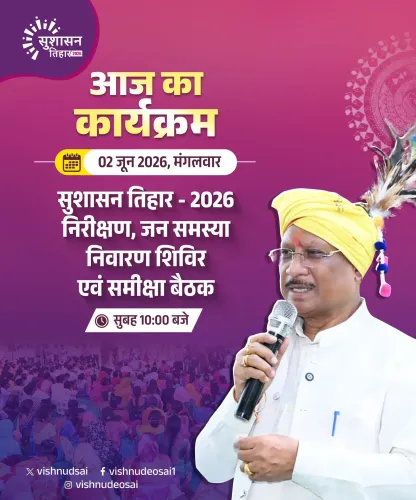
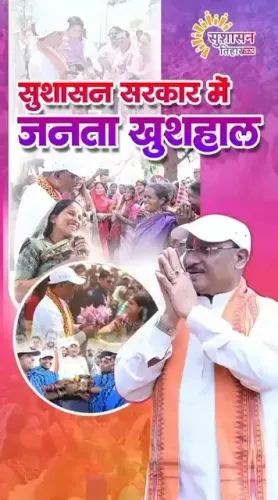
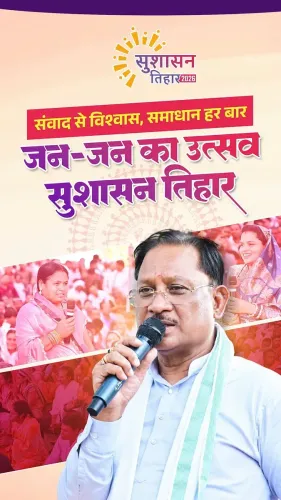
Chhattisgarh Chief Minister Vishnu Deo Sai on 25 May 2026 marked Sushasan Tihar 2026 with a Hindi couplet pledging hope and love at every doorstep. The annual good-governance festival brings state services and grievance redressal directly to citizens across the state's rural and tribal heartland.
Key Takeaways
Chhattisgarh Chief Minister Vishnu Deo Sai promoted Sushasan Tihar 2026 on 25 May 2026 via a Hindi couplet on social media.
Sushasan Tihar is an annual good-governance outreach campaign in Chhattisgarh involving district-level camps for grievance redressal and scheme access.
The campaign is in its third year under the current BJP government, which took office in December 2023 .
Chhattisgarh's large tribal and rural population is the primary target beneficiary of the doorstep-delivery initiative.
The 2026 edition's detailed rollout schedule, including camp dates and scheme focus areas, is yet to be officially announced.
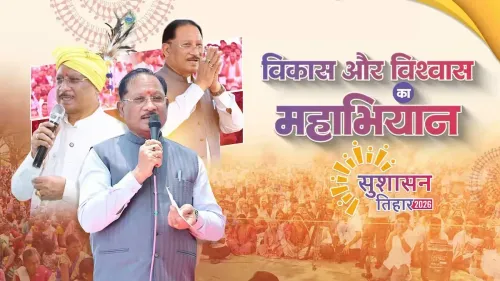
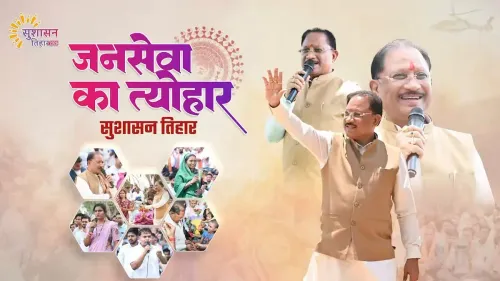
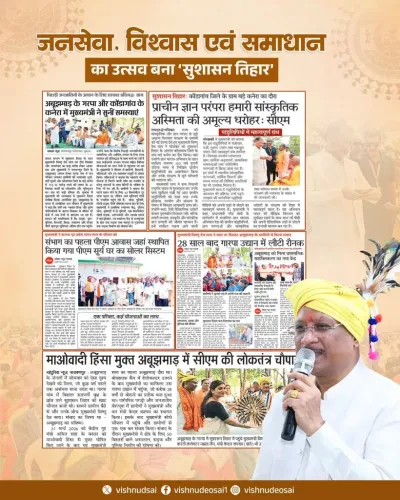
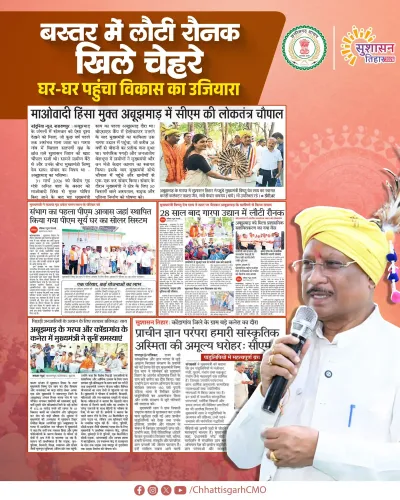
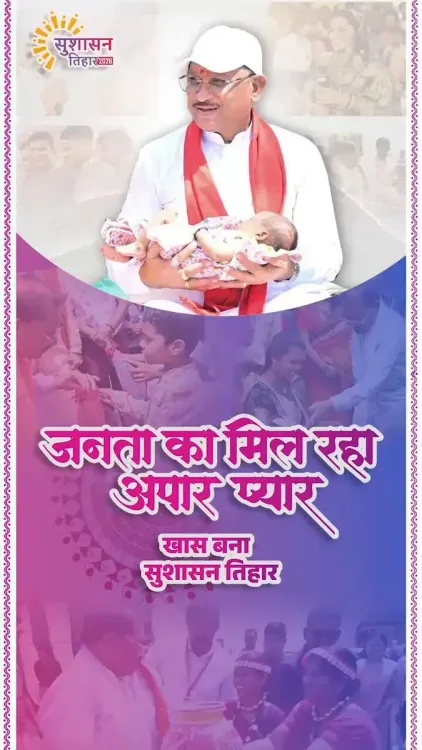
Chhattisgarh Chief Minister Vishnu Deo Sai on Monday, 25 May 2026 invoked the spirit of his government's annual good-governance campaign, posting a couplet on social media that declared Sushasan Tihar 2026 a celebration of hope and affection in every household across the state.
The post, written in Hindi, read: 'Har aangan mein ummeed, har dwaar mein pyaar / Jan-jan ki muskaan se safal hota Sushasan Tihar' — translated as 'Hope in every courtyard, love at every door / The smiles of the people make Sushasan Tihar a success.' The verse frames the campaign not as a bureaucratic exercise but as a people-first outreach anchored in emotional connect with ordinary citizens.
Context
Sushasan Tihar — literally 'Good Governance Festival' — is a recurring state-level initiative in Chhattisgarh designed to bring government services and grievance-redressal mechanisms directly to citizens at the grassroots. The campaign involves district and block-level camps where residents can access welfare schemes, file complaints, and interact with officials without travelling to distant government offices.
Chief Minister Sai, who assumed office in December 2023 after the Bharatiya Janata Party reclaimed power in the state, has positioned such outreach drives as a cornerstone of his administration's identity. The 2026 edition, signalled by the hashtag #SushasanTihar2026, marks the campaign's continuation into the third year of the current government.
Policy Backdrop
The concept of 'sushasan' — good governance — has been a recurring brand element for BJP-led state governments across India, used to signal administrative responsiveness and last-mile delivery of welfare programmes. State governments have increasingly paired such on-ground camps with digital grievance portals to widen citizen access.
Chhattisgarh, a central Indian state formed in November 2000, has a large tribal and rural population for whom physical outreach remains critical given uneven digital penetration. Welfare delivery and scheme awareness in remote districts have historically been key electoral and administrative priorities for successive governments in the state.
Stakeholders and Impact
The primary beneficiaries of Sushasan Tihar are rural and semi-urban households — particularly Chhattisgarh's tribal communities — who stand to gain direct access to entitlements under central and state schemes covering health, housing, agriculture, and social security. The campaign also creates a structured feedback loop for the administration to gauge on-ground implementation gaps.
For the BJP government, the annual festival serves a dual purpose: it reinforces the party's governance narrative ahead of future electoral cycles and provides district-level officials with a mandated window to clear pending grievances and scheme applications.
What's Next
The rollout schedule for the 2026 edition of Sushasan Tihar — including district-level camp dates, scheme focuses, and participation targets — is expected to be announced through official state government channels in the coming days. Observers will watch whether the campaign introduces new delivery mechanisms or expands its reach to previously underserved blocks in Chhattisgarh's interior regions. The Chief Minister's social-media framing suggests the administration intends to give this year's edition a strong citizen-engagement emphasis.
Point of View
The symbolism of 'hope in every courtyard' carries both administrative and political weight. How effectively the 2026 edition translates this messaging into measurable last-mile delivery will determine whether the campaign builds on or merely restates the government's governance credentials.
NationPress
9 Oct 2026
Frequently Asked Questions
What is Sushasan Tihar in Chhattisgarh?
Sushasan Tihar is an annual good-governance festival organised by the Chhattisgarh government to bring welfare schemes, grievance redressal, and official services directly to citizens at the district and block level, reducing the need for residents to travel to government offices.
Who is organising Sushasan Tihar 2026?
Sushasan Tihar 2026 is being organised by the Chhattisgarh state government under Chief Minister Vishnu Deo Sai of the Bharatiya Janata Party, which has run the campaign since returning to power in December 2023.
What did CM Vishnu Deo Sai say about Sushasan Tihar 2026?
Chief Minister Vishnu Deo Sai posted a Hindi couplet on 25 May 2026 stating 'Hope in every courtyard, love at every door — the smiles of the people make Sushasan Tihar a success,' signalling the launch or continuation of the 2026 edition of the campaign.
Who benefits from Sushasan Tihar in Chhattisgarh?
The primary beneficiaries are rural and tribal households across Chhattisgarh who gain direct access to entitlements under health, housing, agriculture, and social-security schemes, along with a channel to file grievances with local officials.
When did BJP return to power in Chhattisgarh?
The Bharatiya Janata Party returned to power in Chhattisgarh in December 2023 following its victory in the state assembly elections, with Vishnu Deo Sai sworn in as Chief Minister.