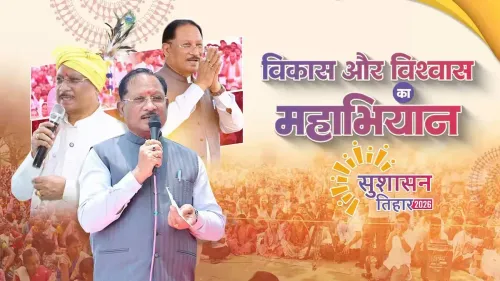
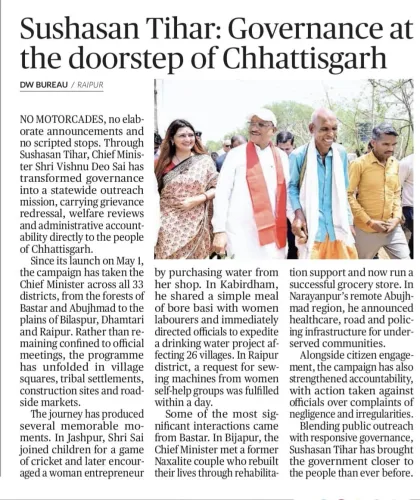
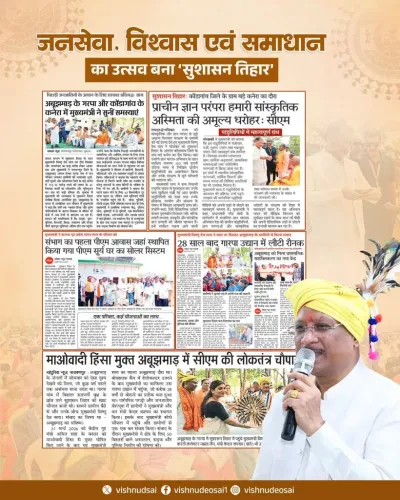
CM Sai Frames Sushasan Tihar as Dialogue, Not Campaign
Synopsis
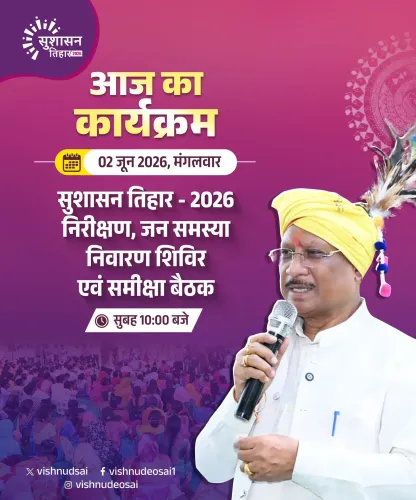
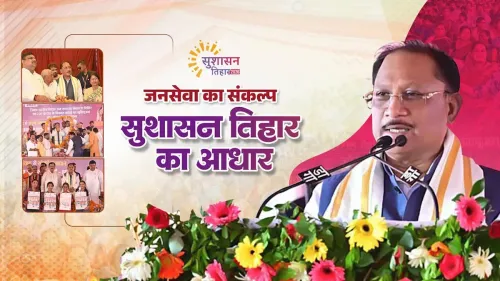
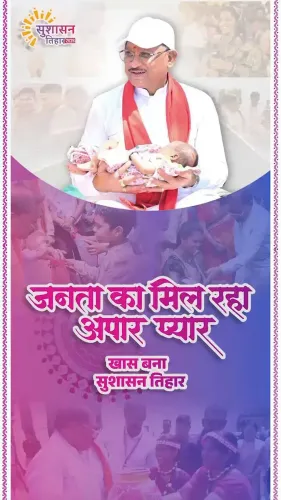
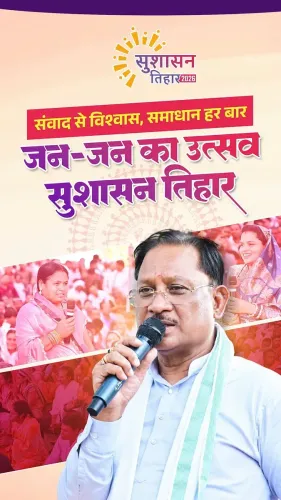
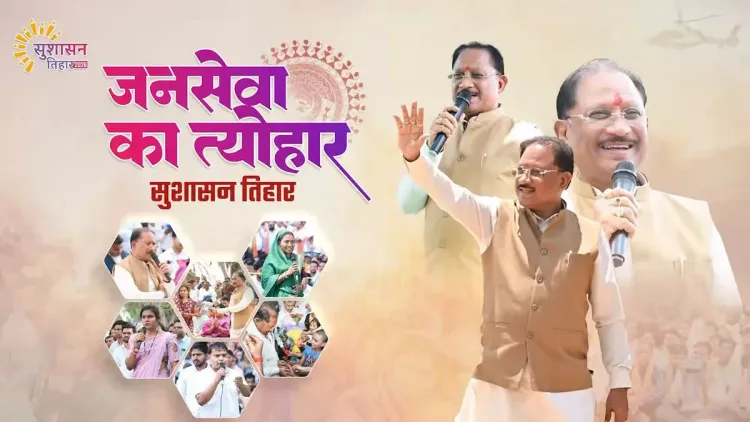
Chhattisgarh Chief Minister Vishnu Deo Sai on 7 June 2026 called Sushasan Tihar 2026 a platform for heartfelt dialogue with citizens, saying governance that reaches the people builds both development and public trust, anchoring his administration's 'Viksit Chhattisgarh' vision.
Key Takeaways
CM Vishnu Deo Sai posted on 7 June 2026 describing Sushasan Tihar 2026 as more than a campaign — a medium for direct dialogue with citizens.
He stated that governance reaching out to people, listening to their problems, and resolving them with sensitivity accelerates development and strengthens public trust.
Sushasan Tihar is a state-level citizen outreach and grievance redressal programme run by the Chhattisgarh government, with tihar meaning 'festival' in Chhattisgarhi.
The initiative aligns with the BJP's national 'sushasan' (good governance) branding, rooted in National Good Governance Day observed on 25 December since 2014 .
CM Sai linked the programme to the broader goal of a 'Viksit Chhattisgarh' (developed Chhattisgarh), framing public trust as the government's greatest asset.
Chhattisgarh Chief Minister Vishnu Deo Sai on Sunday, 7 June 2026 described the state's ongoing Sushasan Tihar 2026 as a platform for direct, empathetic engagement between the government and citizens, saying the initiative goes beyond a routine administrative drive to become a channel for understanding public aspirations.
Context
Posting on X in Hindi, CM Sai wrote: 'जनसेवा से बढ़ते जनविश्वास का उत्सव - सुशासन तिहार' ['A celebration of growing public trust through public service — Sushasan Tihar']. He described the festival as 'not merely a campaign but a powerful medium for heartfelt dialogue with the people of the state and for understanding their expectations.' The post was accompanied by a video.
The Chief Minister added that when governance reaches out to the people, listens to their problems, and works with sensitivity to resolve them, 'development gains momentum and public trust finds new strength.' He identified this trust as the government's 'greatest strength' in pursuing a 'Viksit Chhattisgarh' — a developed Chhattisgarh.
Policy Backdrop
Sushasan Tihar is a state-level citizen outreach and grievance redressal programme promoted by the Chhattisgarh government under CM Sai, who has led the state since December 2023 following the BJP's return to power in the assembly elections. The programme's name draws on the Chhattisgarhi word tihar (festival), framing governance as a celebratory public event rather than a bureaucratic exercise.
The broader concept of 'sushasan' (good governance) has been a pillar of BJP-led administrations nationally since 2014, when 25 December was designated National Good Governance Day to mark the birth anniversary of former Prime Minister Atal Bihari Vajpayee. Chhattisgarh's Sushasan Tihar localises that ethos into a district-level, direct-interaction format.
Stakeholders and Impact
Chhattisgarh has a large tribal population and is mineral-rich, with rural communities historically facing barriers in accessing state services. Outreach programmes that bring officials to citizens — rather than requiring citizens to navigate administrative offices — are particularly significant in remote districts.
The initiative is also part of a broader pattern seen in BJP-governed states, where direct grievance redressal formats serve a dual purpose: improving administrative responsiveness and projecting a visible record of delivery. Rural beneficiaries and local panchayat bodies are among the primary stakeholders in the programme's outcomes.
What's Next
District-level grievance resolution data from the 2026 edition of Sushasan Tihar is expected to feed into subsequent state policy discussions, with observers watching for related announcements in the next assembly session or budget cycle. CM Sai's framing of the exercise as a trust-building compact with citizens signals that the government intends to position governance delivery — rather than welfare announcements alone — as a central plank heading into the state's political calendar. The sustained emphasis on 'Viksit Chhattisgarh' suggests the administration will continue linking outreach outcomes to its broader development narrative.
Point of View
Tightly coupling state governance optics to the party's central development narrative. By emphasising trust as the government's 'greatest strength,' the Chief Minister is also pre-emptively converting grievance redressal data into political capital. Whether the programme's district-level outcomes match the aspirational messaging will be the real test of its governance credibility.
NationPress
22 Oct 2026
Frequently Asked Questions
What is Sushasan Tihar in Chhattisgarh?
Sushasan Tihar is a state-level citizen outreach and grievance redressal programme run by the Chhattisgarh government. The name combines 'sushasan' (good governance) with 'tihar,' the Chhattisgarhi word for festival, framing public administration as a celebratory engagement with citizens.
What did CM Vishnu Deo Sai say about Sushasan Tihar 2026?
CM Vishnu Deo Sai described Sushasan Tihar 2026 as 'not merely a campaign but a powerful medium for heartfelt dialogue' with citizens. He said governance that listens to people and resolves their problems with sensitivity accelerates development and strengthens public trust.
When did Vishnu Deo Sai become Chief Minister of Chhattisgarh?
Vishnu Deo Sai became Chief Minister of Chhattisgarh in December 2023 after the BJP won the state assembly elections.
What is Viksit Chhattisgarh?
Viksit Chhattisgarh, meaning 'developed Chhattisgarh,' is the Sai government's stated development vision for the state. It mirrors the national 'Viksit Bharat' framework promoted by the BJP-led central government.
What is National Good Governance Day in India?
National Good Governance Day is observed on 25 December each year since 2014 to mark the birth anniversary of former Prime Minister Atal Bihari Vajpayee and to promote citizen-centric administration across India.