CM Chandrababu Orders Price Controls as El Niño Hits AP
Synopsis
Andhra Pradesh CM Chandrababu Naidu, citing El Niño-driven nationwide price pressures, directed officials at an RTGS review to prevent rises in five key essentials — rice, tur dal, onions, cooking oil, and sugar — and probed the state of Rythu Bazaar rice sales.
Key Takeaways
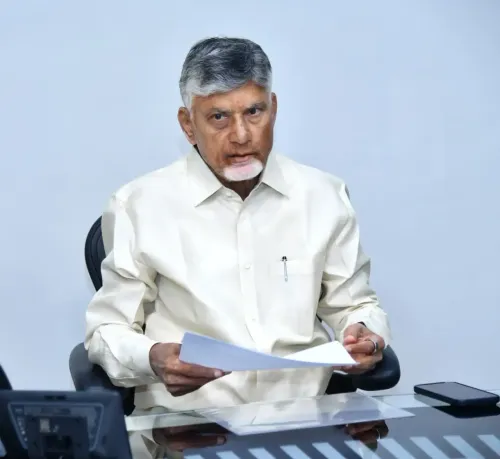
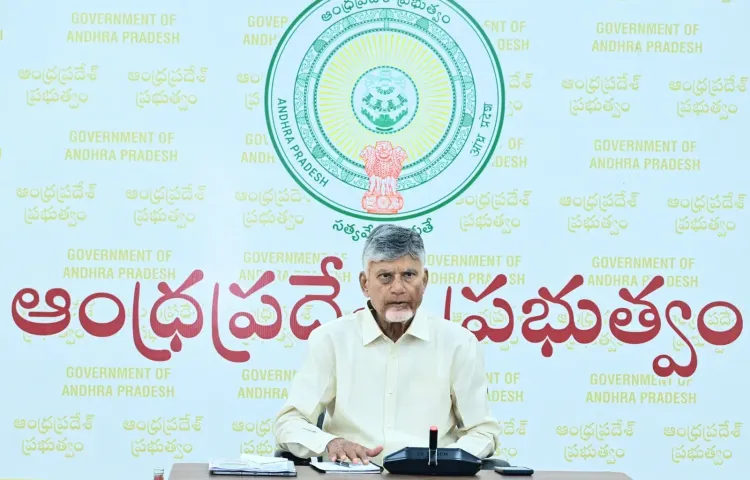
CM Chandrababu Naidu chaired a multi-department performance review at RTGS on 22 October 2026 .
El Niño-linked national price pressures prompted the CM to order preventive action on essential-commodity prices in Andhra Pradesh.
Five commodities flagged for price protection: rice, tur dal, onions, cooking oil, and sugar .
Naidu sought a specific update on government-subsidised rice sales through Rythu Bazaars , the state's direct-to-consumer farmers' market network.
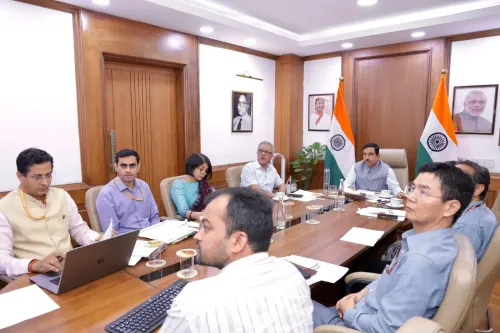
Chief Secretary Sai Prasad and senior departmental heads attended the review.
The CM called for stronger inter-departmental coordination to implement price-stabilisation directives effectively.
With El Niño squeezing agricultural output across the country and essential-commodity prices climbing, Chief Minister Nara Chandrababu Naidu has drawn a hard line: rice, lentils, onions, cooking oil, and sugar must not become unaffordable for ordinary Andhra households. The directive came during a performance review of multiple government departments held at RTGS (Real-Time Governance Society) on Thursday, 22 October 2026.
What Chandrababu told officials — and why El Niño is the trigger
The Chief Minister's Office stated that nationwide price pressures driven by El Niño weather patterns are visible, and the administration must ensure that impact does not reach daily essentials. Naidu directed officials to take concrete steps to prevent price rises in rice, tur dal (kandipappu), onions, cooking oil, and sugar — the five commodities that function as a real-time inflation barometer for low- and middle-income families in Andhra Pradesh.
El Niño events suppress the Indian monsoon, reducing kharif crop yields. When domestic supply of staples falls short, wholesale and retail prices follow upward quickly — a pattern that has stung consumers in AP during past weather cycles and one the administration is clearly keen to get ahead of this time.
Rythu Bazaars put under the CM's microscope
Naidu specifically asked for a status report on government-subsidised rice sales through Rythu Bazaars — the state-run farmers' markets first launched in 1999 to cut out middlemen and stabilise prices for both producers and consumers. The network has historically served as an emergency buffer during supply crunches, and the CM's query signals that these outlets could be activated more aggressively if open-market prices spike further.
The original logic of Rythu Bazaars — farmer sells directly, consumer buys cheaper, state absorbs the logistics cost — becomes especially powerful during a commodity squeeze. Whether current sales volumes are adequate to move the price needle is now a live question the administration wants answered.
Chief Secretary Sai Prasad leads inter-departmental coordination push
The review was attended by Chief Secretary Sai Prasad and senior officials from multiple departments. Naidu underlined that coordination between departments must improve — a recurring theme in AP's governance model that reflects the complexity of managing supply chains across civil supplies, agriculture, horticulture, and market regulation simultaneously.
Subsequent government orders on price-monitoring mechanisms and Rythu Bazaar sales data will indicate how quickly this directive translates into ground-level action.
For Andhra Pradesh's consumers, the pressure test is real — and the administration has put its officials on notice that essential prices are being watched at the very top.
Point of View
The administration is signalling that a 27-year-old institutional tool could serve as a first-responder for supply shocks, which is a politically smart framing. The emphasis on inter-departmental coordination, however, is a tacit acknowledgement that past price-control efforts have been undermined by siloed implementation. Whether the directive produces durable results will depend entirely on the speed and depth of follow-through by the civil supplies and agriculture machinery.
NationPress
22 Oct 2026
Frequently Asked Questions
Why is El Niño causing price rises in India?
El Niño suppresses the Indian monsoon, reducing rainfall and lowering kharif crop yields, which tightens domestic supply of staples like rice, pulses, and vegetables and pushes prices upward across the country.
What did CM Chandrababu Naidu order regarding essential commodity prices?
CM Naidu directed Andhra Pradesh officials to take concrete steps to prevent price rises in rice, tur dal, onions, cooking oil, and sugar, and sought a status report on subsidised rice sales through Rythu Bazaars.
What are Rythu Bazaars in Andhra Pradesh?
Rythu Bazaars are state-run farmers' markets launched in 1999 that allow farmers to sell produce directly to consumers, cutting out middlemen and helping stabilise prices for both sides.
Where was the departmental review meeting held?
The review was conducted at RTGS — the Real-Time Governance Society — a platform the Andhra Pradesh government uses for monitoring departmental performance.
Who attended the Andhra Pradesh price-control review meeting?
Chief Secretary Sai Prasad and senior officials from various state government departments attended the review chaired by CM Chandrababu Naidu.