White House Claims $260 Billion in Fraud Uncovered
Synopsis
The White House announced the Trump Administration has uncovered more than $260 billion in fraud, urging Americans to report suspected federal fund misuse at Fraud.Gov while blaming 'radical Democrats' for enabling taxpayer dollar abuse.
Key Takeaways
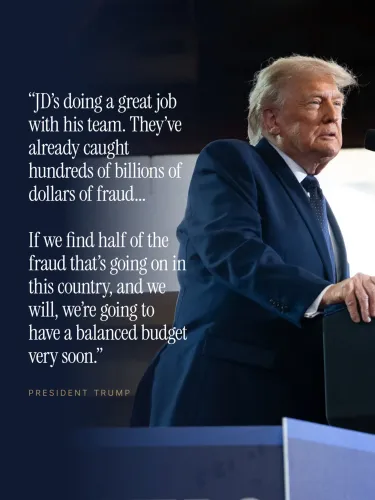
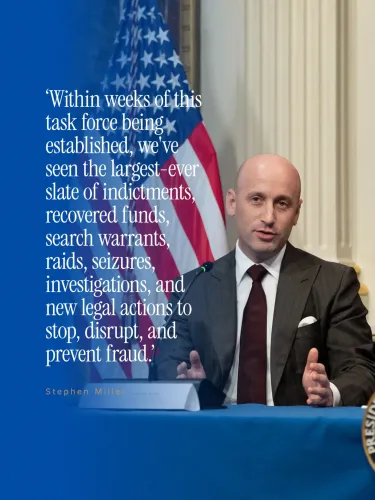
The White House posted on 22 October 2026 claiming the Trump Administration uncovered more than $260 billion in fraud .
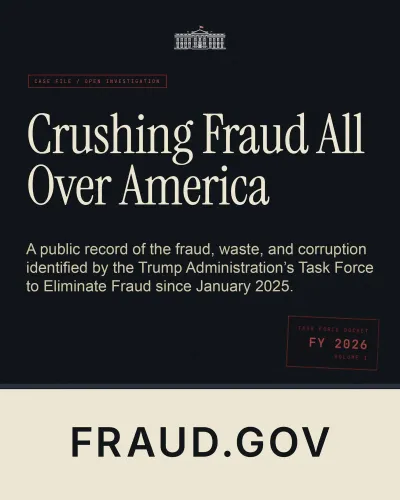
The post calls on citizens to report suspected fraud at Fraud.Gov , the federal government's public fraud-reporting portal.
The messaging frames the initiative as a contrast with 'radical Democrats,' accusing them of refusing to halt misuse of taxpayer funds.
No itemised breakdown of the $260 billion figure was provided alongside the announcement.
Improper federal payments have been a long-standing, bipartisan concern flagged by oversight bodies for decades.
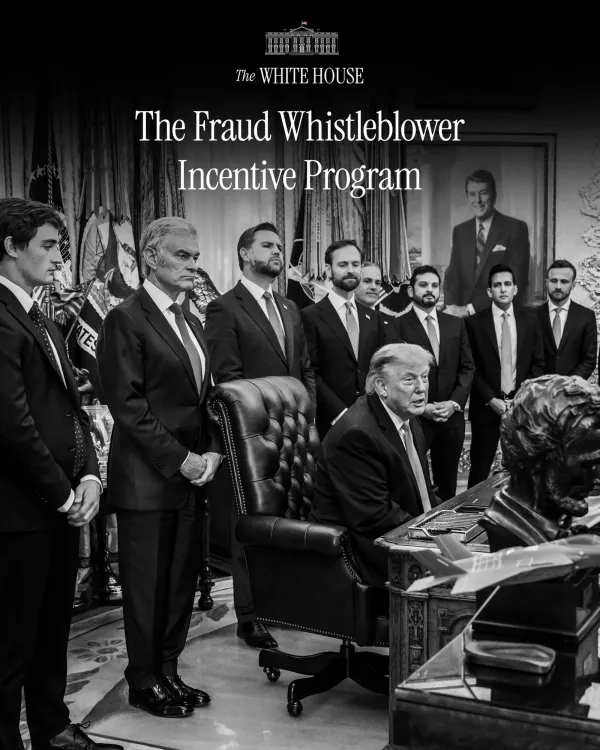
The battle over taxpayer money is back at the centre of American politics. The White House posted on X on Thursday, 22 October 2026, declaring that the Trump Administration has uncovered more than $260 billion in fraud — and is calling on the public to join the effort by reporting suspected misuse of federal funds.
What the White House is claiming
The post states that the administration has 'uncovered more than $260 billion in fraud' and is 'holding criminals accountable,' while directing citizens to Fraud.Gov — the federal government's public portal for reporting suspected waste, fraud, or abuse involving U.S. government programmes. The message frames the initiative explicitly against 'radical Democrats,' accusing them of refusing to stop the misuse of taxpayer dollars.
Fraud.Gov and federal oversight machinery
Fraud.Gov is a long-standing federal resource that allows citizens, whistleblowers, and government employees to flag suspected improper payments or corrupt use of public funds. The platform channels reports to relevant inspector-general offices and enforcement agencies across the federal government. Public-participation campaigns around the site are periodically amplified by the executive branch to signal fiscal seriousness.
The partisan framing behind the numbers
White House communications under the Trump administration have consistently used fiscal-oversight messaging as a political contrast device — highlighting executive action on waste and fraud against what it characterises as legislative inaction by Democrats. That pattern is clearly visible here. The $260 billion figure has not been independently detailed in this post, and no specific breakdown of recovered funds or prosecutions has been provided alongside the announcement.
Still, the broader context is real: improper payments across U.S. federal programmes — spanning healthcare, welfare, and procurement — have been a documented and bipartisan concern for decades, with the Government Accountability Office consistently flagging tens of billions in annual losses.
What it means for ordinary Americans
For U.S. taxpayers, the messaging carries a direct ask: report fraud at Fraud.Gov. Whether this campaign is accompanied by new enforcement actions, legislative proposals, or audits remains to be seen from subsequent White House releases. The $260 billion claim, if substantiated, would represent one of the largest announced fraud-recovery figures in U.S. executive history — making the absence of a detailed breakdown a notable gap to watch.
Point of View
Attention-commanding number with a partisan contrast and a public call to action. The $260 billion headline figure is strategically massive — it demands scrutiny and detail that the post itself does not supply, leaving the claim politically potent but analytically incomplete. For Indian observers tracking U.S. fiscal governance, this fits a broader pattern of executive-branch messaging that treats accountability as both a policy goal and an electoral weapon. The real question is whether subsequent disclosures will provide the case-by-case evidence to substantiate the figure — or whether the number will remain a campaign-style talking point without forensic backup.
NationPress
22 Oct 2026
Frequently Asked Questions
What is the White House's $260 billion fraud claim about?
The White House announced that the Trump Administration has uncovered more than $260 billion in fraud involving U.S. government funds, and is urging the public to report further suspected misuse at Fraud.Gov.
What is Fraud.Gov and how can Americans use it?
Fraud.Gov is a U.S. federal portal where citizens, whistleblowers, and government employees can report suspected waste, fraud, or abuse of government programmes. Reports are routed to the relevant inspector-general offices for investigation.
Has the $260 billion fraud figure been independently verified?
The White House post does not provide a detailed breakdown of the $260 billion figure, and no independent verification of the specific amount has been publicly confirmed alongside this announcement.
Why is the White House blaming Democrats for federal fraud?
The post accuses 'radical Democrats' of refusing to stop the misuse of taxpayer dollars. This reflects a long-standing pattern in Trump administration communications that uses fiscal-oversight messaging as a political contrast against congressional Democrats.
How significant is federal fraud in the United States?
Improper payments across U.S. federal programmes — including healthcare, welfare, and procurement — have been a documented, bipartisan concern for decades, with oversight bodies flagging tens of billions of dollars in losses annually.