White House Says Trump Admin Is Rooting Out Fraud Across US
Synopsis
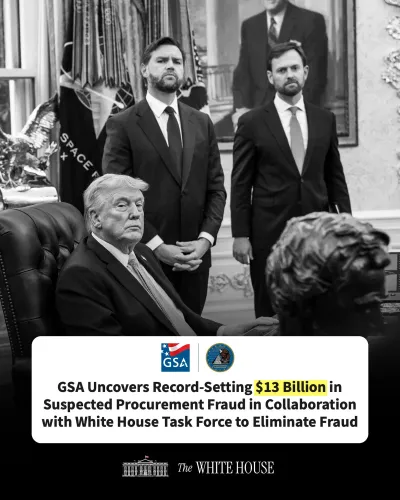
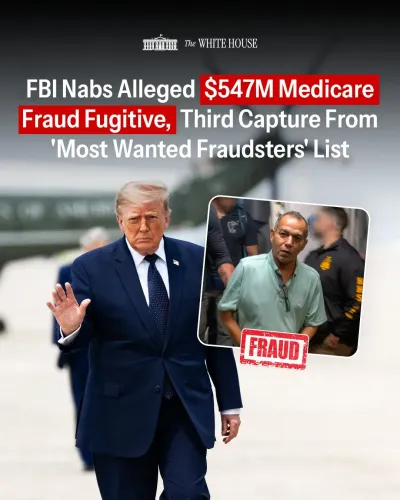
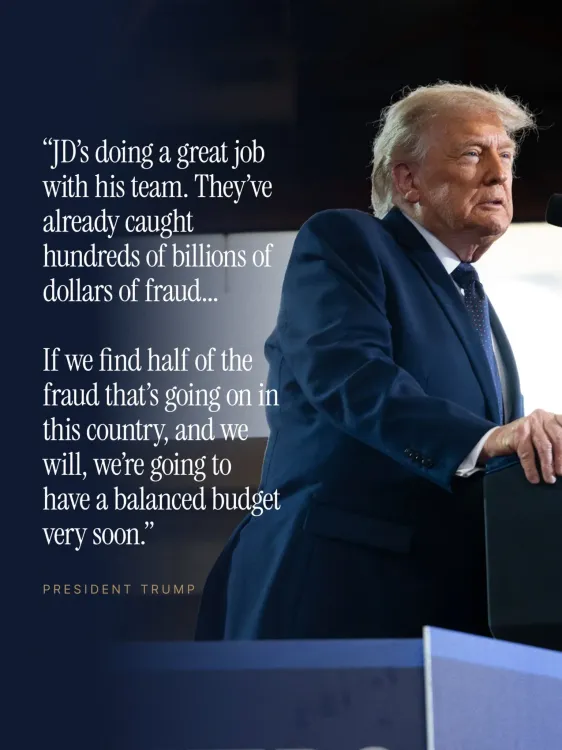
The White House announced on 2 June 2026 that the Trump Administration is aggressively identifying, prosecuting, and eliminating rampant fraud across the United States, signalling a strong executive priority on fiscal accountability and federal enforcement.
Key Takeaways
The White House declared on 2 June 2026 that 'rampant fraud is being identified, prosecuted, and extinguished across America' under the Trump Administration .
The statement signals a whole-of-government priority on fraud enforcement spanning multiple federal agencies.
During Trump's first term , the DOJ expanded healthcare fraud prosecutions via Medicare Strike Force teams from 2017 onward.
Primary beneficiaries of successful anti-fraud efforts are U.S. taxpayers , through recovered funds and reduced programme costs.
Upcoming DOJ quarterly fraud statistics and inspector general reports are expected to provide verifiable data on the administration's claims.
The White House posted on Monday, 2 June 2026, asserting that the Trump Administration is actively identifying, prosecuting, and eliminating widespread fraud across the United States. The statement, issued via the official White House account on X, signals a continued executive focus on fraud enforcement and fiscal accountability.
Context
The post states: 'Rampant fraud is being identified, prosecuted, and extinguished across America under the Trump Administration.' The language is unambiguous in framing the current administration as taking an aggressive, whole-of-government posture against fraud in federal systems. Such declarations from the executive office typically accompany or precede formal enforcement announcements, inspector general reports, or Department of Justice briefings.
Presidential administrations have historically used public messaging around fraud prosecutions to signal priorities in justice delivery and fiscal stewardship. The choice of the word 'extinguished' — rather than 'reduced' or 'addressed' — reflects a maximalist rhetorical posture consistent with the administration's broader governance communication style.
Policy Backdrop
During President Donald Trump's first term, the Department of Justice expanded healthcare fraud prosecutions through dedicated Medicare Strike Force teams, issuing annual enforcement reports from 2017 onward. Those efforts targeted fraudulent billing, phantom services, and prescription drug schemes that collectively cost taxpayers billions of dollars annually.
Federal fraud enforcement spans multiple agencies, including the DOJ, the Department of Health and Human Services Office of Inspector General, the Social Security Administration OIG, and the IRS Criminal Investigation Division. Coordinated crackdowns often coincide with budget cycles, when the administration seeks to demonstrate responsible stewardship of public funds to Congress and the public.
Stakeholders and Impact
U.S. taxpayers are the primary stakeholders in any federal anti-fraud drive, as recoveries from fraudulent claims and prosecutions can return funds to the treasury and reduce programme costs. Federal prosecutors and investigators across the country are the operational arm of such campaigns, and high-profile enforcement activity typically elevates their caseloads and resource requirements.
Businesses and individuals operating in sectors with high federal programme exposure — healthcare, defence contracting, and social welfare — face heightened compliance scrutiny during periods of declared enforcement priority. Civil-society watchdogs and congressional oversight committees also play a role in independently verifying the scope and outcomes of such campaigns.
What's Next
Observers will look to the Department of Justice's quarterly fraud statistics releases and any forthcoming congressional hearings on enforcement funding for concrete data behind the administration's claim. Inspector general reports from key federal departments are expected to provide independent assessments of fraud recovery figures in the coming months.
The administration's sustained public messaging on this front suggests further formal announcements — potentially detailing specific sectors, dollar amounts recovered, or legislative proposals — may follow in the near term.
Point of View
Action-oriented language to frame the administration as a decisive steward of public funds. The word 'extinguished' elevates routine prosecutorial activity into a narrative of total victory, which serves both a domestic political audience and a deterrence function. Historically, such declarations precede formal data releases or legislative pushes, suggesting this may be the opening salvo of a broader anti-fraud communications campaign. For Indian observers, the parallel is notable: anti-corruption and fiscal accountability messaging has become a universal tool of incumbents seeking to reinforce governance credibility ahead of budget or electoral cycles.
NationPress
15 Oct 2026
Frequently Asked Questions
What fraud is the Trump Administration targeting in 2026?
The White House has not specified particular sectors in this statement, but federal anti-fraud efforts under the Trump Administration have historically focused on healthcare billing fraud, social welfare programme abuse, and defence contracting irregularities.
Which US agencies handle federal fraud prosecution?
Federal fraud prosecution is led primarily by the Department of Justice , supported by the HHS Office of Inspector General , the IRS Criminal Investigation Division , and the Social Security Administration OIG , often working in coordinated task forces.
What was the Medicare Strike Force under Trump?
The Medicare Strike Force is a DOJ-led initiative expanded during Trump's first term from 2017 onward, targeting fraudulent Medicare billing, phantom medical services, and prescription drug schemes that cost taxpayers large sums annually.
How does anti-fraud messaging benefit a US administration politically?
Declaring a crackdown on fraud allows an administration to demonstrate fiscal responsibility and law-and-order credentials simultaneously, appealing to taxpayers concerned about government waste and to conservatives prioritising strong enforcement.
When will data on Trump Administration fraud prosecutions be available?
The Department of Justice releases quarterly fraud enforcement statistics, and inspector general reports from key federal departments are expected in the coming months, which should provide independent verification of the administration's claims.