White House Touts $90M Minnesota Health Care Fraud Indictments
Synopsis
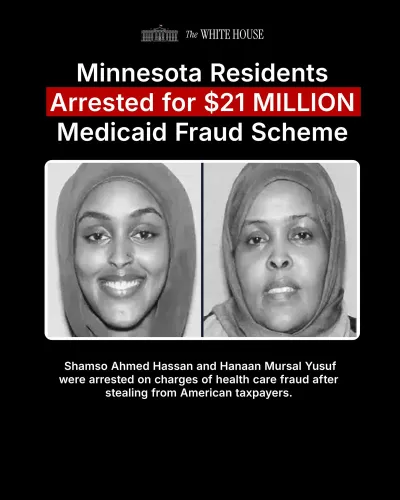
The White House on 21 May 2026 announced 15 individuals indicted in Minnesota over an alleged $90+ million health care fraud scheme, calling it a major accountability win for American taxpayers and signalling continued federal pressure on Medicare and Medicaid fraud.
Key Takeaways
15 individuals have been federally indicted in Minnesota over an alleged health care fraud scheme.
The alleged scheme is valued at over $90 million , drawn from taxpayer-funded health programs.
The White House framed the indictments as a direct accountability win for American taxpayers on 21 May 2026 .
Medicare and Medicaid — the likely programs targeted — together represent more than one-third of U.S. national health spending.
Federal health care fraud enforcement has been a bipartisan priority, with past operations charging hundreds of individuals in billion-dollar schemes.
The case will proceed through the federal court system; an HHS Office of Inspector General report to Congress is expected to detail further fraud recovery data.
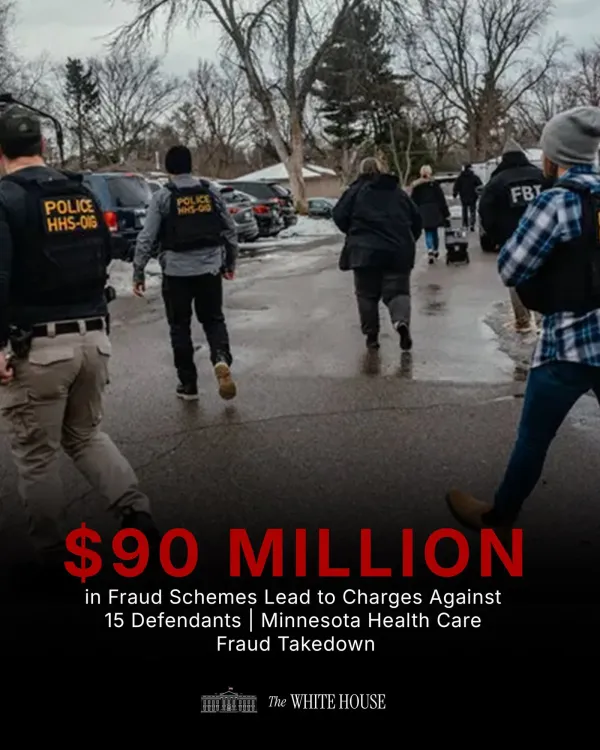
The White House on Thursday, 21 May 2026 announced that 15 individuals have been indicted in Minnesota in connection with an alleged health care fraud scheme exceeding $90 million, framing the action as a direct win for American taxpayers.
Context
The White House post, carrying the banner 'War on Fraud,' declared the indictments a 'big win' and stated: 'American taxpayers deserve to know exactly where their hard-earned money is going. This is what accountability looks like.' The announcement points to a federal criminal prosecution of what authorities allege was a large-scale billing or kickback operation that improperly siphoned funds from taxpayer-supported health care programs.
The Department of Justice and the HHS Office of Inspector General are the principal federal bodies responsible for investigating and prosecuting such cases. The specific charges, defendant names, and billing mechanisms in this Minnesota case remain subject to court proceedings and have not been independently detailed in the White House statement.
Policy Backdrop
Federal enforcement against health care fraud has been a sustained, bipartisan priority for successive administrations. Medicare and Medicaid together account for more than one-third of all national health spending in the United States and generate billions of dollars in estimated improper payments each year.
Prosecutors have routinely paired criminal indictments with civil recoveries under the False Claims Act to deter fraudulent billing and illegal kickback arrangements. Past multi-state enforcement operations — including a 2019 sweep that charged over 300 individuals in schemes exceeding $1 billion — illustrate the scale at which federal agencies have historically acted. The current Minnesota indictments, while smaller in number of defendants, represent a significant alleged dollar figure at over $90 million.
Stakeholders and Impact
The most immediate stakeholders are U.S. taxpayers whose funds flow into federal health programs, and Medicare and Medicaid beneficiaries whose care quality and program integrity are directly affected by fraudulent diversions of funds. Health care fraud inflates program costs, which can translate into higher premiums, reduced benefits, or constrained coverage expansions over time.
For the 15 indicted individuals, the federal charges represent serious criminal exposure. Convictions in comparable federal health care fraud cases have resulted in multi-year prison sentences and orders to repay misappropriated funds. The White House's decision to amplify the indictment publicly signals an intent to use high-profile enforcement actions as a deterrent message to others engaged in similar schemes.
What's Next
The case will now proceed through the federal court system in Minnesota, where the accused will face arraignment and the opportunity to enter pleas. Prosecutors will be required to present evidence of the alleged fraud before a jury or reach plea agreements with defendants.
Broader oversight activity is also expected. The HHS Office of Inspector General is scheduled to release its next semiannual report to Congress, which will detail fraud recoveries and flag new enforcement priorities. Congressional oversight committees may also schedule hearings on health program integrity in light of continued large-scale fraud allegations. The White House's public framing of these indictments as a fiscal accountability milestone suggests further announcements in this vein as federal enforcement actions progress.
Point of View
' the administration is signalling to both Congress and the public that health program integrity is an active priority, not a bureaucratic afterthought. For Indian observers, the case underscores how federal systems manage the tension between universal health coverage ambitions and the fraud vulnerabilities that large, complex benefit programmes inevitably create. The announcement also previews likely congressional interest in oversight hearings, which could shape the next cycle of health care enforcement funding and priorities.
NationPress
24 Sept 2026
Frequently Asked Questions
What is the Minnesota health care fraud case announced by the White House?
The White House announced on 21 May 2026 that 15 individuals were indicted in Minnesota over an alleged health care fraud scheme exceeding $90 million, involving the alleged misappropriation of funds from taxpayer-supported health programs.
Which federal agencies investigate health care fraud in the United States?
The Department of Justice and the HHS Office of Inspector General are the primary federal bodies that investigate and prosecute large-scale health care fraud, often working jointly on multi-state enforcement operations.
How common are large-scale Medicare and Medicaid fraud cases in the US?
Large-scale fraud cases are a recurring federal enforcement issue. In 2019 alone, a single multi-state sweep charged over 300 individuals in schemes exceeding $1 billion, illustrating the scale of the problem across taxpayer-funded health programs.
What penalties do defendants face in federal health care fraud cases?
Federal health care fraud convictions can result in significant prison sentences and court orders to repay misappropriated funds; the exact penalties depend on the charges, the scale of fraud proven, and any plea arrangements reached.
Why does the White House publicly announce individual fraud indictments?
Public announcements serve as a deterrent signal to others engaged in similar schemes and reinforce the administration's messaging around fiscal accountability in government health programs, particularly Medicare and Medicaid.