White House Fraud Task Force Claims Billions Recovered
Synopsis
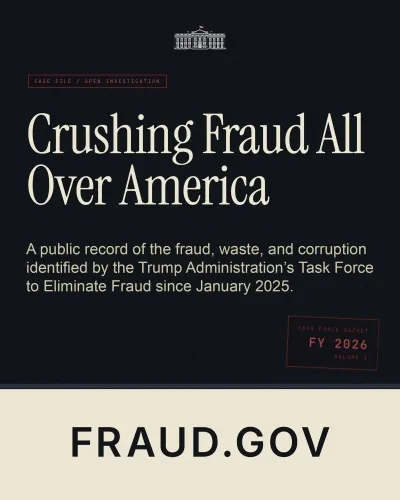
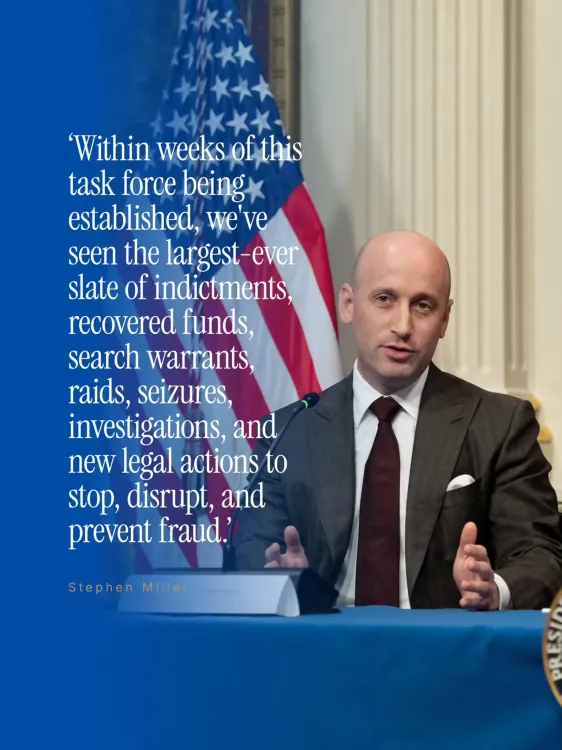
The White House announced that the White House Fraud Task Force has recovered billions in taxpayer dollars since its launch, with the Trump administration vowing to pursue every fraud scheme across federal programs until full accountability is restored.
Key Takeaways
The White House Fraud Task Force (@WHFraudTF) has recovered billions of dollars in taxpayer funds since its launch, according to the official White House account.
The Trump administration pledged continued action to expose fraud schemes and recover every possible dollar from misused federal spending.
The task force targets fraud across federal programs , with particular focus on COVID-era relief fraud and entitlement program integrity.
Similar payment-integrity initiatives were pursued during Trump's first term (2017–2021) through the Treasury and OMB .
Upcoming quarterly recovery reports and Congressional appropriations language will be key indicators of the task force's reach and permanence.
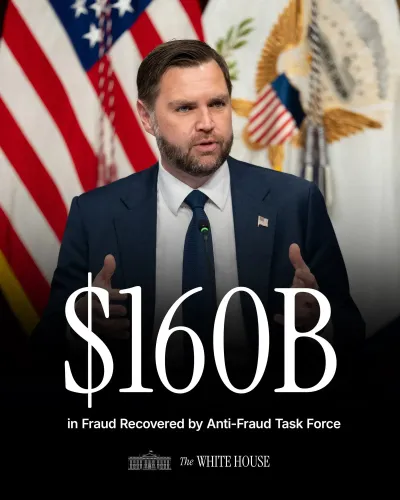
The White House announced on Tuesday, May 26, 2026, that the White House Fraud Task Force (@WHFraudTF) has already recovered billions of dollars in taxpayer funds since its launch, pledging continued action to expose fraud schemes and claw back misused federal money.
Context
The official White House account posted that 'since @WHFraudTF launched, BILLIONS have already been recovered in taxpayer dollars,' framing the recovery as a major milestone in the Trump administration's broader effort to restore public trust in federal spending. The post warned that the administration 'will keep fighting until every fraud scheme is exposed, every dollar possible is clawed back, and trust is restored.'
The White House Fraud Task Force was established to detect and recover funds lost to fraud across federal programs. Its creation reflects a sustained institutional focus on payment integrity that has defined both of President Donald J. Trump's terms in office.
Policy Backdrop
During his first term (2017–2021), Trump directed agencies including the Treasury and the Office of Management and Budget (OMB) to reduce improper payments flagged annually in federal audits. The Government Accountability Office (GAO) has long identified improper payments — including overpayments, underpayments, and payments to ineligible recipients — as a persistent vulnerability across entitlement programs and discretionary spending.
In his second term, the administration has intensified scrutiny of COVID-era relief fraud, targeting schemes that exploited emergency disbursements made through programs such as pandemic unemployment assistance and small business relief funds. The Fraud Task Force represents a formalised, cross-agency mechanism to pursue these recoveries systematically rather than through ad hoc enforcement.
Stakeholders and Impact
U.S. taxpayers are the primary stakeholders, as recovered funds are returned to the federal treasury, theoretically reducing the deficit and freeing resources for authorised programs. Federal agencies administering large benefit and grant programs face heightened compliance pressure as the task force expands its scope.
Critics of such initiatives have previously noted that aggressive fraud-recovery operations can sometimes delay legitimate payments to eligible beneficiaries, raising due-process concerns. The administration has not publicly addressed those trade-offs in this announcement.
What's Next
Analysts will watch for quarterly recovery reports from the White House Fraud Task Force that would quantify the 'billions' cited in the post with agency-level breakdowns. Any related language in upcoming Congressional appropriations bills could institutionalise the task force's mandate and funding beyond executive action.
The broader pattern of waste-fraud-and-abuse messaging has historically served dual purposes for the Trump administration: substantive fiscal policy and a political signal to voters that federal spending is being policed. How Congress responds — particularly on oversight and appropriations — will shape the task force's long-term reach.
Point of View
The post maximises political impact while avoiding the scrutiny that precise numbers invite — a pattern consistent with how both Trump terms have communicated waste-reduction milestones. For Indian observers tracking US fiscal governance, the move underscores how executive-branch task forces are increasingly used to project spending discipline without waiting for legislative action. The real test will be whether quarterly disclosures match the scale of the rhetoric.
NationPress
10 Oct 2026
Frequently Asked Questions
What is the White House Fraud Task Force?
The White House Fraud Task Force, operating under the handle @WHFraudTF, is a body created by the Trump administration to detect and recover funds lost to fraud across federal programs and spending.
How much money has the White House Fraud Task Force recovered?
The White House stated that 'billions' of taxpayer dollars have been recovered since the task force launched, but a precise verified figure has not been publicly released as of the announcement on May 26, 2026.
What kinds of fraud is the White House Fraud Task Force targeting?
The task force targets fraud across federal programs broadly, with emphasis on COVID-era relief fraud, improper payments in entitlement programs, and misuse of discretionary federal spending.
Is the White House Fraud Task Force a new initiative under Trump?
While the specific task force is a second-term creation, it builds on payment-integrity directives issued during Trump's first term (2017–2021) through the Treasury and the Office of Management and Budget.
What happens next with the White House Fraud Task Force?
Analysts expect quarterly recovery reports that will detail agency-level breakdowns of recovered funds, and Congress may address the task force's mandate in upcoming appropriations legislation.