White House Vows Full Prosecution of Antifa Over Attacks on Law Enforcement
Synopsis
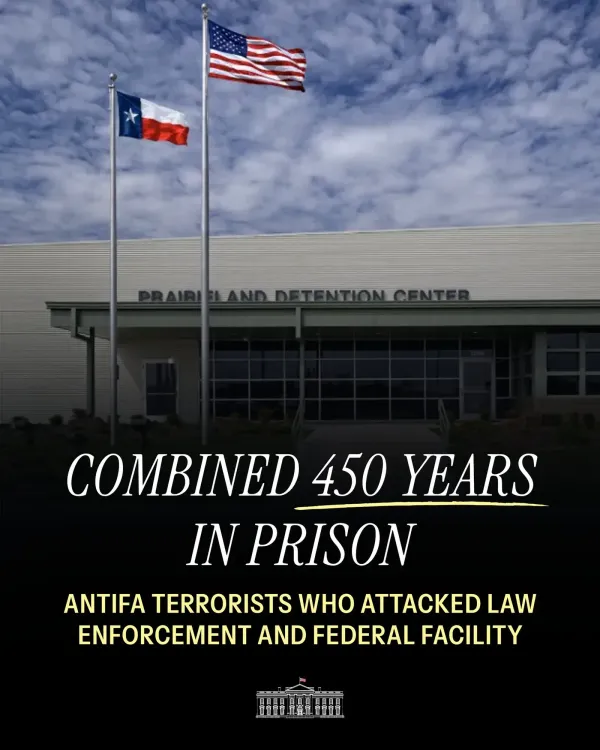
The White House on 24 June 2026 declared that Antifa members who violently attack law enforcement officers or federal facilities will be prosecuted to the fullest extent of the law, continuing a pattern of executive-branch deterrence messaging that dates to the 2020 protest cycle.
Key Takeaways
The White House posted on 24 June 2026 that Antifa members attacking law enforcement or federal facilities will face maximum prosecution.
Antifa is a decentralised anti-fascist movement with no formal leadership structure, complicating any blanket legal designation under existing US law.
Between 2020 and 2021 , the Department of Justice charged more than 300 individuals for protest-related federal offences including arson and assault on officers.
The executive branch has historically relied on existing statutes — covering arson, civil disorder, and assault on federal officers — rather than new domestic terrorism legislation.
No formal domestic terrorism statute specifically targeting non-foreign actors currently exists in US federal law, limiting the legal tools available to prosecutors.
Any follow-on indictments or updated Department of Justice charging guidelines will signal whether this statement translates into concrete prosecutorial action.
The White House issued a stern warning on Wednesday, 24 June 2026, declaring that individuals associated with Antifa who engage in violent attacks on law enforcement and federal facilities will face prosecution to the fullest extent of the law.
Context
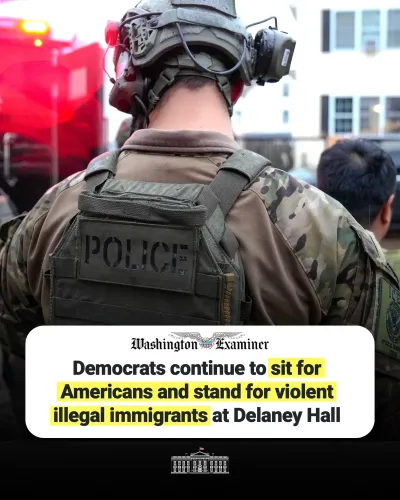
The official White House account posted that 'Antifa terrorists who practice violent extremist terrorism by ATTACKING law enforcement and federal facilities will be prosecuted to the fullest extent of the law.' The statement reflects a hardened executive-branch posture toward Antifa, a decentralised anti-fascist movement whose members have, in documented incidents, been accused of violence against police officers and federal property.
Antifa does not operate as a formal organisation with centralised leadership. It is a loose network of activists united by anti-fascist ideology, making any blanket designation legally and operationally complex under existing United States federal law.
Policy Backdrop
This is not the first time the executive branch has taken an aggressive public stance against Antifa-linked violence. In June 2020, during the nationwide protests that followed the death of George Floyd, the then-administration publicly announced its intent to designate Antifa a terrorist organisation, though no formal legal designation followed under existing domestic terrorism statutes.
Between 2020 and 2021, the Department of Justice brought federal charges against more than 300 individuals for offences including arson, assault on officers, and attacks on federal facilities — most notably at the federal courthouse in Portland, Oregon, where a prolonged occupation lasted several months. The current statement signals a continuation of that prosecutorial emphasis rather than the introduction of new legislation.
The Department of Justice remains the primary federal body responsible for investigating and prosecuting violations of US criminal law, including cases that fall under domestic terrorism provisions. Prosecutors have used existing statutes — covering arson, civil disorder, and assault on federal officers — to pursue individuals involved in attacks on government infrastructure.
Stakeholders and Impact
The most immediate stakeholders are federal law enforcement officers and the prosecutors within the Department of Justice who would be tasked with executing any escalated charging directives. For law enforcement agencies, the White House statement serves as a public signal of executive backing for aggressive prosecution strategies.
Civil liberties advocates and legal scholars have consistently raised concerns about the broad application of terrorism-related language to protest movements, arguing that such framing risks criminalising constitutionally protected dissent alongside genuinely violent conduct. The absence of a formal domestic terrorism statute in US law that specifically covers non-foreign actors continues to complicate such prosecutions.
For ordinary protest participants and activist communities across the United States, the statement may have a chilling effect, even though the White House message is directed specifically at those committing violent acts against law enforcement and federal buildings.
What's Next
Observers will watch closely for follow-on action from the Department of Justice, including any updated charging guidelines or new indictments tied to recent protest-related incidents. Congressional debate around a dedicated domestic terrorism statute — which has surfaced periodically over the past decade — could also gain renewed momentum in the coming legislative session.
The executive branch's continued reliance on deterrence messaging, rather than new legislative tools, suggests that the immediate focus remains on maximising penalties under existing law. Whether this statement is accompanied by concrete prosecutorial action will determine its real-world impact.
Point of View
Given that the movement lacks the centralised structure that terrorism statutes typically target. This kind of announcement tends to energise the administration's political base while placing the operational burden on the Department of Justice, which must work within existing statutory limits. The real test will be whether a wave of new indictments follows — or whether the statement remains primarily a political signal ahead of anticipated protest activity.
NationPress
23 Sept 2026
Frequently Asked Questions
What did the White House say about Antifa in June 2026?
The White House posted on 24 June 2026 that Antifa members who attack law enforcement officers or federal facilities will be prosecuted to the fullest extent of the law.
Is Antifa a designated terrorist organisation in the United States?
No. As of the latest available information, Antifa has not been formally designated a terrorist organisation under US federal law, partly because it lacks a centralised structure that existing statutes require for such a designation.
How many people were charged over Antifa-linked violence in 2020 and 2021?
The Department of Justice brought federal charges against more than 300 individuals between 2020 and 2021 for offences including arson and assault on federal officers, many related to attacks on the Portland federal courthouse.
What laws can be used to prosecute Antifa members who attack federal buildings?
Federal prosecutors can use existing statutes covering arson, civil disorder, and assault on federal officers. There is no dedicated domestic terrorism statute in the US specifically targeting non-foreign actors.
What happens next after the White House Antifa warning?
Observers are watching for follow-on action from the Department of Justice, including new indictments or updated charging guidelines. Congressional debate on a dedicated domestic terrorism statute could also resurface in the coming legislative session.