White House Launches Public Fraud Tracker Map
Synopsis
The White House has launched a public geographic fraud tracker at Whitehouse.gov/fraud/map, continuing a federal tradition of transparency dashboards that began with COVID-era improper-payment tools. The map puts enforcement data directly in front of taxpayers and oversight bodies.
Key Takeaways
The White House announced a new public 'fraud tracker' map on August 13, 2026 .
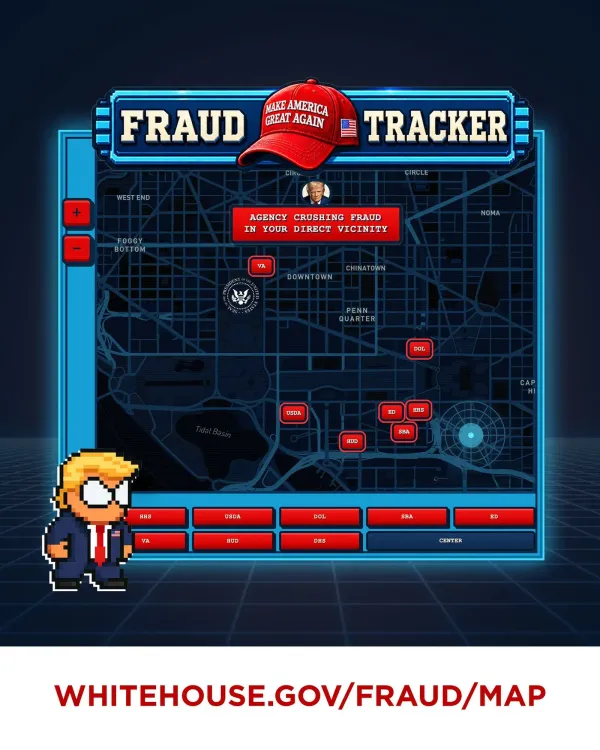
The tool is hosted at Whitehouse.gov/fraud/map and uses geographic visualisation to display federal fraud cases.
Federal fraud dashboards have precedent: similar tools tracked improper payments in COVID-19 relief programs during 2020–2022 .
The primary stakeholders are taxpayers and federal agencies , whose enforcement records become publicly auditable.
Methodology details, data sourcing, and update frequency will determine the tool's long-term credibility and utility.
The federal government just put fraud on the map — literally. The White House on Thursday, August 13, 2026 announced the launch of a new public-facing 'fraud tracker,' a geographic tool designed to visualise fraud cases that federal enforcement has 'webbed up,' as the official post put it, complete with a Spider-Man reference that underscored the administration's push to make anti-fraud work visible and accessible to ordinary Americans.
What the Fraud Tracker Is
The tool, hosted at Whitehouse.gov/fraud/map, is described as a 'friendly neighborhood fraud tracker' — a map-based dashboard intended to show Americans where and how federal fraud has been detected and recovered. The Spider-Man-themed framing ('webbed up,' the 🕷️ emoji) signals a deliberate effort to give a dry enforcement subject some popular appeal. The core function, however, is a transparency tool: putting fraud data on a publicly navigable map.
A Pattern of Federal Fraud Dashboards
This is not the first time Washington has tried to make government fraud visible. Federal agencies have previously published dashboards tracking improper payments and fraud recovery — most prominently around 2020–2022, when COVID-19 relief programs became a major vector for fraudulent claims in unemployment insurance and emergency business funds. Geographic mapping of enforcement actions has also appeared in prior federal reporting cycles. The new tool appears to extend that transparency tradition into a single, centralised public interface.
Why Taxpayers Are Watching
For taxpayers, a public fraud map carries real stakes: it makes enforcement data auditable by citizens, journalists, and oversight bodies alike. The broader pattern of such tools is that they create accountability pressure — agencies whose regions show high fraud incidence face harder questions from Congress and the public. Whether this map includes methodology details, data sourcing, and update frequency will determine how credible and durable it proves to be.
The next test is what gets added: additional data layers, agency-level breakdowns, and any accompanying congressional oversight activity will reveal whether this is a substantive transparency upgrade or a headline-ready launch. The map is live — the scrutiny starts now.
Point of View
Particularly when federal spending is under scrutiny. The Spider-Man branding is deliberate — it lowers the barrier to public engagement on a subject that typically lives in inspector-general reports few citizens read. The real policy test, however, is whether the map's data is granular, regularly updated, and methodologically transparent enough to survive independent verification. A flashy launch that outpaces the underlying data infrastructure tends to become a liability rather than an asset.
NationPress
28 Sept 2026
Frequently Asked Questions
What is the White House fraud tracker map?
It is a public geographic dashboard launched on August 13, 2026, at Whitehouse.gov/fraud/map, designed to show where and how federal fraud has been detected and recovered by enforcement agencies.
Why did the White House launch a fraud map?
The tool is a transparency initiative intended to make federal anti-fraud enforcement data visible and accessible to taxpayers and oversight bodies, continuing a pattern of similar dashboards used during COVID-era relief programs.
How does the US federal fraud tracker work?
Based on the announcement, it uses a geographic map interface to display fraud cases that federal agencies have identified and acted upon, though specific methodology and data sourcing details have not yet been confirmed.
Has the US government done this before?
Yes. Federal agencies published fraud and improper-payment dashboards during 2020–2022, particularly to track fraudulent claims in COVID-19 unemployment insurance and emergency business relief programs.
What should I watch for after the fraud map launch?
Look for the release of methodology details, additional data layers, and any related congressional oversight hearings that will test whether the map is a substantive accountability tool or a high-profile launch without deep data backing.