White House Claims Trump Is Cutting Prescription Drug Prices
Synopsis
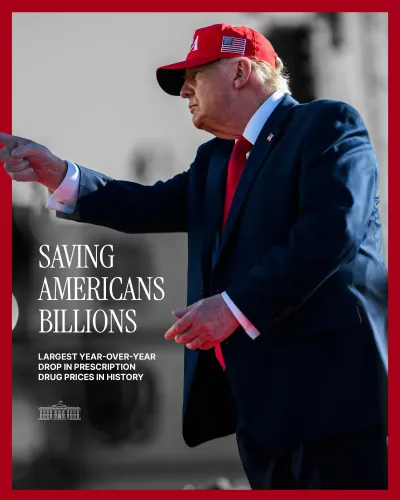
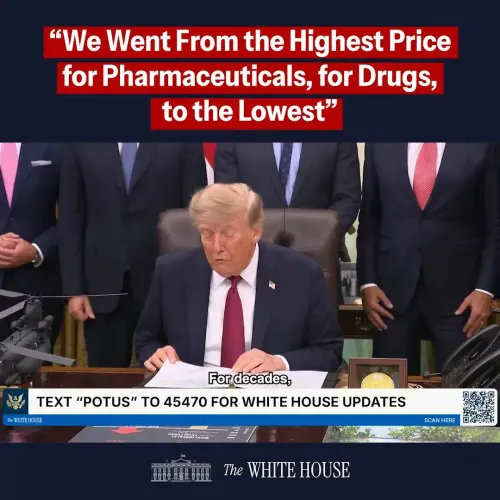
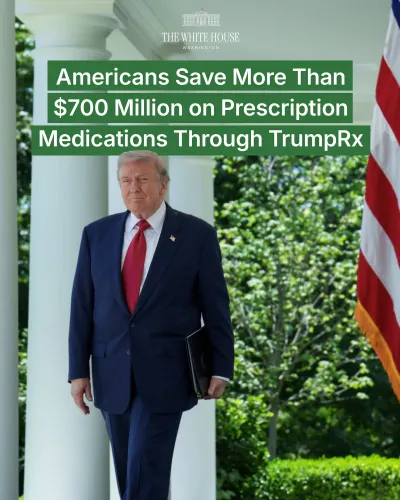
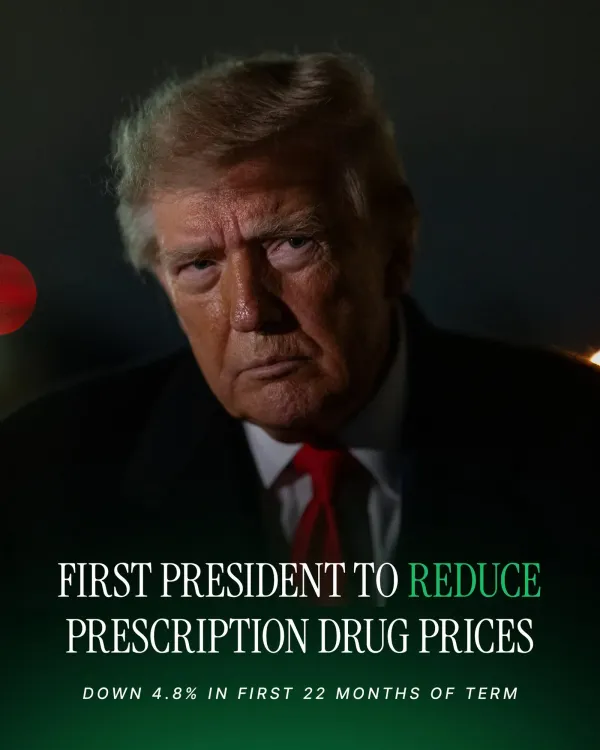
The White House declared on X that President Trump — the 47th — is 'actually reducing prescription drug prices,' drawing a pointed contrast with decades of unfulfilled promises from both parties. The post cites no specific mechanism, but signals the administration intends to own the drug pricing issue politically.
Key Takeaways
The White House posted on November 12, 2026 that President Trump (47th) is 'actually reducing prescription drug prices.' The post frames the claim as a contrast with all previous administrations, which are said to have promised but not delivered.
Trump's first term saw the Most Favored Nation rule (2020) targeting Medicare Part B prices, which was legally challenged and never implemented.
No specific new policy, executive order, or rule is cited in the post; the mechanism of any price reduction remains unspecified.
Roughly 65 million Medicare beneficiaries stand to be most directly affected by any federal drug pricing action.
Pharmaceutical manufacturers and CMS rulemaking timelines will determine whether any price changes reach patients.
A promise as old as American politics — lower drug prices — has become the latest battlefield for the Trump White House, which on Thursday, November 12, 2026, declared on X that President Donald Trump, governing in his second term as the 47th President of the United States, is 'actually reducing prescription drug prices' where others only made promises.
A campaign staple finally finds action — or does it?
The White House post is blunt: 'Many have promised, none have delivered, except 47.' The framing is deliberate — positioning Trump not against a single rival but against the entire history of presidential pledges on drug pricing, a list that stretches back decades across both parties. High prescription drug costs remain one of the most persistent pain points for American households, and every administration has arrived with a plan. Few have moved the needle on what patients actually pay at the pharmacy counter.
Trump's own first term offers the most direct comparison point. In 2020, his administration finalised a Most Favored Nation (MFN) rule that sought to cap Medicare Part B drug prices — primarily costly infusions administered by doctors — at the lowest rates paid by comparable wealthy nations. The rule was legally challenged and never took effect. His administration also pushed for drug importation from Canada and pricing transparency measures. The efforts were real; the durable results were limited.
What 'reducing prices' could mean in practice
The post does not specify the mechanism — whether through a new executive order, a Centers for Medicare and Medicaid Services (CMS) rule, or a legislative action. That distinction matters enormously. Executive actions on drug pricing have historically faced swift legal challenges from the pharmaceutical industry, which has the resources and motivation to litigate any rule that threatens manufacturer revenue. A CMS rulemaking carries more regulatory weight but takes months to finalise and years to show up in patient costs.
Medicare beneficiaries — the elderly and disabled Americans who rely on government-funded coverage — are the most directly affected by any federal drug pricing action. Roughly 65 million Americans are enrolled in Medicare, and prescription costs represent a major share of their healthcare spending. For the broader market, pharmaceutical manufacturers are watching any policy signal closely, as even the credible threat of price controls can influence how companies set list prices.
The political arithmetic behind the message
Republicans and Democrats have historically diverged on method, not ambition. Democrats have pushed for direct government price negotiation — the approach embedded in the Inflation Reduction Act. Republicans have leaned on market mechanisms: transparency requirements, international benchmarking, and importation. Trump has at times broken with orthodox Republican reluctance to let Medicare negotiate, making his second-term approach harder to predict from ideology alone.
The White House's choice to frame this as a 'delivered vs. promised' argument signals that the administration views drug pricing as a winning political issue — one they want to own heading into a mid-term cycle. Whether any measurable reduction in out-of-pocket costs for patients materialises and can be credibly attributed to White House action is the story that will follow.
Point of View
Designed to claim ownership of one of America's most durable domestic grievances heading into a mid-term environment. The absence of a named policy mechanism in the post is notable — it allows the administration to claim credit for momentum without being held to a specific, measurable target. Historically, executive drug pricing actions have collided with pharmaceutical industry litigation, which means the gap between announced intent and verifiable patient relief remains wide. If the administration cannot point to concrete, sustained reductions in out-of-pocket costs, the message risks becoming precisely the kind of unfulfilled promise it is trying to disown.
NationPress
12 Nov 2026
Frequently Asked Questions
What drug pricing action has Trump taken in his second term?
The White House has claimed that President Trump is 'actually reducing prescription drug prices,' but the specific policy mechanism — whether a new executive order, CMS rule, or legislative measure — has not been detailed in the official post.
What was Trump's Most Favored Nation drug pricing rule?
In 2020 , the Trump administration finalised a Most Favored Nation rule that sought to cap Medicare Part B drug prices at the lowest rates paid by comparable countries. The rule was legally challenged and was never implemented.
How do US prescription drug prices compare internationally?
The United States consistently pays among the highest prescription drug prices in the world. Americans often pay several times more than patients in countries like Canada, Germany, or the UK for the same medications, which has driven repeated reform efforts across administrations.
Who benefits most from federal drug pricing reforms?
Roughly 65 million Medicare beneficiaries — elderly and disabled Americans on government-funded health coverage — stand to benefit most directly from any federal drug pricing action, as prescription costs make up a major share of their healthcare spending.
What is the difference between Republican and Democratic approaches to drug pricing?
Republicans have typically favoured market-based tools such as pricing transparency, drug importation, and international benchmarking. Democrats have pursued direct government price negotiation with manufacturers, as embedded in the Inflation Reduction Act.