White House Touts Historic Steps to Lower US Drug Prices
Synopsis
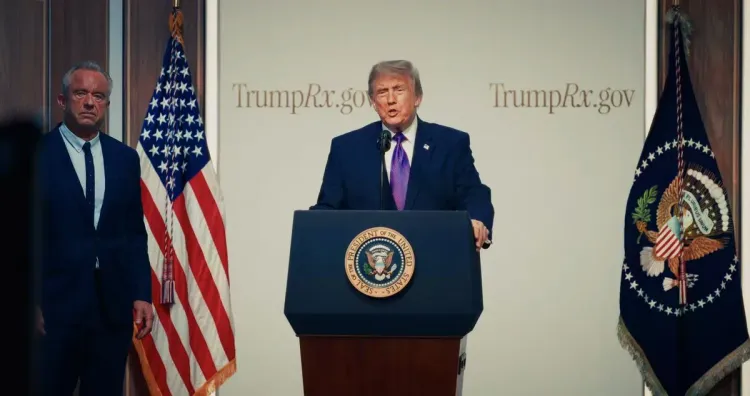
The White House on May 27, 2026 announced 'bold, historic steps' to lower prescription drug prices for American patients, invoking a 'Promises Made, Promises Kept' frame and directing the public to a tool to find reduced-price medications. The move builds on Medicare negotiation authority granted by the Inflation Reduction Act of 2022, with first negotiated prices due to take effect this year.
Key Takeaways
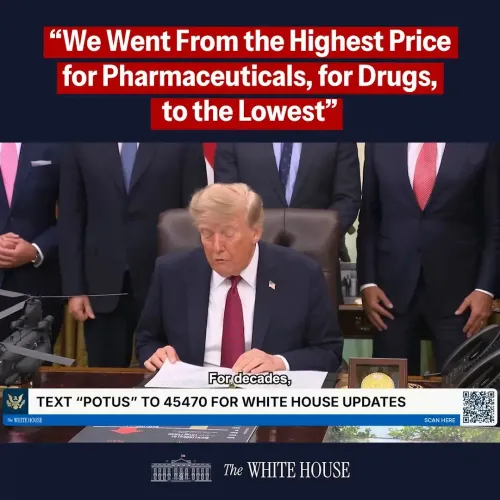
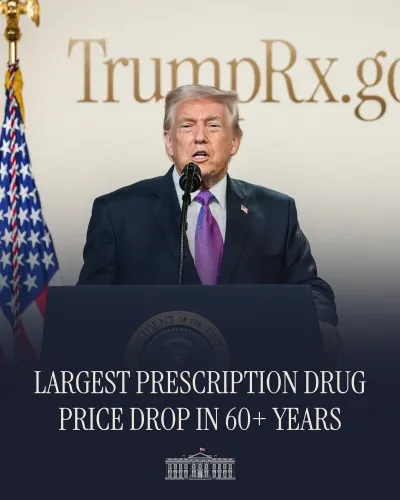
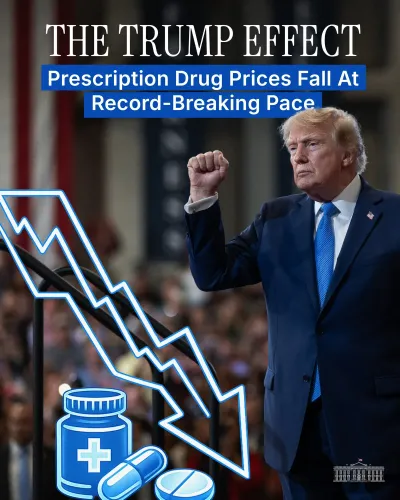
The White House on May 27, 2026 announced what it described as 'bold, historic steps' to lower prescription drug prices for American patients.
The post used the phrase 'Promises Made, Promises Kept,' framing the action as delivery on a core administration commitment.
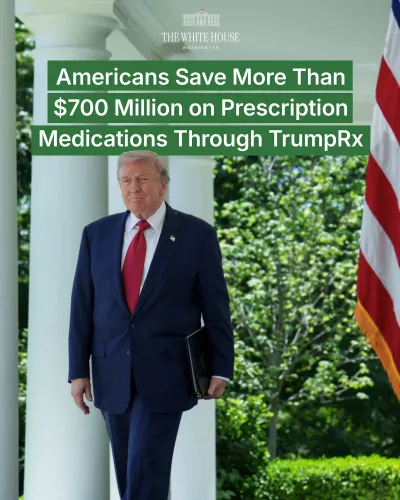
A patient-facing tool was linked, allowing Americans to search for their specific medications at lower prices.
The Inflation Reduction Act of 2022 gave Medicare the authority to negotiate drug prices for the first time; negotiated prices were scheduled to begin taking effect in 2026 .
Pharmaceutical manufacturers have previously challenged federal price-setting authority through litigation, and new measures could face similar legal scrutiny.
More than 60 million Americans enrolled in Medicare stand to be directly affected if lower negotiated prices reduce out-of-pocket costs.
The White House on Wednesday, May 27, 2026, highlighted what it called 'bold, historic steps' to lower prescription drug prices for American patients, framing the action as a fulfilment of earlier commitments under the banner 'Promises Made, Promises Kept.' The post directed Americans to a patient-facing tool to find medications at reduced prices.
Context
The White House post declared 'Bold Historic Steps to Lower Drug Prices for American Patients' and linked to a resource allowing patients to search for their specific medications. The phrase 'Promises Made, Promises Kept' signals the administration's intent to position these moves as the delivery of a core campaign commitment on healthcare affordability.
Prescription drug pricing has been one of the most persistent and bipartisan policy concerns in the United States for over a decade. Successive administrations have pursued a range of mechanisms — transparency rules, international reference pricing proposals, and direct negotiation authority — to bring down costs borne by patients and federal programmes alike.
Policy Backdrop
The most significant legislative milestone in this space was the Inflation Reduction Act of 2022, which for the first time granted Medicare — the federal health insurance programme covering Americans aged 65 and older — the authority to directly negotiate lower prices on certain high-cost prescription drugs. The first negotiated prices under that law were scheduled to take effect in 2026, making this year a critical implementation window.
Earlier executive actions during the first Trump administration had focused on 'Most-Favored-Nation' pricing models, which would have pegged what Medicare pays to the lower prices charged in peer countries, as well as caps on insulin costs. The current post places fresh administration steps within this longer sequence of federal action on drug pricing, though the specific new measures referenced in the linked resource could not be independently verified at the time of publication.
Stakeholders and Impact
Medicare beneficiaries — a population exceeding 60 million Americans — stand to be the most directly affected group if negotiated or capped prices translate into lower out-of-pocket costs at the pharmacy. For many seniors on fixed incomes, prescription drug expenditure represents a substantial share of monthly household spending.
Pharmaceutical manufacturers are the primary industry stakeholder, and the sector has historically challenged federal price-setting authority through litigation. Legal challenges to the Medicare negotiation framework established under the Inflation Reduction Act have been a feature of the policy's rollout, with courts weighing the constitutional and statutory questions involved. Any new pricing agreements or expanded negotiation lists announced in 2026 would likely face similar scrutiny.
What's Next
Observers will watch closely for the rollout of any new patient-facing tools, updated Medicare plan formularies, or expanded lists of drugs subject to federal price negotiation. Congressional oversight hearings and potential industry legal action remain live variables that could shape the pace and scope of implementation.
The administration's decision to pair the policy announcement with a direct consumer tool — 'Find your medication today' — suggests a deliberate effort to make the impact tangible for individual voters ahead of any broader legislative or electoral calendar. How quickly patients experience lower prices at the counter will ultimately determine whether the 'Promises Kept' framing holds political resonance.
Point of View
Promises Kept' framing is a deliberate political signal, tying a complex multi-year policy implementation to a simple accountability narrative ahead of any electoral cycle. By pairing the announcement with a direct consumer tool, the administration is attempting to translate abstract federal price negotiations into a tangible, voter-legible outcome. This follows a well-established pattern in US healthcare politics where both parties have claimed ownership of drug pricing reform while the structural leverage actually shifts incrementally through legislation and litigation. The durability of this messaging will depend heavily on whether patients experience measurable savings at the pharmacy counter in the near term.
NationPress
10 Oct 2026
Frequently Asked Questions
What has the White House done to lower drug prices in 2026?
The White House announced 'bold, historic steps' to lower prescription drug prices for American patients on May 27, 2026, and directed the public to a tool to find medications at reduced costs. The specific new measures build on Medicare's drug price negotiation authority established by the Inflation Reduction Act of 2022.
What is the Inflation Reduction Act and how does it affect drug prices?
The Inflation Reduction Act of 2022 was the first US law to grant Medicare the authority to directly negotiate lower prices on certain high-cost prescription drugs. The first prices negotiated under this authority were scheduled to take effect in 2026, making it a key year for implementation.
Who benefits from lower Medicare drug prices?
Medicare beneficiaries — primarily Americans aged 65 and older, a group exceeding 60 million people — are the primary beneficiaries. Lower negotiated prices can reduce out-of-pocket costs for seniors, many of whom spend a significant portion of their fixed incomes on prescription medications.
Can pharmaceutical companies challenge US drug price negotiations?
Yes. Pharmaceutical manufacturers have historically challenged federal price-setting authority through litigation. Legal challenges to the Medicare negotiation framework under the Inflation Reduction Act have already been filed, and any new pricing agreements announced in 2026 could face similar court scrutiny.
What does 'Most-Favored-Nation' drug pricing mean?
'Most-Favored-Nation' pricing is a policy model under which Medicare would pay no more for a drug than the lowest price charged in comparable wealthy countries. Earlier Trump administration executive orders explored this approach as a way to align US drug costs with lower international benchmarks.