White House: Trump's Drug Pricing Plan Puts Americans First
Synopsis
The White House is championing President Trump's Most Favored Nation drug pricing model, which ties Medicare reimbursement to the lowest prices paid by comparable nations, claiming no prior president has fought as hard for American patients on prescription drug costs.
Key Takeaways
The White House posted on August 31, 2026 , promoting Most Favored Nation (MFN) drug pricing as a landmark patient-first policy.
The MFN model ties Medicare Part B drug reimbursement rates to the lowest prices paid by comparable wealthy nations globally.
The Trump administration first issued an executive order directing CMS to test the MFN model in July 2020 .
U.S. prescription drug prices have historically ranked among the highest in the world, making this a long-contested policy frontier.
Pharmaceutical manufacturers have challenged the model legally, and industry opposition remains a key obstacle to full implementation.
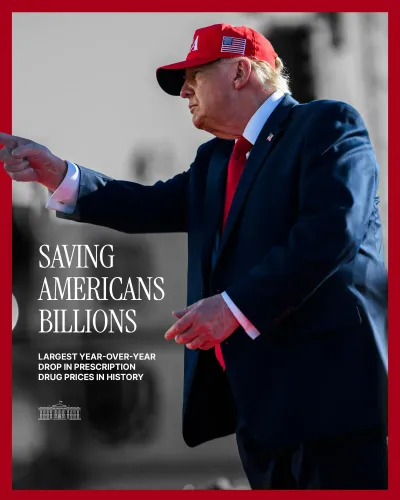
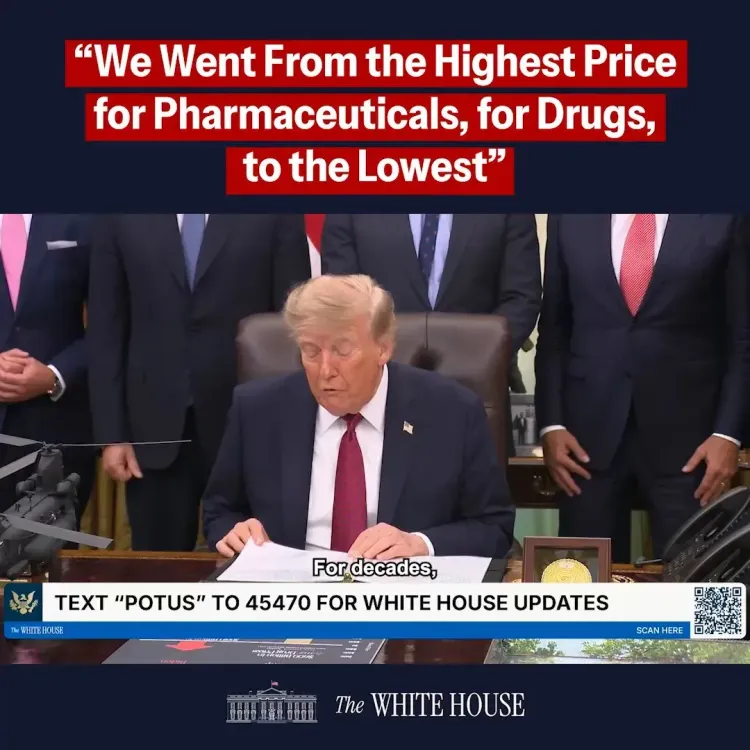
A promise to end what many Americans call a decades-long injustice is back at the centre of the White House's messaging — and this time, the administration is framing it in the starkest terms yet. The White House posted on Monday, August 31, 2026, invoking a direct quote to argue that President Donald Trump is the first commander-in-chief to genuinely fight for American patients on prescription drug costs.
What the Most Favored Nation model actually does
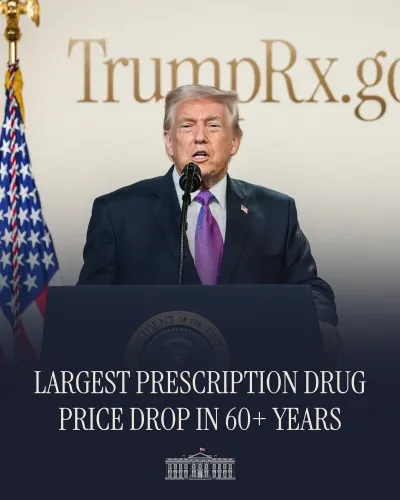
The Most Favored Nation (MFN) drug pricing model is built on a deceptively simple idea: the United States should not pay more for a prescription drug than the lowest price any comparable wealthy nation pays for the same drug. The White House's post puts it plainly — 'Americans pay the lowest price in the world for prescription drugs' under this framework.
The mechanism targets Medicare Part B, the federal programme that covers outpatient drugs — often high-cost injectables and infusions administered in clinics. By anchoring reimbursement rates to international benchmarks, the model attempts to import the negotiating leverage that governments in Europe, Japan, and Canada routinely exercise, without the U.S. government directly setting a price ceiling itself.
From the 2020 executive order to a renewed push
This is not a new idea — but it has had a turbulent journey. In July 2020, during Trump's first term, his administration directed the Centers for Medicare and Medicaid Services (CMS) to test the MFN model for Medicare Part B drugs. Pharmaceutical manufacturers challenged the rule in court, and subsequent policy shifts stalled its implementation.
The U.S. has long ranked among the highest-cost nations for prescription drugs — a gap that has persisted across multiple administrations regardless of which party held the White House. The MFN concept is one market-oriented answer to that gap: rather than government-mandated price controls, it uses foreign market prices as a reference point.
The political stakes behind the claim
The White House's framing — 'No other President has fought for American patients like President Trump' — is an explicitly political assertion, and it lands in a landscape where drug pricing has been a flashpoint for both parties. The administration is betting that the MFN model's intuitive appeal (why should Americans pay more than anyone else?) cuts through partisan lines and speaks directly to Medicare beneficiaries and their families.
The pharmaceutical industry has consistently pushed back, arguing that lower U.S. prices would reduce the revenue that funds research and development for future medicines. That tension — patient savings versus innovation incentives — remains the central fault line in every drug-pricing debate.
Whether the current MFN push translates into enforceable policy or faces the same legal and legislative headwinds as its predecessor is the question that will define its legacy.
Point of View
And anchoring Trump's identity to it ahead of any legislative push is strategically significant. The claim of being the 'first' to truly fight for patients is contested territory: multiple administrations have attempted drug-pricing reforms, from reference pricing experiments to direct negotiation authority. What distinguishes the MFN model is its market-based framing, which sidesteps the 'price control' label that typically triggers industry and conservative opposition. The durability of this push will depend entirely on whether it survives the pharmaceutical lobby's legal firepower — the same force that derailed the 2020 iteration.
NationPress
16 Oct 2026
Frequently Asked Questions
What is Most Favored Nation drug pricing?
Most Favored Nation (MFN) drug pricing ties what the U.S. Medicare programme pays for certain drugs to the lowest price paid by any comparable wealthy nation, so Americans are never charged more than the world's best rate.
Which drugs does the Most Favored Nation model cover?
The MFN model primarily targets Medicare Part B drugs — typically high-cost prescription medicines administered in outpatient clinical settings, such as injectables and infusions, rather than pharmacy-counter pills.
Did Trump try this drug pricing policy before?
Yes. In July 2020, during his first term, President Trump issued an executive order directing the Centers for Medicare and Medicaid Services to test the MFN model, but legal challenges from pharmaceutical companies and subsequent policy shifts prevented full implementation.
Why are U.S. prescription drug prices so high compared to other countries?
Unlike most developed nations, the U.S. has historically lacked a central government body that negotiates or sets drug prices, allowing manufacturers to charge market rates. Other countries use government bargaining power or reference pricing to keep costs lower.
What is the pharmaceutical industry's argument against MFN pricing?
Drug manufacturers argue that lower U.S. reimbursement rates would cut the revenue they rely on to fund research and development of new medicines, potentially slowing medical innovation over time.