CM Sukhu Raises Anganwadi Workers' Honorarium, Widens Jobs Quota
Synopsis
Himachal Pradesh CM Sukhvinder Singh Sukhu has hiked Anganwadi workers' honorarium by Rs 1,000 to Rs 11,500 and helpers' to Rs 6,800, while raising the annual income ceiling for widow and single-women recruitment from Rs 50,000 to Rs 75,000.
Key Takeaways
Anganwadi workers in Himachal Pradesh will now receive a monthly honorarium of Rs 11,500 , up from Rs 10,500 .
Helpers (sahayikas) will receive Rs 6,800 per month, up from Rs 5,800 — a hike of Rs 1,000 each.
The annual income ceiling for appointment of widows, destitute and single women has been raised from Rs 50,000 to Rs 75,000 , expanding the eligible pool by 50 per cent .
Anganwadi centres operate under the Integrated Child Development Services (ICDS) scheme, which has run nationally since 1975 ; state governments supplement the central honorarium from their own budgets.
CM Sukhu has governed Himachal Pradesh since December 2022 and has framed the revision as a matter of dignity — 'maan-samman' — for frontline women workers.
The next key milestone is implementation in the state budget cycle and issuance of recruitment notifications for eligible widows and single women.
They are the last mile of India's child nutrition network — and for decades, they have worked for wages that barely kept pace with inflation. Now, Himachal Pradesh Chief Minister Sukhvinder Singh Sukhu has announced a direct pay hike for Anganwadi workers and helpers across the state, alongside a widened income threshold that opens recruitment to more widows and single women.
Posting on X on Friday, October 16, 2026, CM Sukhu stated that the government has raised the monthly honorarium for Anganwadi workers from Rs 10,500 to Rs 11,500 — a hike of Rs 1,000 — and for helpers (sahayikas) from Rs 5,800 to Rs 6,800, again a gain of Rs 1,000. In the same announcement, the annual income ceiling for appointment of widows, destitute women, and single women was raised from Rs 50,000 to Rs 75,000, broadening the eligibility pool for this priority category.
'Pradesh ki pragati mein Anganwadi bahnon ka yogdan atulniya hai' — 'the contribution of Anganwadi sisters to the state's progress is incomparable,' Sukhu wrote, framing the hikes as a recognition of dignity, not just a budget line.
What the Anganwadi network actually does in Himachal
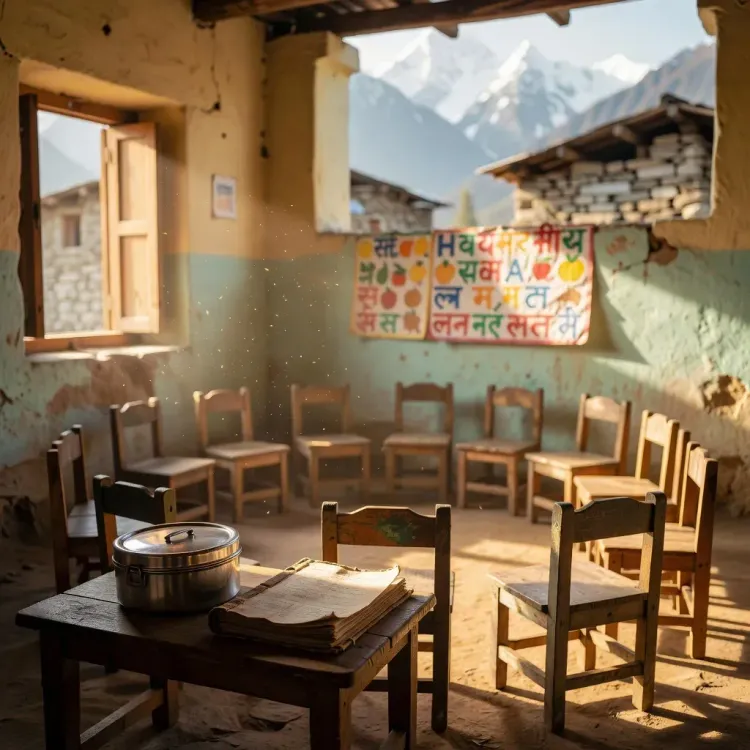
Anganwadi centres are the frontline delivery arm of the Integrated Child Development Services (ICDS), a central government scheme launched in 1975 that channels nutrition support, immunisation, preschool education, and health check-ups to children under six and to pregnant and lactating mothers. In a mountainous state like Himachal Pradesh — where villages are scattered across difficult terrain — Anganwadi workers are often the only welfare contact families have. The state government supplements the central honorarium from its own budget, and revisions like today's signal where a state chooses to place its fiscal priorities.
Why the income-limit change matters as much as the pay hike
The honorarium increase is the headline number, but the shift in the annual income ceiling for widows, destitute and single women could matter more over time. By raising the eligibility bar from Rs 50,000 to Rs 75,000, the state effectively brings a larger cohort of economically vulnerable women into contention for Anganwadi appointments — a category of formal, recurring government-linked work that also comes with social status in rural communities. It is a supply-side move: more women qualify, more vacancies can be filled by those who need the income most.
Several other states have moved in this direction in recent years, adjusting both pay and eligibility norms as demands from frontline ICDS workers have grown louder. Himachal's announcement fits a pattern — but the scale of the income-limit jump, 50 per cent in one revision, is a notably sharp step.
Sukhu government's welfare positioning
CM Sukhu, who took charge of Himachal Pradesh in December 2022, has anchored much of his government's public identity around targeted welfare measures for women and economically marginal groups. Anganwadi workers, who sit outside formal government-employee status and have long campaigned for better pay and regularisation, represent a constituency whose goodwill carries political weight — but the framing of the announcement around 'maan-samman' (honour and dignity) suggests the pitch is broader than electoral arithmetic alone. Whether the revised payments reach workers in the next budget cycle and whether recruitment notifications for widows and single women follow promptly will be the real test of intent.
For now, roughly Rs 1,000 more a month — in the hands of women who reach the most remote corners of a Himalayan state — is a concrete, if incremental, step forward.
Point of View
Organised constituency of frontline women workers while simultaneously extending the state's social safety net to a more economically precarious group. Anganwadi workers sit in an awkward legal limbo — they are not formal government employees, yet they deliver one of the state's most essential services — and periodic honorarium hikes are the government's primary tool to retain them without triggering regularisation demands. Raising the income ceiling for widows and single women by 50 per cent in one step is the more structurally significant move, quietly reshaping who can access stable, state-linked work in rural Himachal. Whether this translates into actual recruitment at scale, or remains a policy on paper, will define its legacy.
NationPress
16 Oct 2026
Frequently Asked Questions
What is the new monthly honorarium for Anganwadi workers in Himachal Pradesh?
The Himachal Pradesh government has revised the monthly honorarium for Anganwadi workers to Rs 11,500 , up from the earlier Rs 10,500 , an increase of Rs 1,000.
What is the new salary for Anganwadi helpers (sahayikas) in Himachal Pradesh?
Anganwadi helpers (sahayikas) in Himachal Pradesh will now receive Rs 6,800 per month, raised from the previous Rs 5,800 .
What is the new income limit for widow and single women Anganwadi recruitment in Himachal Pradesh?
The annual income ceiling for appointment of widows, destitute and single women to Anganwadi posts has been raised from Rs 50,000 to Rs 75,000 , making more women eligible for recruitment.
What is the Integrated Child Development Services (ICDS) scheme?
ICDS is a central government scheme launched in 1975 that delivers nutrition support, preschool education, immunisation, and health services to children under six and to pregnant and lactating mothers through a nationwide network of Anganwadi centres.
When did Sukhvinder Singh Sukhu become Chief Minister of Himachal Pradesh?
Sukhvinder Singh Sukhu took office as Chief Minister of Himachal Pradesh in December 2022 as an Indian National Congress leader.