Goyal fires at Rahul Gandhi, cites Supreme Court on democracy
Synopsis
Commerce Minister Piyush Goyal sharpened the BJP's attack on Rahul Gandhi and Congress on October 16, accusing them of placing political self-interest above national interest and citing a Supreme Court observation as backing for his charge.
Key Takeaways
Piyush Goyal posted on October 16, 2026 accusing Rahul Gandhi and Congress of spreading anarchy and obstructing India's developmental journey.
He warned that democracy is not a 'licence' to strike at constitutional institutions or spread misinformation.
Goyal invoked an observation by the Supreme Court of India made on October 15, 2026 as a signal supporting his position.
The specific Supreme Court observation cited by Goyal has not been independently verified at the time of this report.
Congress had not issued a formal response to the post at the time of publication.
The attack follows a long-standing BJP pattern of framing Congress actions as obstructionist rather than legitimate democratic engagement.
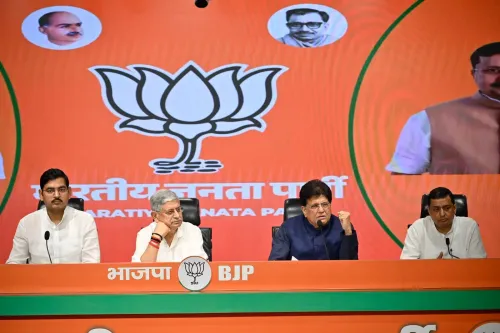
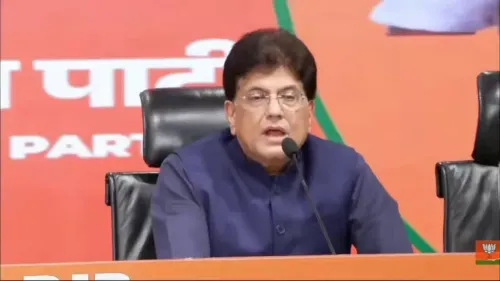
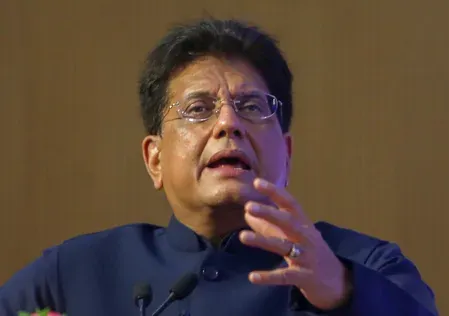
When political self-interest is placed above truth and national interest, Union Commerce and Industry Minister Piyush Goyal warned on Friday, October 16, democratic discourse stops being about facts and reason — and becomes a vehicle for prejudice and propaganda. Goyal's sharp broadside, aimed directly at Rahul Gandhi and the Congress leadership, also invoked what he described as a pointed observation by the Supreme Court of India the previous day.
What Goyal said — and what he meant
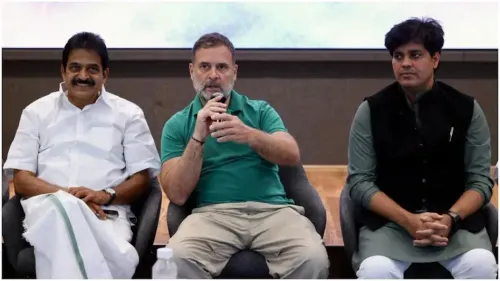
Posting in Hindi, the senior BJP leader and Leader of the House in the Rajya Sabha wrote: 'जब राजनीतिक स्वार्थ को सत्य और राष्ट्रहित से ऊपर रखा जाता है...' — 'When political self-interest is placed above truth and national interest, democratic discourse falls prey to prejudices and misinformation instead of facts and arguments.' He then addressed Gandhi directly: 'Rahul Gandhi and his associates must understand that democracy is not a licence to spread anarchy, strike at constitutional institutions, or obstruct India's developmental journey.'
Goyal closed with a pointed legal reference, stating that the Supreme Court's observations from the day before — October 15, 2026 — were themselves a signal in the same direction. The specific observation cited by Goyal could not be independently confirmed at the time of this report.
BJP's long-running charge against Congress 'obstructionism'
The attack fits a well-worn template in Indian political discourse, but the explicit invocation of the apex court gives it an unusual edge. For several years, BJP leaders have framed Congress-led protests, parliamentary disruptions, and institutional criticism as obstructionism that crosses democratic bounds. Goyal — one of the government's most combative voices in the upper house — has been a consistent enforcer of this line, particularly in Parliament during budget and legislative sessions.
Rahul Gandhi, as Congress's most visible face, has been the recurring target of such statements, especially when BJP seeks to consolidate its base around themes of national unity and institutional respect. The reference to 'constitutional institutions' is a signal aimed at Congress's record of questioning the judiciary, the Election Commission, and other statutory bodies — charges Congress firmly denies.
Why the Supreme Court reference matters
Invoking the Supreme Court of India in a partisan political broadside is a calculated move. It lets a ruling-party leader argue that the critique of the opposition is not merely political but has received, in some sense, judicial endorsement. It is a rhetorical device that is difficult for the opposition to rebut without appearing to argue against the court itself. Congress has not issued a formal response to Goyal's post at the time of publication.
The episode lands at a moment when the relationship between political parties and India's constitutional institutions is under close scrutiny — and when any Supreme Court observation touching on political conduct instantly becomes ammunition in a charged electoral environment.
Democracy, Goyal is telling Gandhi, comes with obligations — and the country's highest court, he insists, just said so too.
Point of View
And use the judiciary's public observations as a force-multiplier for that narrative. By stitching a Supreme Court remark onto a political broadside, he forces Congress into an awkward position — any rebuttal risks being read as arguing against the court. The move also signals that BJP is keen to fight the next political cycle on the terrain of 'institutional stability versus opposition chaos,' a framing it has deployed with considerable success in previous electoral campaigns.
NationPress
16 Oct 2026
Frequently Asked Questions
What did Piyush Goyal say about Rahul Gandhi and democracy?
Goyal said that when political self-interest is placed above truth and national interest, democratic discourse becomes prey to prejudice and propaganda. He specifically told Rahul Gandhi that democracy is not a licence to spread anarchy, attack constitutional institutions, or obstruct India's development.
Which Supreme Court observation did Piyush Goyal refer to?
Goyal cited an observation made by the Supreme Court of India on October 15, 2026, calling it a signal in the same direction as his criticism of the opposition. The specific content of that observation could not be independently verified at the time of this report.
What is Piyush Goyal's role in the government and Parliament?
Piyush Goyal is the Union Minister of Commerce and Industry, a senior BJP leader, and the Leader of the House in the Rajya Sabha — making him one of the government's most prominent voices in Parliament's upper house.
Has Rahul Gandhi or Congress responded to Goyal's statement?
Congress had not issued a formal response to Goyal's post at the time of publication.
Why does BJP frequently accuse Congress of undermining constitutional institutions?
BJP has consistently framed Congress protests, parliamentary disruptions, and criticism of statutory bodies like the Election Commission as obstructionism that undermines India's democratic framework — a narrative it deploys both in Parliament and in electoral campaigns.