CM Bhagwant Mann Hits Back at Amit Shah Over Punjab Drug Blame
Synopsis
Punjab CM Bhagwant Mann publicly challenged Union Home Minister Amit Shah on October 16, invoking a reported 3,000 kg heroin seizure at Gujarat's Kandla Port and BSF's 50-km border jurisdiction to push back against drug-trafficking blame directed at his government.
Key Takeaways
Bhagwant Mann fired a sharp public rebuttal at Amit Shah on October 16, 2026 over drug-trafficking blame.
Mann cited a reported 3,000 kg heroin seizure at Kandla Port, Gujarat — a centrally administered facility — as evidence of shared federal responsibility.
He highlighted that the BSF holds a 50-kilometre jurisdiction along India's borders under the Union Home Ministry .
Mann accused Shah of copy-pasting tweets written by aides rather than engaging with ground reality.
The clash reflects a wider AAP-BJP friction over who bears accountability for narcotics inflows into Punjab since 2022.
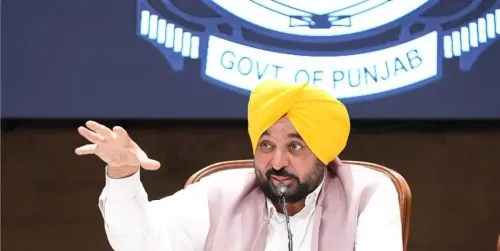
Before blaming Punjab, look at your own backyard. That, in essence, is the sharp retort Punjab Chief Minister Bhagwant Mann fired at Union Home Minister Amit Shah on Friday, October 16, turning a narcotics blame game into a pointed debate about where federal responsibility ends and state accountability begins.
Writing in Punjabi on X, Mann challenged Shah directly: 'Amit Shah ji, mere baare bolṇ toṇ pehlaṇ apṇe salaahkaraṇ naal salaah mashvaraah kar leṇaah sī' — 'Amit Shah ji, before speaking about me, you should have consulted your advisors.' The message was pointed, and the evidence Mann marshalled was specific: 3,000 kg of heroin allegedly seized at Kandla Port in Gujarat, a major seaport under central government administration, and a reminder that the Border Security Force (BSF) — a Union Home Ministry force — holds a 50-kilometre jurisdiction along India's borders. 'Before blaming Bhagwant Mann, take responsibility for your own domain,' Mann wrote. He also advised Shah against copy-pasting tweets written by aides.
The Jurisdiction Fault Line: BSF's Border Belt and Kandla's Shadow
At the heart of Mann's counter-attack is a constitutional and administrative reality. The BSF, which operates under the Union Home Ministry, exercises wide enforcement powers in a designated belt along India's international borders — the very corridor through which cross-border drug flows into Punjab are routinely documented. Punjab governments going back to the 2010s have consistently highlighted that a significant share of narcotics entering the state arrives via this border zone, where state police jurisdiction is constrained.
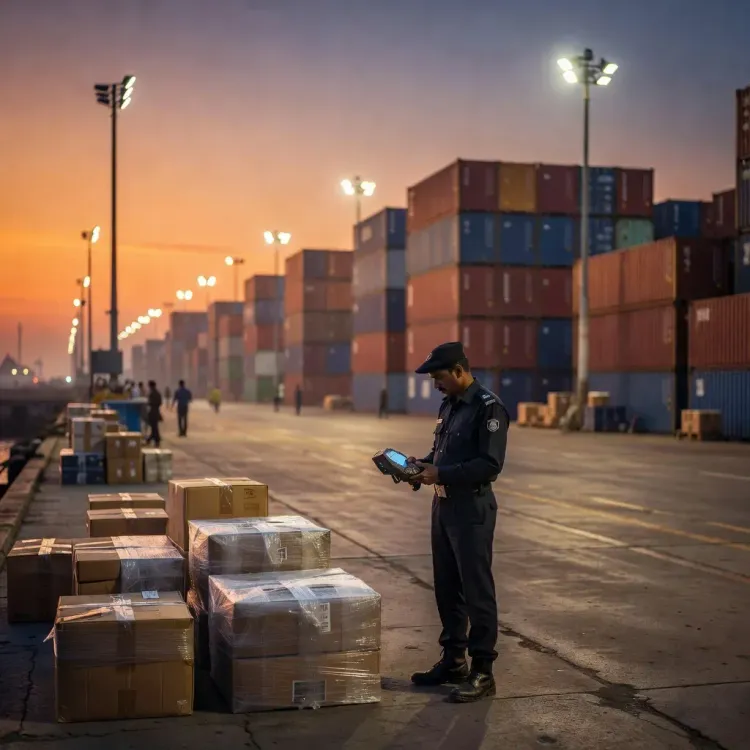
The reference to Kandla Port sharpens the argument further. Kandla, located in Gujarat, is one of India's highest-volume cargo ports and falls under central customs and maritime security oversight. Drug seizures at major Indian ports are handled by central agencies — Customs, the Narcotics Control Bureau, and coast guard units — not state police. By invoking a large seizure at a Gujarat port, Mann is making a structural point: narcotics trafficking is not merely a Punjab law-and-order failure but a networked supply-chain problem with nodes that run through centrally administered infrastructure.
A Pattern Bigger Than One Post
This public spat fits squarely into an established pattern of AAP-versus-BJP friction on drug policy. Since Bhagwant Mann came to power in Punjab in 2022 on a manifesto that explicitly promised to eliminate the drug menace, the state government has faced persistent criticism from the BJP at both state and national levels. The AAP response has been consistent: point to central control over borders, ports, and the BSF, and argue that drug interdiction is a shared federal responsibility.
Similar flashpoints have erupted around BSF deployment, border fencing timelines, and port-level seizures in other states, reflecting a broader, unresolved tension in India's federal security architecture. The question of who is accountable when drugs cross an international border, transit through a central port, and finally surface on a Punjab street does not have a clean answer — and both sides know it.
What the Exchange Actually Demands
Mann's post is combative in tone but substantive in content. Whether or not the 3,000 kg Kandla seizure he references is formally verified, the jurisdictional logic he raises — that the BSF's 50-km border belt and centrally administered seaports sit outside state government control — is a legitimate policy question that deserves an official answer, not a social-media riposte. The ball is now squarely in the Union Home Ministry's court.
Point of View
He shifts the frame from state policing failure to federal supply-chain accountability. This mirrors a playbook AAP has used since 2022: accept no unilateral blame on drugs without forcing the centre to account for border and maritime nodes it controls. The real stakes, however, go beyond optics: if the Kandla seizure reference gains traction, it could prompt parliamentary scrutiny of port-level narcotics interdiction, an area where coordination between central agencies has historically been patchy. For Shah, the cost of an unanswered rebuttal is a durable talking point for AAP heading into future electoral cycles in Punjab.
NationPress
16 Oct 2026
Frequently Asked Questions
Why is Bhagwant Mann criticising Amit Shah over Punjab drugs?
Mann responded to drug-trafficking blame from Shah by pointing out that the BSF — under Shah's Home Ministry — controls a 50-km border belt and that a large heroin haul was allegedly seized at Kandla Port in Gujarat, arguing responsibility is shared between the centre and state.
What is the BSF's jurisdiction in Punjab border areas?
The Border Security Force, which operates under the Union Home Ministry, holds enforcement jurisdiction in a designated belt extending up to 50 kilometres from India's international borders, covering a significant portion of Punjab's border zone.
What happened at Kandla Port regarding drugs?
Bhagwant Mann referenced a seizure of 3,000 kg of heroin at Kandla Port in Gujarat, a major seaport under central government administration, to argue that narcotics trafficking is not a Punjab-only failure.
Who controls Kandla Port and its security?
Kandla Port in Gujarat is administered under central government oversight, with drug interdiction handled by central agencies including Customs and the Narcotics Control Bureau, not state police.
What has AAP promised on Punjab's drug problem?
Bhagwant Mann's AAP won the 2022 Punjab assembly elections partly on a manifesto commitment to eliminate the drug menace, making narcotics policy a defining issue for his government.