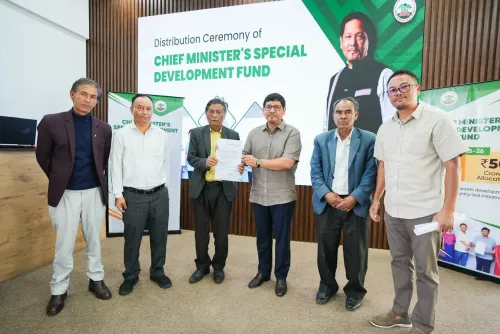
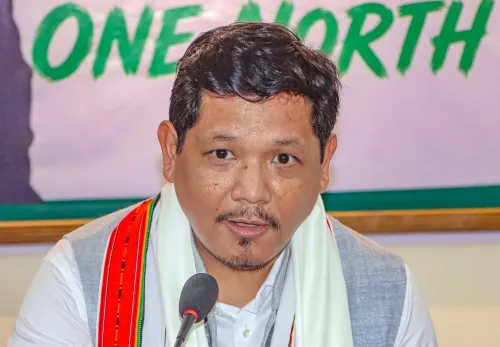
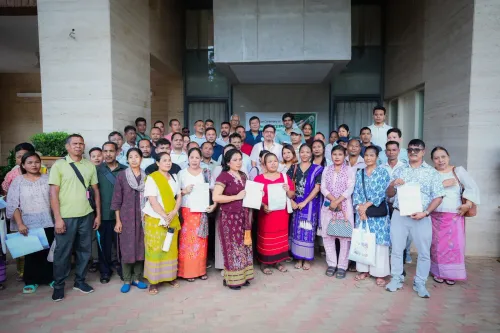
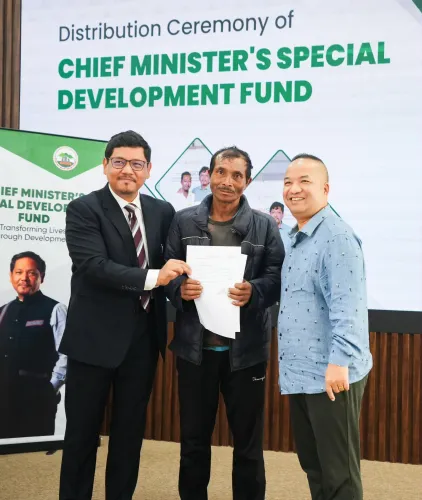
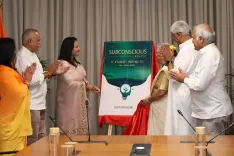
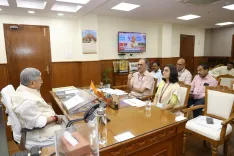
CM Conrad Sangma hands over CMSDF sanctions in Shillong
Synopsis
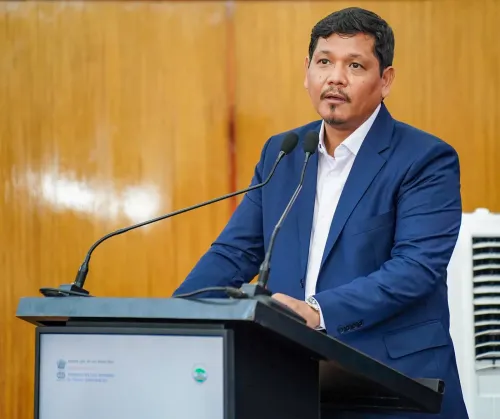
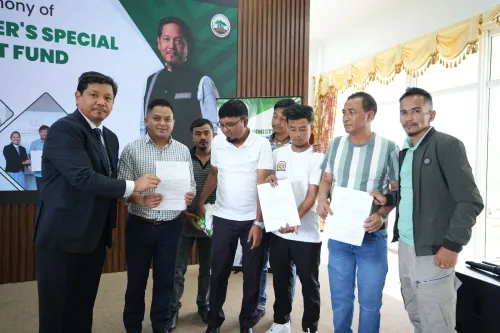
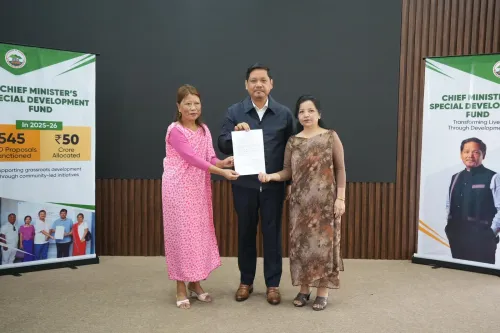
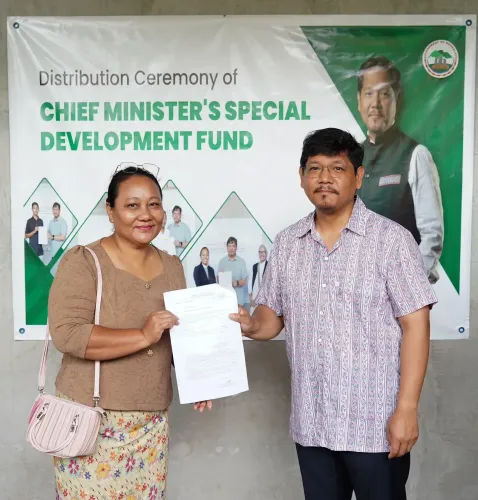
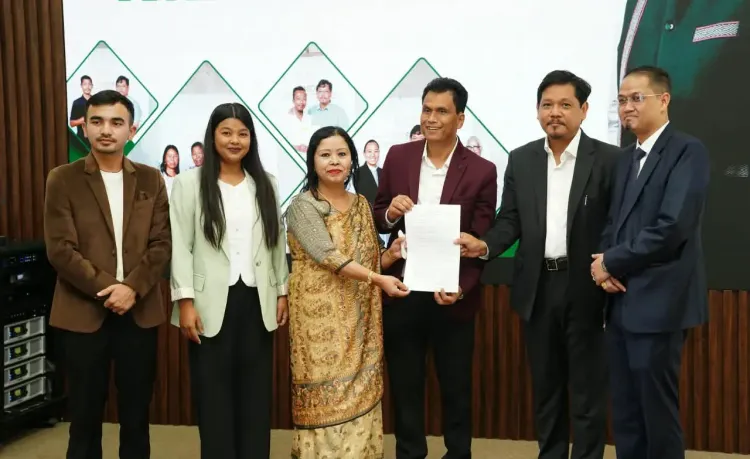
Meghalaya Chief Minister Conrad Sangma personally handed over sanctions under the Chief Minister's Special Development Fund (CMSDF) to organisations, institutions, and NGOs in Shillong on 16 October 2026, continuing a pattern of direct community-level disbursements under his administration.
Key Takeaways
Conrad Sangma distributed CMSDF sanctions in Shillong on 16 October 2026 .
Recipients included organisations, institutions, and NGOs across Meghalaya.
The CMSDF is a discretionary fund that operates outside regular departmental budget cycles, enabling faster community-level support.
Sangma has served as Meghalaya Chief Minister since 2018 and is national president of the National People's Party .
Specific recipient names and sanctioned amounts were not disclosed in the Chief Minister's announcement.
Grassroots organisations, institutions, and NGOs across Meghalaya received a direct pipeline to state resources on Friday, 16 October 2026, as Meghalaya Chief Minister Conrad Sangma personally handed over sanctions under the Chief Minister's Special Development Fund (CMSDF) at a ceremony in Shillong.
What the CMSDF does — and why it matters at the ground level
The Chief Minister's Special Development Fund is a discretionary mechanism that allows the Meghalaya government to channel resources directly to community-level entities — NGOs, local institutions, and civic organisations — outside the slower pipeline of regular departmental budgets. The fund gives the Chief Minister flexibility to respond to specific, localised needs that might otherwise wait years in a bureaucratic queue.
Across Indian states, such discretionary funds have become a standard tool of responsive governance, letting elected heads of government bridge gaps that line departments cannot address quickly. In a hilly, geographically fragmented state like Meghalaya, where road connectivity and administrative reach remain uneven, that flexibility carries particular weight.
Sangma's record with the fund
Conrad Sangma has helmed Meghalaya since 2018 and simultaneously serves as national president of the National People's Party (NPP), the regional party that leads the state government. Periodic CMSDF disbursement events — where sanctions are formally handed to recipients in person — have been a recurring feature of his administration, blending accountability with visibility for community stakeholders.
Today's Shillong handover continues that pattern, signalling active deployment of the fund in the current fiscal period. The identities of the specific recipient organisations and the precise amounts sanctioned were not disclosed in the Chief Minister's post.
For the NGOs and institutions that received sanctions today, the funds represent a direct, time-sensitive intervention — the kind that builds a school extension, equips a community health centre, or keeps a local self-help network running. The next question is whether utilisation reports follow, turning a handover ceremony into a verifiable development story.
Point of View
Who leads both the state government and a regional party seeking national relevance, these handover events double as constituency-management moments. The broader pattern across Indian states shows discretionary funds thriving when utilisation is transparent, but drawing scrutiny when accountability mechanisms are weak — making any follow-up audit or utilisation report the real test of today's handover.
NationPress
16 Oct 2026
Frequently Asked Questions
What is the Chief Minister's Special Development Fund (CMSDF) in Meghalaya?
The CMSDF is a discretionary fund operated by the Meghalaya Chief Minister to provide direct financial support to local organisations, NGOs, and institutions for community development projects outside the regular departmental budget process.
Who is Conrad Sangma and which party does he lead?
Conrad Sangma is the Chief Minister of Meghalaya, in office since 2018, and the national president of the National People's Party (NPP), a regional party that heads the Meghalaya state government.
Which organisations received CMSDF sanctions on 16 October 2026?
The Chief Minister's announcement confirmed that organisations, institutions, and NGOs received sanctions, but the specific names of recipients and the amounts sanctioned were not publicly disclosed.
Why do Indian states use discretionary development funds like the CMSDF?
Discretionary funds allow chief ministers to respond quickly to localised needs — community infrastructure, civil society support, grassroots projects — that would otherwise move slowly through standard departmental budget and approval cycles.
Where did the CMSDF sanction handover event take place?
The handover ceremony was held in Shillong, the capital city of Meghalaya, on 16 October 2026.