CM Sukhu Announces Full Fee Waiver, Cash Aid for Widows' Children in HP
Synopsis
Himachal Pradesh CM Sukhvinder Singh Sukhu has announced full fee coverage for children of widows earning under Rs 2 lakh annually, plus Rs 1,000 for sons and Rs 1,500 for daughters monthly. The scheme will be formalised within two months, funded from state savings.
Key Takeaways
Full fee waiver for school and college-going children of widows whose annual income is below Rs 2,00,000 .
Monthly stipend of Rs 1,000 for sons and Rs 1,500 for daughters — a built-in premium for girls' education.
CM Sukhu pledged the scheme will be formally launched within two months .
Benefits are framed as a reallocation of fiscal savings toward widows, orphans, and rural farmers.
The announcement extends the Congress-led Himachal government's focus on gender-sensitive and rural welfare since taking office in December 2022 .
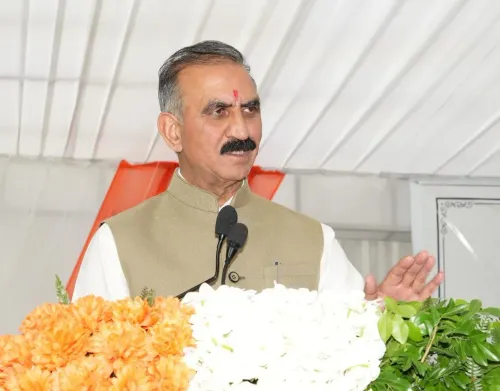
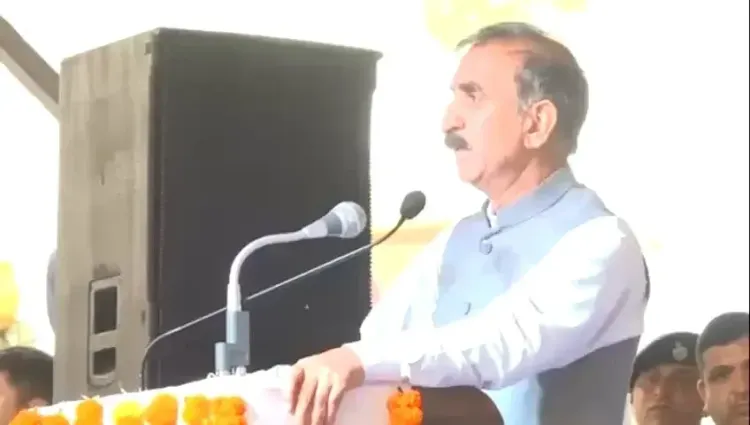
Widows earning under Rs 2 lakh a year in Himachal Pradesh are about to get a financial floor they never had — their children's school and college fees paid in full by the state, plus a monthly stipend that tips higher if the child is a daughter. Chief Minister Sukhvinder Singh Sukhu announced the landmark welfare package on Friday, September 25, 2026, pledging to give it full legal shape within the next two months.
What the scheme promises — and who it reaches
The numbers are specific and the tiers deliberate. For every son enrolled in school or college, the family will receive Rs 1,000 per month; for every daughter, Rs 1,500 per month — a conscious premium on girls' education built into the design from day one. The income ceiling of Rs 2,00,000 annually targets households in genuine distress, not the lower-middle class. Sukhu made the case plainly: 'जो पैसा बचाया है, उस पर अधिकार हमारी विधवा बहनों का है' — 'the money we have saved belongs, by right, to our widowed sisters, our orphaned children, and the farmers sitting in our villages.'
That framing — savings redirected to the most vulnerable — is a direct political argument about fiscal priorities. The Chief Minister is positioning the welfare expansion not as new expenditure but as a reallocation of efficiency gains, a distinction that matters when a mountain state with limited revenues faces scrutiny over its finances.
HP's welfare history and what comes next
Himachal Pradesh has run widow pension and social security programmes for several years, but fee waivers tied to a household income threshold represent a sharper, education-first intervention. The Congress-led government that Sukhu has headed since December 2022 has consistently framed its social spending around rural and gender-focused priorities — this announcement fits that arc squarely.
The two-month implementation window Sukhu named is the detail to watch. Eligibility verification, the mechanism for fee reimbursement to institutions, and the source and size of the savings pool all remain to be specified in the formal scheme guidelines. Orphans and village farmers were mentioned alongside widows in the same breath — suggesting a broader welfare revision may be in the works, not just a standalone widow-support measure.
For now, the political signal is unambiguous: in a state where every rupee of patronage is scrutinised ahead of electoral cycles, Sukhu is betting that putting money behind widows' children — especially daughters — is both the right policy and the right politics.
The scheme's real test will arrive not in the announcement, but in the gazette notification — and the first fee reimbursement cheque that actually reaches a widow's doorstep.
Point of View
Not just balance-sheet improvement. By naming widows, orphans, and farmers in one breath, Sukhu is broadening the scheme's political coalition beyond a narrow demographic. The higher stipend for daughters is a policy signal aligned with national-level gender-in-education priorities, giving the state scheme a resonance beyond Himachal Pradesh. The real credibility test lies ahead — whether the two-month rollout deadline holds, and whether income verification is designed to include rather than exclude genuinely vulnerable households.
NationPress
26 Sept 2026
Frequently Asked Questions
What is the Himachal Pradesh widow children fee waiver scheme announced by CM Sukhu?
CM Sukhvinder Singh Sukhu has announced that the Himachal Pradesh government will pay the full school and college fees for children of widows whose annual household income is below Rs 2,00,000. Sons will additionally receive Rs 1,000 per month and daughters Rs 1,500 per month as a stipend.
Who is eligible for the HP widow education scheme?
Widows residing in Himachal Pradesh with an annual income of less than Rs 2,00,000 are eligible. Their children currently enrolled in school or college will qualify for the full fee waiver and monthly cash support.
When will the Himachal Pradesh widow welfare scheme be implemented?
CM Sukhu stated the scheme will be fully formulated and launched within the next two months from the date of announcement, September 25, 2026.
Why does the stipend differ for sons and daughters under the HP scheme?
The scheme offers Rs 1,500 per month for daughters and Rs 1,000 for sons, building a deliberate premium for girl-child education into the design — consistent with state and national priorities around closing gender gaps in schooling.
Where is the funding for the HP widow scheme coming from?
CM Sukhu stated the scheme will be financed from savings the state government has accumulated, asserting that these savings rightfully belong to widowed women, orphaned children, and rural farmers.