CM Sukhu Launches Rs 1,500/Month Scheme for Women in HP
Synopsis
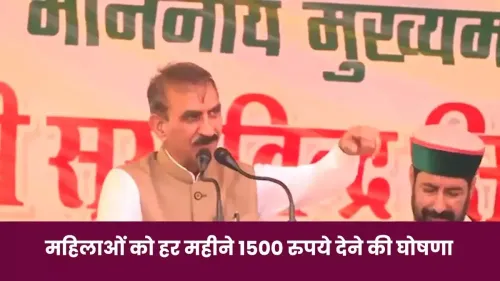
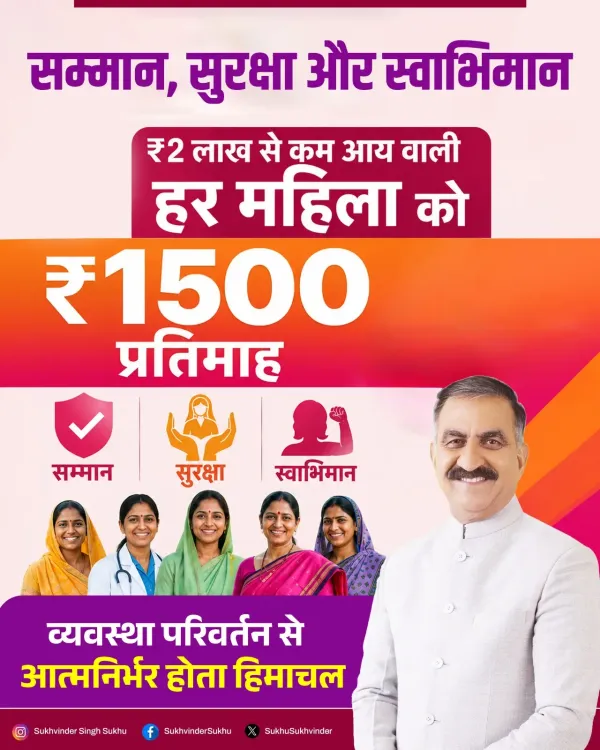
Himachal Pradesh Chief Minister Sukhvinder Singh Sukhu announced the Indira Gandhi Pyari Bahna Sukh-Samman Nidhi Yojana on 24 May 2026, promising Rs 1,500 per month to women with annual family income below Rs 2 lakh. The scheme aims to boost economic independence and dignity of low-income women in the state.
Key Takeaways
Sukhvinder Singh Sukhu announced the Indira Gandhi Pyari Bahna Sukh-Samman Nidhi Yojana on 24 May 2026 .
Eligible women will receive Rs 1,500 per month , amounting to Rs 18,000 annually .
The scheme targets women from households with an annual income below Rs 2 lakh .
The scheme is named after former Prime Minister Indira Gandhi , reflecting the Indian National Congress government's ideological branding.
It follows a national trend of state-level women's cash transfer schemes, including Madhya Pradesh's Ladli Behna Yojana launched in 2023 .
Formal rollout details including registration and disbursement timelines are yet to be notified.
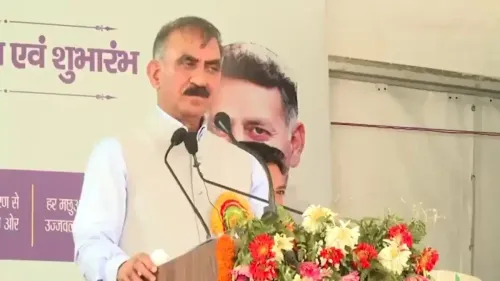
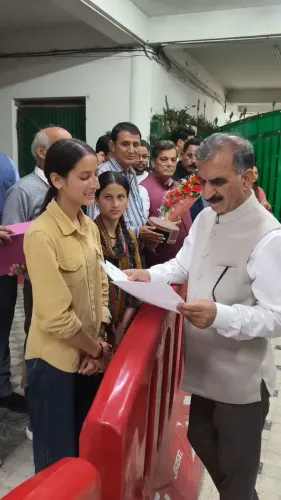
Himachal Pradesh Chief Minister Sukhvinder Singh Sukhu announced on Sunday, 24 May 2026 that his government will provide a monthly financial assistance of Rs 1,500 to women with an annual family income below Rs 2 lakh under the Indira Gandhi Pyari Bahna Sukh-Samman Nidhi Yojana. The scheme, named after former Prime Minister Indira Gandhi, is aimed at strengthening the economic independence and dignity of low-income women across the state.
Context
Posting in Hindi on 24 May 2026, Chief Minister Sukhu wrote: 'हमारी सरकार इंदिरा गांधी प्यारी बहना सुख-सम्मान निधि योजना के माध्यम से 2 लाख रुपये से कम वार्षिक आय वाली महिलाओं को प्रतिमाह 1500 रुपये की आर्थिक सहायता प्रदान करेगी।' ('Our government will provide monthly financial assistance of Rs 1,500 to women with annual income below Rs 2 lakh through the Indira Gandhi Pyari Bahna Sukh-Samman Nidhi Yojana.')
He added that the scheme is a symbol of the government's resolve to strengthen women's honour, self-confidence, and self-reliance, and that the effort is to ensure every woman can meet her family's needs and live with dignity.
Policy Backdrop
The announcement fits into a broader national trend of state-level direct benefit transfer schemes targeting low-income women, which gathered pace after 2023. Madhya Pradesh launched its Ladli Behna Yojana in 2023, offering monthly cash transfers to women, and became a widely cited model for similar programmes across party lines.
In Himachal Pradesh, the Indian National Congress government led by Chief Minister Sukhu — who took office in December 2022 — has consistently positioned welfare delivery as a central plank of its governance agenda. Naming the scheme after Indira Gandhi reinforces the party's ideological branding while targeting a constituency of economically vulnerable women.
Stakeholders and Impact
The primary beneficiaries are women from households with an annual income of less than Rs 2 lakh — a threshold that encompasses a significant share of Himachal Pradesh's rural and semi-urban population. A monthly transfer of Rs 1,500 translates to Rs 18,000 annually per beneficiary, providing a direct supplement to household income.
Welfare economists and gender-policy advocates have broadly supported such direct transfer models for their potential to increase women's financial agency within households. However, the actual reach and impact of the scheme will depend on the beneficiary identification process, budget allocation, and timely disbursement mechanisms — details that are yet to be formally notified.
What's Next
The government is expected to release formal notifications covering eligibility criteria, the registration process, and the disbursement calendar in the coming months. Budget provisions and the administrative machinery for delivery will be closely watched by civil society groups and opposition parties alike. The rollout of the scheme will serve as a key test of the Sukhu government's capacity to translate welfare announcements into on-ground delivery ahead of future electoral cycles in Himachal Pradesh.
Point of View
The Congress government in Shimla is simultaneously delivering a welfare signal to low-income women and reinforcing party identity. The Rs 2 lakh income ceiling is broad enough to capture a large beneficiary base, giving the announcement significant political weight. Whether the scheme translates into durable economic empowerment or remains a periodic cash supplement will hinge on implementation rigour — a challenge that has tripped up similar programmes elsewhere in India.
NationPress
24 Sept 2026
Frequently Asked Questions
What is the Indira Gandhi Pyari Bahna Sukh-Samman Nidhi Yojana?
It is a Himachal Pradesh state government scheme announced by Chief Minister Sukhvinder Singh Sukhu that will provide Rs 1,500 per month to women from households with an annual income below Rs 2 lakh, aimed at improving their financial independence and dignity.
Who is eligible for the Indira Gandhi Pyari Bahna Sukh-Samman Nidhi Yojana?
Women with an annual family income of less than Rs 2 lakh are eligible for the scheme, as announced by the Himachal Pradesh government.
How much money will women receive under the HP women welfare scheme?
Eligible women will receive Rs 1,500 per month, which amounts to Rs 18,000 per year, directly as financial assistance from the Himachal Pradesh government.
When was the Indira Gandhi Pyari Bahna Sukh-Samman Nidhi Yojana announced?
Chief Minister Sukhvinder Singh Sukhu announced the scheme on 24 May 2026 via a post on X. Formal rollout and registration details are yet to be notified.
How does this HP scheme compare to Ladli Behna Yojana?
Both are state-level monthly cash transfer schemes for low-income women. Madhya Pradesh launched Ladli Behna Yojana in 2023, and Himachal Pradesh's Indira Gandhi Pyari Bahna Sukh-Samman Nidhi Yojana follows a similar direct benefit transfer model.