CM Sukhu Widens Sukhi Parivar Yojana, ₹1,500/Month for Daughters
Synopsis
Himachal Pradesh CM Sukhvinder Singh Sukhu has expanded the Mukhyamantri Apna Sukhi Parivar Yojana — raising the income ceiling to ₹75,000, removing an MGNREGA work condition, and promising ₹1,500 per month for every daughter over 21 in eligible families.
Key Takeaways
The Mukhyamantri Apna Sukhi Parivar Yojana survey is currently underway across all of Himachal Pradesh.
Annual income eligibility limit raised from ₹50,000 to ₹75,000 , widening the beneficiary pool.
The mandatory one-day MGNREGA wage-labour condition is being scrapped to ease access.
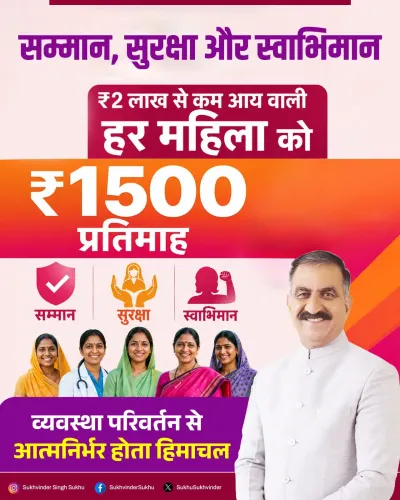
Every daughter aged over 21 years in an eligible family will receive ₹1,500 per month directly in her bank account.
There is no cap on the number of daughters per household who can receive the transfer.
Funding quantum and final rollout timeline will depend on state assembly or budget-session approval.
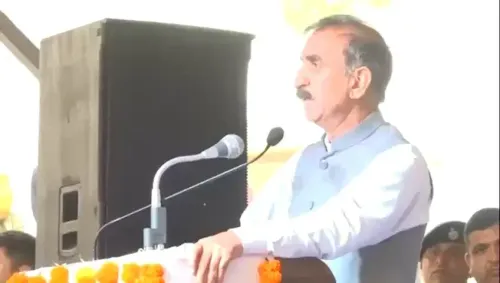
A state-wide survey is already underway, the income ceiling has just been pushed higher, and Himachal Pradesh Chief Minister Sukhvinder Singh Sukhu has now put a number on what comes next — ₹1,500 every month, deposited directly into the bank accounts of every daughter above 21 years of age in eligible families across the state.
Higher income bar, wider net
Announcing the expansion of the Mukhyamantri Apna Sukhi Parivar Yojana, CM Sukhu said the annual income eligibility limit has been revised upward — from ₹50,000 to ₹75,000 — a move designed to pull in households that were previously just above the cut-off and left out of the scheme's benefits. The state government is simultaneously conducting a fresh survey across all districts to identify and enrol eligible families under the revised criteria.
The revision matters because, in a largely agrarian hill economy like Himachal Pradesh, a ₹50,000 income ceiling excluded a significant slice of rural households that still live close to the margin. Stretching the limit by 50 percent substantially broadens the scheme's potential reach.
MGNREGA wage condition dropped
In a parallel move, Sukhu announced that the requirement of completing one day's wage labour under MGNREGA as a condition for scheme eligibility will be removed. The Mahatma Gandhi National Rural Employment Guarantee Act is India's flagship rural employment guarantee programme, and tying welfare-scheme access to participation in it had created a procedural hurdle — particularly for families where women do not formally participate in MGNREGA work. Dropping the condition signals a deliberate shift toward unconditional direct benefit, reducing bureaucratic friction for the most vulnerable.
₹1,500 a month, per daughter, no cap on siblings
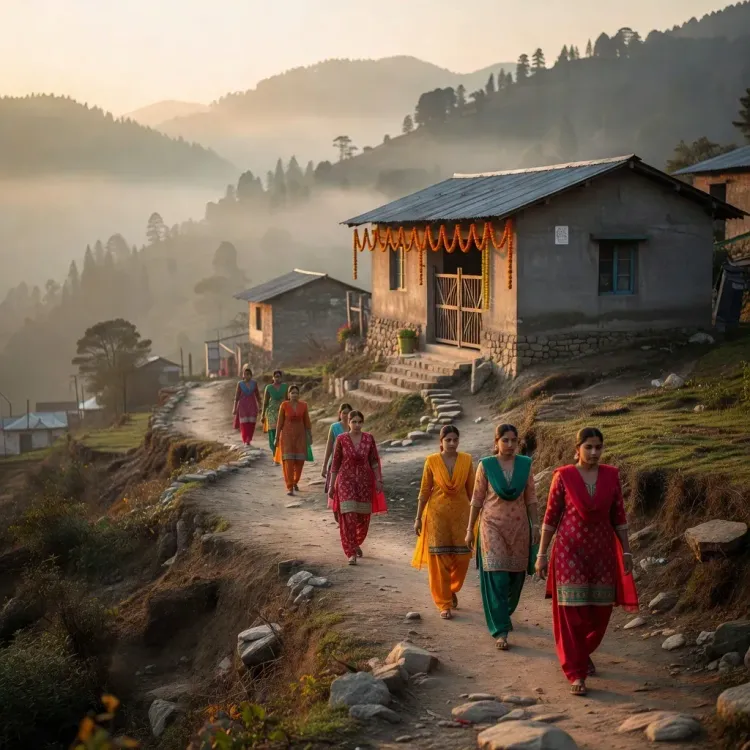
The headline announcement is the monthly cash transfer: the Sukhu government will deposit ₹1,500 per month into the individual bank accounts of all daughters aged over 21 years within an eligible family. Crucially, there is no restriction on the number of daughters per household — every qualifying woman gets her own transfer. In a state where several districts still grapple with skewed sex ratios and limited formal employment for young women, a per-daughter, unconditional monthly payment carries both economic and symbolic weight.
Cash-transfer schemes targeting women have become a live policy arena across Indian states, with governments in Madhya Pradesh, Karnataka, and others running comparable programmes. Himachal Pradesh's iteration is notable for extending the benefit to all adult daughters rather than restricting it to a single beneficiary per family — a design choice that could directly benefit households with multiple unmarried or economically dependent daughters.
Survey, funding, and what the assembly must confirm
The on-ground survey currently running across Himachal Pradesh will determine the final beneficiary count — a number that will set the fiscal ask when the scheme's full rollout is tabled before the state assembly or reflected in a budget revision. The income-limit change and MGNREGA waiver are administrative decisions; the sustained monthly transfer will require budgetary backing at scale. Watch for the state's next budget session or a supplementary demand for the precise allocation that makes the ₹1,500-per-month promise a line item.
For now, the government's signal is clear: the Sukhi Parivar Yojana is expanding its tent, and the daughters of Himachal Pradesh are its new headline beneficiaries.
Point of View
Moving closer to universal basic income logic. The per-daughter design, with no sibling cap, is a meaningful departure from single-beneficiary household norms and could set a precedent other states watch closely. The scheme's credibility, however, will hinge entirely on how the state funds recurring monthly payouts at scale without compressing its already stretched development budget.
NationPress
26 Sept 2026
Frequently Asked Questions
What is Mukhyamantri Apna Sukhi Parivar Yojana?
It is a Himachal Pradesh state welfare scheme that provides financial assistance to low-income families. CM Sukhu has now expanded it to include a monthly ₹1,500 cash transfer for every daughter over 21 in eligible households.
Who is eligible for the ₹1,500 monthly transfer under the Sukhi Parivar Yojana?
Daughters above 21 years of age in families with an annual income of up to ₹75,000 are eligible. All qualifying daughters in a single family will each receive ₹1,500 per month directly in their bank accounts.
What has changed in the Sukhi Parivar Yojana income limit?
The annual income ceiling has been raised from ₹50,000 to ₹75,000, making a significantly larger share of Himachal Pradesh families eligible for the scheme's benefits.
Why is the MGNREGA condition being removed from the Sukhi Parivar Yojana?
The requirement to complete at least one day of MGNREGA wage work was a procedural barrier for many families, especially those whose women do not participate in the programme. Removing it makes scheme access simpler and more direct.
When will the ₹1,500 monthly transfer start for daughters in Himachal Pradesh?
CM Sukhu said the transfers will be made 'in the coming time' (aane wale samay mein). The state-wide beneficiary survey is currently ongoing, and the final rollout timeline will be confirmed through the state budget or assembly process.