Puri briefs Rising Leaders on India's energy security story
Synopsis
Union Petroleum Minister Hardeep Singh Puri addressed nearly 70 young professionals at the Rising Leaders Programme co-hosted by ILead Global Foundation and Konrad Adenauer Stiftung, detailing India's energy security diplomacy, price-stability record, and its projected share of 25% of global energy demand growth over two decades.
Key Takeaways
Hardeep Singh Puri addressed a delegation of nearly 70 young professionals and researchers at the Rising Leaders Programme on 26 September 2026 .
India is the world's 3rd largest energy consumer , 3rd largest crude oil importer , and 4th largest refiner , consuming around 5 million barrels of oil per day .
India is projected to account for nearly 25% of global energy demand growth over the next two decades.
The minister highlighted India's record of maintaining stable domestic fuel prices despite global supply shocks and surging international prices.
The event was co-organised by ILead Global Foundation and the India office of Konrad Adenauer Stiftung , a German political foundation.
Puri linked India's energy diplomacy to PM Narendra Modi's broader push for diversified supply sources and affordable, sustainable energy access.
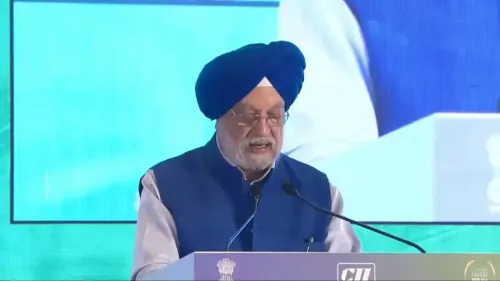
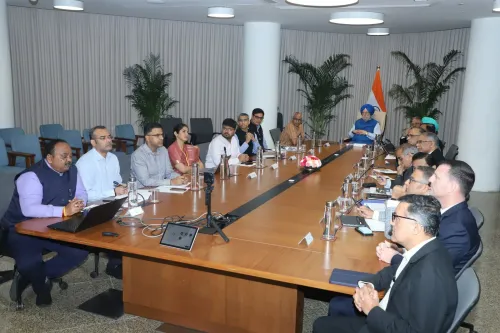
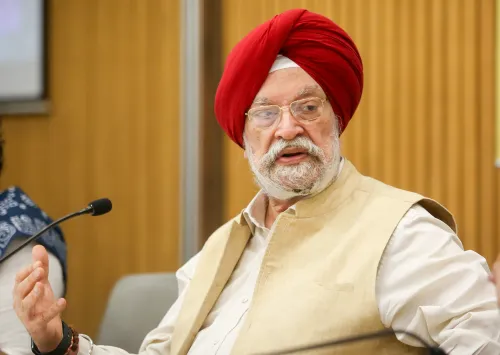
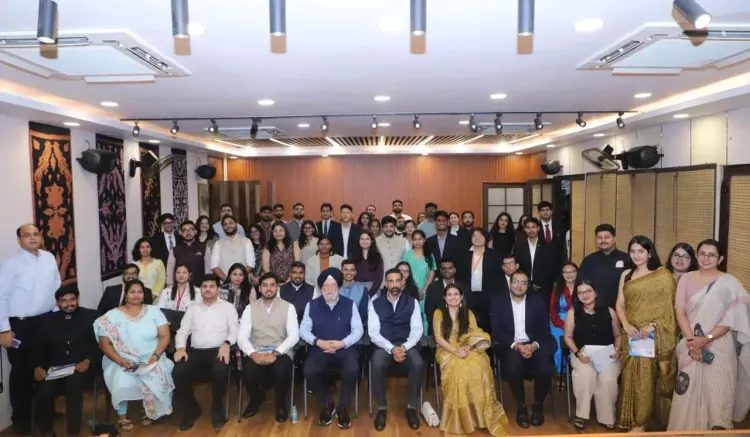
Seventy sharp young minds walked into a room with Union Petroleum Minister Hardeep Singh Puri on Saturday, 26 September 2026 — and walked out with a masterclass in how India is rewriting its energy future in real time. The minister addressed a delegation of young professionals and researchers as part of the Rising Leaders Programme, a joint initiative of ILead Global Foundation and the India office of Konrad Adenauer Stiftung, turning the session into a wide-ranging discussion on energy diplomacy, price stability, and India's outsized role in shaping global energy demand.
India's energy identity — the numbers that define the stakes
Puri put the scale of India's energy story on the table without ambiguity. India is the world's 3rd largest energy consumer, 3rd largest crude oil importer, and 4th largest refiner, consuming approximately 5 million barrels of oil per day. Those figures alone command attention in any boardroom or geopolitical forum. More striking is the forward projection: India is expected to account for nearly 25% of global energy demand growth over the next two decades — a number that positions New Delhi not as a passive buyer, but as a structural force shaping how the world produces and prices energy.
Stable pumps, turbulent world — how India held the line
The context makes the achievement sharper. Global energy markets were rattled by supply shocks after 2022, with fuel prices surging across Europe, parts of Asia, and beyond. India, despite being one of the world's largest importers of crude, managed to shield its citizens from the full force of that volatility — a deliberate policy choice that drew on diversified supply sourcing and diplomatic hustle. Puri framed this as a defining feature of India's energy diplomacy under Prime Minister Narendra Modi: securing uninterrupted supplies, broadening the energy basket, and keeping affordable, sustainable energy within reach of ordinary citizens even as geopolitical crises roiled major producing regions.
Why a German foundation and an Indian leadership incubator are in the same room
The setting itself carries meaning. Konrad Adenauer Stiftung, the German Christian-democratic political foundation with a global network, has long engaged on governance and policy capacity-building in India. Paired with ILead Global Foundation's Rising Leaders Programme, the event reflects a broader trend of strategic policy themes migrating into leadership-development spaces — a recognition that the next generation of policymakers, diplomats, and business leaders will need to navigate an energy-complex world from day one. Puri's choice to engage a diverse, cross-disciplinary cohort rather than a sector-specific audience signals that energy security is no longer a niche portfolio subject. It is a civilisational conversation.
As India edges toward commanding a quarter of the planet's incremental energy appetite, the leaders being trained today will be the ones signing the import contracts, negotiating pipeline agreements, and defending domestic price decisions tomorrow. The briefing room just got a lot more consequential.
Point of View
But in leadership pipelines. The framing of domestic price stability as a geopolitical achievement, rather than a subsidy outcome, marks a deliberate shift in official messaging: India positions itself as a competent, proactive energy actor, not a vulnerable importer at the mercy of global shocks. The partnership with a German foundation adds a transatlantic legitimacy layer to what is otherwise a domestic policy story, subtly signalling that India's energy choices are now globally significant. With 25% of incremental world demand expected from India over two decades, that framing is not just political — it is increasingly accurate.
NationPress
27 Sept 2026
Frequently Asked Questions
What is India's rank as a global energy consumer?
India is the world's 3rd largest energy consumer, 3rd largest crude oil importer, and 4th largest refiner, consuming around 5 million barrels of oil per day.
What is the Rising Leaders Programme and who organises it?
The Rising Leaders Programme is a leadership and policy initiative jointly organised by ILead Global Foundation and the India office of Konrad Adenauer Stiftung, a German political foundation, aimed at young professionals and researchers from diverse disciplines.
How did India manage fuel prices during the global energy crisis?
India maintained stable domestic fuel prices despite global supply shocks and surging international prices by diversifying crude oil sources and pursuing active energy diplomacy, shielding citizens from the full impact of global volatility.
What share of global energy demand growth is India expected to account for?
India is expected to account for nearly 25% of global energy demand growth over the next two decades, making it one of the most consequential energy markets in the world.
What is Konrad Adenauer Stiftung's role in India?
Konrad Adenauer Stiftung is a German Christian-democratic political foundation that operates an India office focused on governance, policy capacity-building, and leadership development programmes in partnership with Indian organisations.