Puri: India's fuel supply held firm through global energy crisis
Synopsis
Petroleum Minister Hardeep Singh Puri says India kept every retail fuel outlet stocked through global supply disruptions by expanding crude import sources from 27 to 41 countries and growing refining capacity — even as IEA projects India will drive 30% of global energy demand growth by 2030.
Key Takeaways
India is the world's third-largest energy consumer , third-largest energy importer , and fourth-largest refining nation .
The IEA projects India's energy demand is growing at roughly three times the global average.
India is expected to contribute approximately 30% of all new global energy demand growth by 2030 .
The Modi government expanded crude oil import sources from 27 to 41 countries to hedge against supply disruptions.
Despite Strait of Hormuz tensions and a global energy crisis, no retail fuel outlet in India reported a shortage.
Minister Puri made these remarks at the CII International Energy Conclave (CIIIECE2026) on 7 August 2026 .
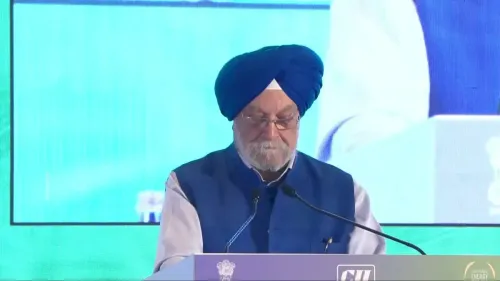
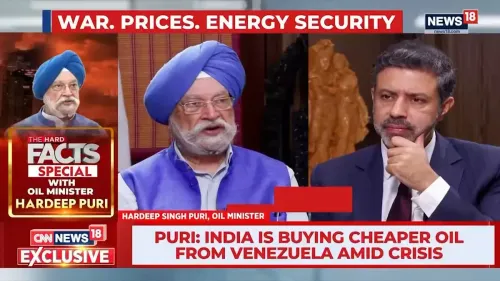
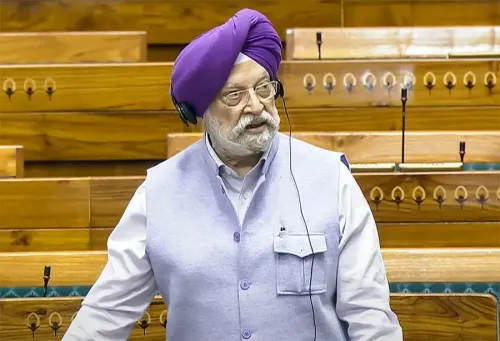
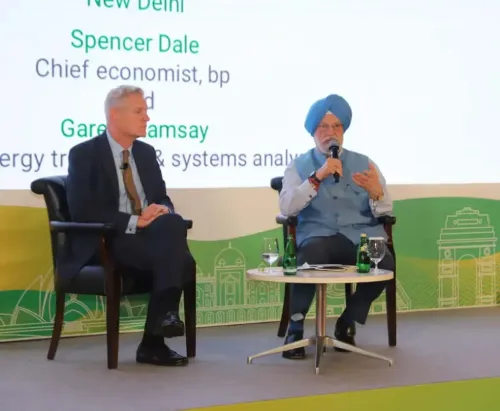
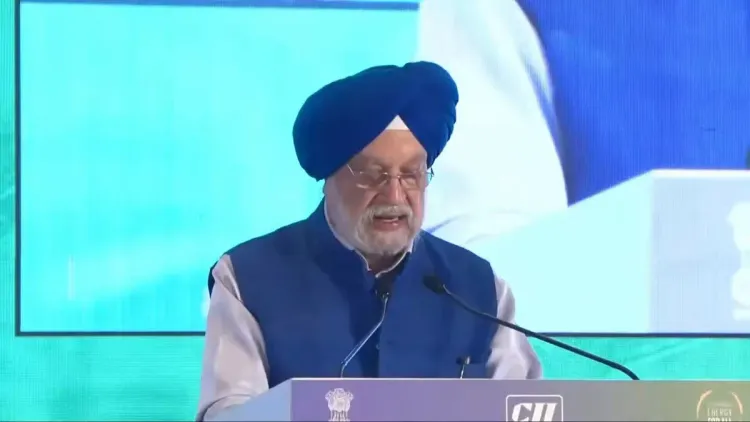
While global energy markets buckled under geopolitical strain and the Strait of Hormuz cast its familiar shadow over oil transit routes, not a single retail fuel outlet in India ran dry. Union Petroleum Minister Hardeep Singh Puri made that assertion on Friday, 7 August 2026, speaking at the CII International Energy Conclave (CIIIECE2026) and amplifying the message on X.
In his post, Puri laid out India's current energy coordinates: the country now ranks as the world's third-largest energy consumer, third-largest energy importer, and fourth-largest refining nation, while also counting itself among the leading energy exporters. Citing the International Energy Agency (IEA), he noted that India's energy demand is growing at roughly three times the global average — and that by 2030, India is projected to account for approximately 30 per cent of all new global energy demand growth.
From 27 to 41: the supply-source expansion that kept the pumps running
The centrepiece of Puri's argument was supply-chain architecture. He credited the Modi government with expanding crude oil import sources from 27 to 41 countries, a deliberate diversification away from over-reliance on any single region or transit corridor. Paired with a sustained push to grow domestic refining capacity, this framework, he argued, is what insulated Indian consumers from the disruptions that rattled markets elsewhere.
The logic is straightforward: when one supply lane tightens — whether through sanctions, conflict, or chokepoint risk — a wider supplier network absorbs the shock. India's Strategic Petroleum Reserves programme, initiated in the early 2000s, adds another buffer layer. Together, they form the architecture Puri described as a 'robust energy framework' (majboot urja dhanche).
A 30% share of global demand growth — and what that demands of policy
The IEA's demand projections place India in a category of its own among emerging economies. Growing at nearly three times the global average, the country's energy needs will require not just more imports but smarter infrastructure, faster refining expansion, and continued source diversification to avoid the very supply shocks Puri says the government has so far managed to sidestep.
The Confederation of Indian Industry (CII), which hosted the conclave, has consistently flagged energy security as a structural priority for sustaining India's manufacturing and economic growth ambitions. The CIIIECE2026 platform gave Puri a natural stage to frame the government's record as proof-of-concept ahead of the demand surge the IEA projects through the end of the decade.
India's energy story is no longer just about consumption — it is about architecture. And if the next wave of demand arrives as forecast, the resilience of that architecture will be tested far more severely than the Hormuz tensions of 2026.
Point of View
Not just the Gulf. With IEA projections placing India at the centre of global demand growth through 2030, the government is clearly building a narrative of institutional resilience ahead of what will be an increasingly contested global energy market — and positioning that resilience as a governance achievement ahead of any future electoral cycle.
NationPress
22 Sept 2026
Frequently Asked Questions
What is India's current ranking as an energy consumer?
India is the world's third-largest energy consumer, third-largest energy importer, and fourth-largest refining nation, according to Minister Hardeep Singh Puri.
How many countries does India import crude oil from?
According to Minister Puri, the Modi government expanded India's crude oil import sources from 27 to 41 countries to reduce dependence on any single supply corridor.
What does the IEA say about India's energy demand growth?
The International Energy Agency projects that India's energy demand is growing at roughly three times the global average and that India will account for about 30% of new global energy demand growth by 2030.
Was there a fuel shortage in India during the 2026 global energy crisis?
Minister Puri stated that no retail fuel outlet in India faced a shortage during the global energy crisis or amid Strait of Hormuz disruptions, crediting supply diversification and refining expansion.
What is CIIIECE2026?
CIIIECE2026 is the CII International Energy Conclave hosted by the Confederation of Indian Industry, focused on energy security and economic issues, where Minister Puri made these remarks.