Puri: India shielded families as global fuel costs surged 80%
Synopsis
Petroleum Minister Hardeep Singh Puri at ETM2026 detailed how India kept retail fuel prices nearly flat despite an 80% global crude surge — through three tax cuts, PSU cost absorption, and capping LPG costs for Ujjwala beneficiaries at ₹642 against an import-linked ₹1,600.
Key Takeaways
Global crude prices rose by around 80% during the shock period; Indian petrol and diesel prices increased by only about 8% .
The government cut fuel excise duties three times, including ₹8 per litre on petrol and ₹6 per litre on diesel in May 2022 .
Public-sector oil companies — IOC, BPCL, and HPCL — absorbed a significant share of the additional crude cost.
Ujjwala Yojana beneficiaries paid an effective ₹642 per LPG cylinder even as the import-linked cost crossed ₹1,600 .
India is investing in higher domestic crude output, expanded strategic storage, and diversified import sources to guard against future shocks.
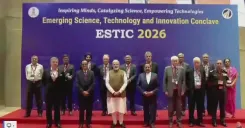
Puri made the remarks at ETM2026 , an energy technology conference, on 27 October 2026 .
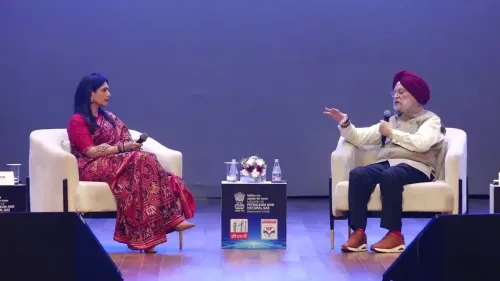
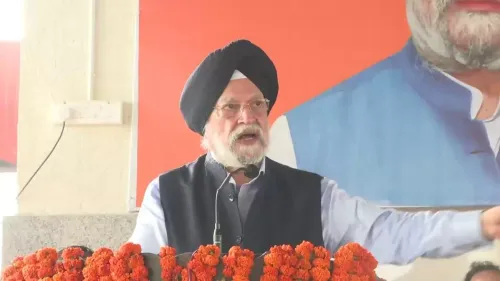
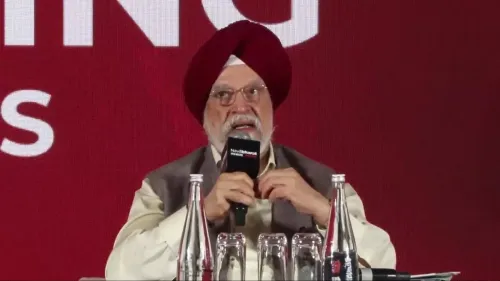
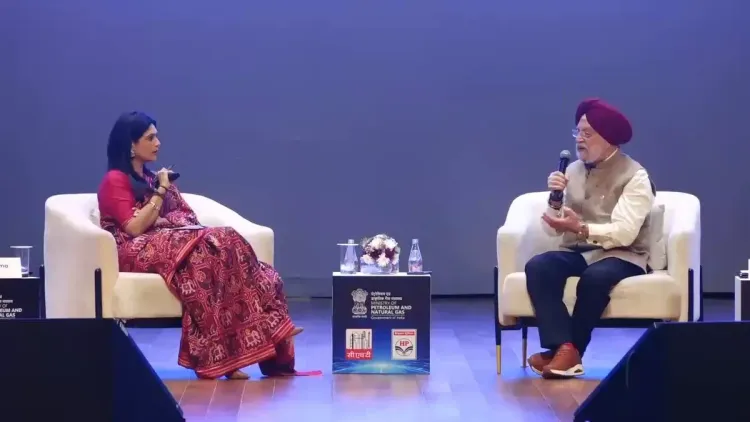
While energy crises left households across Europe and Asia scrambling for affordable fuel, India kept the lights on and the stoves burning — and Union Petroleum Minister Hardeep Singh Puri wants the world to know exactly how. Speaking at #ETM2026 on Tuesday, 27 October 2026, Puri laid out a detailed account of how the Modi government insulated Indian consumers from a global energy shock that sent crude prices spiralling.
80% global surge, 8% Indian bump — the arithmetic of insulation
The central claim is striking. When global crude prices surged by around 80% during the post-pandemic and geopolitical-crisis period, retail petrol and diesel prices in India rose by only about 8%. The gap between those two numbers is not magic — it is policy, and it came at a cost borne partly by the exchequer and partly by India's public-sector oil giants.
Indian Oil Corporation, Bharat Petroleum, and Hindustan Petroleum absorbed a significant portion of the additional crude cost to prevent it from flowing through entirely to pump prices. The government complemented that buffer with three rounds of fuel tax cuts, the most consequential of which came in May 2022 — ₹8 per litre off petrol and ₹6 per litre off diesel — as the Russia-Ukraine conflict pushed global benchmarks to multi-year highs.
Ujjwala's firewall: a ₹1,600 cylinder held at ₹642
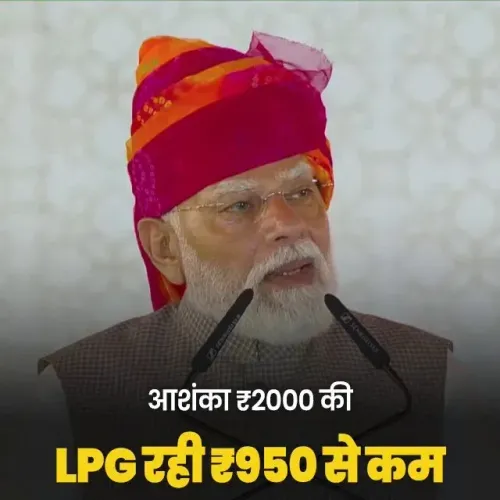
For the poorest households, the protection was even more direct. As the import-linked cost of an LPG cylinder crossed ₹1,600, beneficiaries of the Pradhan Mantri Ujjwala Yojana — the flagship clean-cooking scheme launched in May 2016 for below-poverty-line families — paid an effective price of just ₹642. That gap of nearly ₹1,000 per cylinder represents a direct subsidy shield that kept clean cooking fuel within reach for millions of rural and semi-urban women who had only recently received their first LPG connection.
Ujjwala, which began as an access programme, effectively doubled as a price-protection instrument during the shock years — a policy design choice that its architects could not have fully anticipated but which proved consequential when tested.
Building the next line of defence: storage, output, and diversification
Puri's remarks at ETM2026 were not only retrospective. He pointed to ongoing efforts to increase domestic crude production, expand strategic petroleum storage, and diversify India's import sources — a strategy that reduces the country's exposure to any single supplier or geopolitical flashpoint. The diversification push accelerated after 2022, when India notably expanded purchases from alternative suppliers to fill the supply gap created by Western sanctions on Russian exports.
The minister framed these investments as the architecture of future resilience: the same insulation that protected Indian families from the last shock, rebuilt and reinforced before the next one arrives.
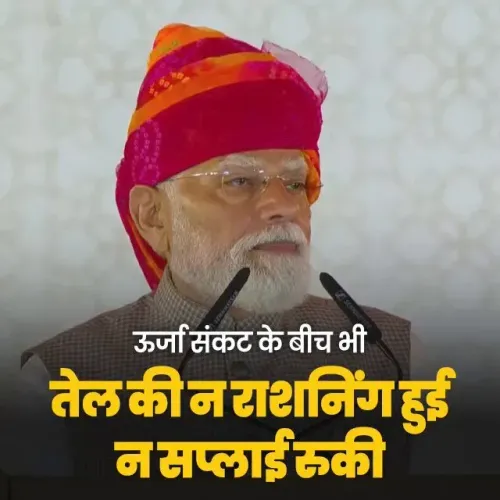
When the rest of the world was rationing, India was refuelling. That is the argument Puri is making — and at ETM2026, he is making it with numbers.
Point of View
The minister is framing the Modi government's record as a deliberate consumer-protection architecture rather than ad hoc crisis management. The emphasis on future-proofing — storage, domestic output, import diversification — signals that the ministry is positioning itself for a world where geopolitical energy shocks are treated as a recurring structural risk, not an exception. That framing also quietly pre-empts opposition arguments about global-price-linked domestic fuel volatility, making the case that Indian consumers were the priority throughout.
NationPress
27 Oct 2026
Frequently Asked Questions
Why did India's petrol and diesel prices not rise as much as global crude prices?
The government cut excise duties on fuel three times, public-sector oil companies absorbed part of the extra cost, and policy was explicitly aimed at shielding Indian consumers — collectively limiting the retail price increase to around 8% even as global crude rose about 80%.
What were the fuel tax cuts announced in May 2022?
In May 2022 , the government reduced excise duty by ₹8 per litre on petrol and ₹6 per litre on diesel to provide relief amid surging global crude prices linked to the Russia-Ukraine conflict.
How much did Ujjwala Yojana beneficiaries pay for LPG during the price surge?
Even as the import-linked cost of an LPG cylinder crossed ₹1,600 , Ujjwala Yojana beneficiaries paid an effective price of only ₹642 per cylinder, with the government covering the difference.
What is Pradhan Mantri Ujjwala Yojana?
Launched in May 2016 , Pradhan Mantri Ujjwala Yojana provides LPG connections to below-poverty-line households, primarily rural women, and has since been expanded with targeted subsidies to protect recipients from global fuel price spikes.
What is India doing to prevent future fuel price shocks?
India is increasing domestic crude oil production, expanding strategic petroleum storage capacity, and diversifying its crude import sources to reduce dependence on any single supplier and cushion consumers from future geopolitical energy crises.