Puri: India widened energy sources from 27 to 41 countries since 2014
Synopsis
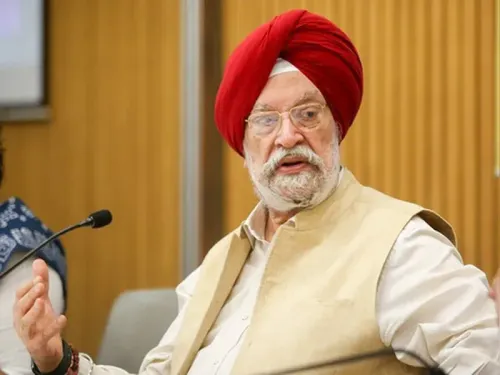
Union Petroleum Minister Hardeep Singh Puri says India grew its energy supplier base from 27 to 41 countries since 2014, maintained stable domestic fuel prices through global geopolitical disruptions, and kept any recent price adjustment minimal compared to hikes seen worldwide.
Key Takeaways
Union Petroleum Minister Hardeep Singh Puri says India expanded its energy supplier base from 27 countries in 2014 to 41 countries today.
India maintained uninterrupted energy supply despite disruptions on the Strait of Hormuz route by sourcing from alternative geographies.
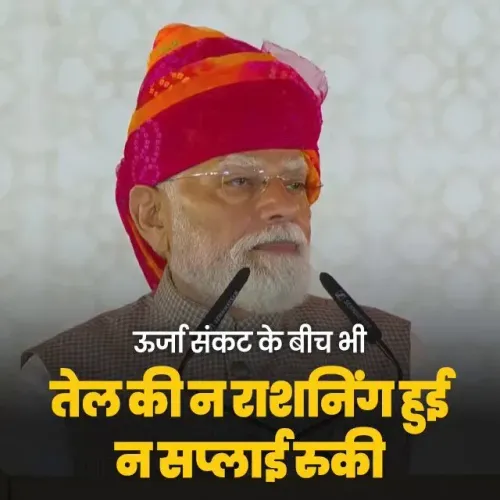
Puri claims India is the only country where energy prices remained unchanged for four years , with prices actually falling when global rates were rising.
The government built Strategic Petroleum Reserves and diversified supply chains to protect consumers from global price volatility.
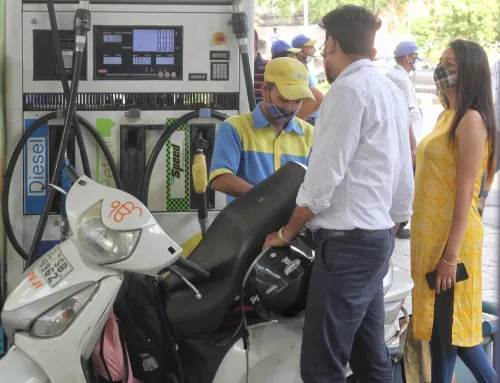
A recent domestic fuel price adjustment has been described by Puri as 'minimal' relative to hikes seen in neighbouring and developed nations.
The diversification strategy is being presented as a model of proactive energy diplomacy under PM Narendra Modi .
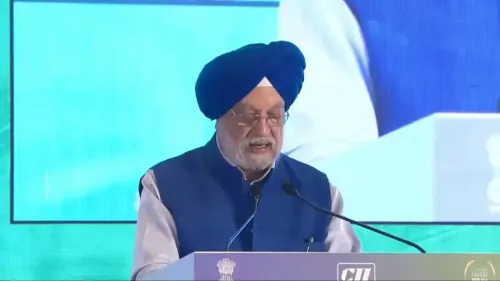
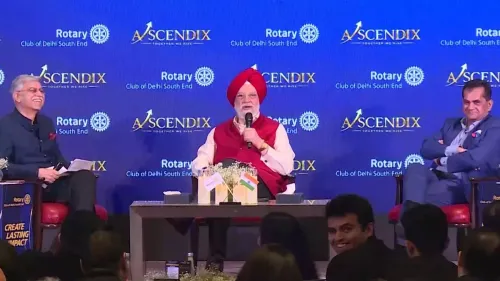
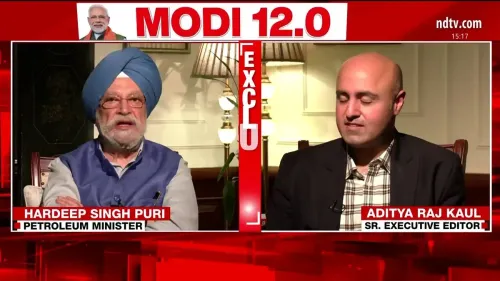
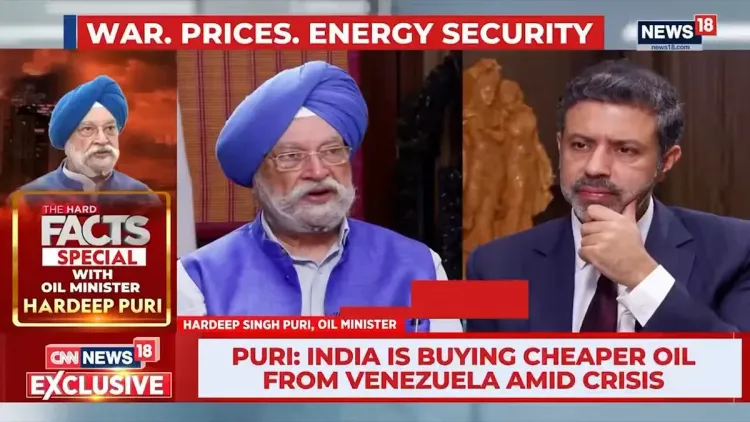
Union Petroleum Minister Hardeep Singh Puri on Monday, 8 June 2026 credited the Narendra Modi government with shielding Indian consumers from global energy price shocks by diversifying the country's crude oil and gas supplier base and maintaining stable retail fuel prices even as geopolitical disruptions roiled international markets.
Context
In a post on X, Puri stated that India expanded its basket of energy source countries from 27 in 2014 to 41 countries at present, allowing it to reroute imports when the Strait of Hormuz corridor faced disruptions. He wrote: 'While many countries struggled with shortages and soaring prices, India protected its citizens because we planned ahead, diversified supply chains, strengthened strategic reserves, expanded sourcing options, and took difficult decisions when required.'
The minister further claimed that India is 'the only country where energy prices remained unchanged for four years,' and that domestic fuel prices were actually reduced at a time when global prices were rising sharply.
Policy Backdrop
Since 2014, the government has pursued a systematic policy of reducing dependence on any single crude oil supplier or maritime corridor. India's Strategic Petroleum Reserves programme — with storage facilities at Mangalore and Padur that began commercial operations around 2015–2016 — was designed precisely to provide a buffer against sudden supply-side shocks.
The 2022 Russia-Ukraine conflict became a stress test for this architecture. As European and Asian buyers scrambled for alternative supplies and global benchmark prices surged, New Delhi drew on its diversified supplier network — including increased imports from non-traditional origins — to keep domestic retail prices from tracking international volatility in real time.
Puri acknowledged a recent price adjustment but framed it as modest: 'The price adjustment is minimal compared to the hikes that many countries, including many in our immediate neighbourhood and even in developed countries, are experiencing.'
Stakeholders and Impact
Indian consumers and oil marketing companies (OMCs) sit at the centre of this policy calculus. OMCs absorb the difference between import costs and capped retail prices in the short run, making the government's ability to sustain price stability contingent on both global crude levels and state finances.
Neighbouring economies and several developed nations, by contrast, have passed through sharper retail price increases to end users, making the comparative stability of Indian pump prices a politically salient data point for the ruling BJP. For industrial consumers and logistics-dependent sectors, predictable energy costs also translate into more stable input-cost planning.
What's Next
The minister's remarks come alongside what he described as a 'minimal' price adjustment, signalling that some recalibration of retail fuel prices is under way even as the government insists it remains committed to buffering citizens from severe impacts. Analysts will watch the next round of retail fuel price revisions for the scale of any further pass-through.
Longer term, the government's stated ambition to keep widening its supplier network and potentially expand strategic storage capacity will determine how durable this diversification dividend proves if another major supply disruption materialises. The trajectory from 27 to 41 supplier nations represents a structural shift in India's energy diplomacy — one that Puri is now positioning as a model for emerging economies navigating an increasingly fragmented global energy order.
Point of View
Arriving alongside what he concedes is a fresh — if 'minimal' — fuel price adjustment. By anchoring the narrative in supply-chain diversification and the Hormuz disruption episode, the minister reframes a potential political liability into a proof-of-resilience story. The claim of four years of unchanged prices, if it holds scrutiny, is a powerful electoral argument in a country where fuel costs directly affect inflation sentiment. The broader arc here is India's deliberate pivot from a price-taker dependent on Gulf corridors to an active buyer that plays supplier competition to its advantage — a shift with implications well beyond the petroleum sector.
NationPress
16 Sept 2026
Frequently Asked Questions
How many countries does India import energy from now?
According to Union Petroleum Minister Hardeep Singh Puri, India currently sources energy from 41 countries , up from 27 countries in 2014 , as part of a deliberate diversification strategy.
Did India's fuel prices go up or down during the global energy crisis?
Minister Puri stated that fuel prices in India actually went down during the period when global prices were rising sharply, and that India is the only country where energy prices remained unchanged for four years .
What is India's Strategic Petroleum Reserve and how does it help?
India's Strategic Petroleum Reserves are government-built underground crude oil storage facilities — including sites at Mangalore and Padur — designed to cushion the country against sudden global supply disruptions or price spikes.
How did India manage energy supply during the Hormuz route disruptions?
Puri said that when the Strait of Hormuz corridor faced disruptions, India was able to reroute imports through alternative supply chains and geographic routes, thanks to its expanded base of 41 supplier countries .
Why did India's fuel prices increase recently?
Puri acknowledged a recent price adjustment but described it as 'minimal' compared to hikes in neighbouring and developed countries, saying the government remains committed to buffering citizens from severe impacts.