PM-KUSUM scheme transforms Gadchiroli farmer's income to ₹3.5 lakh a year
Synopsis
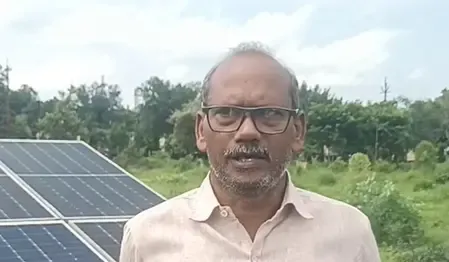
A single solar pump and a ₹11,000 application fee changed everything for Ashok Karade of Gadchiroli — he now grows two crops a year, runs a mango orchard, and earns over ₹3.5 lakh annually. His story is a rare ground-level proof point for PM-KUSUM in one of Maharashtra's most remote districts.
Key Takeaways
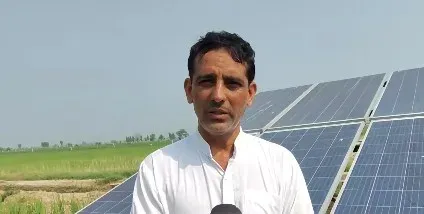
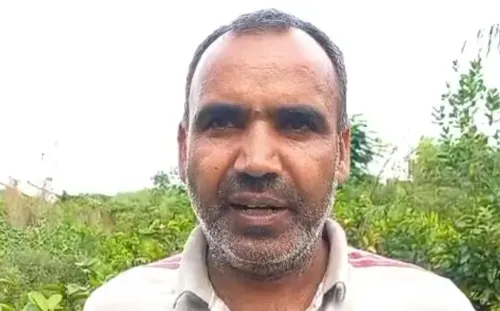
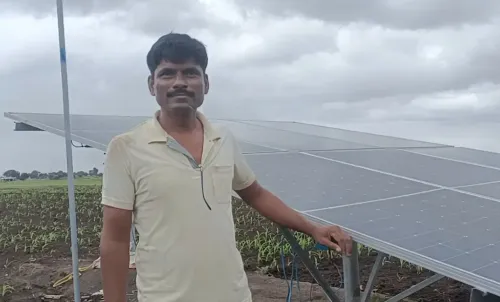
Ashok Karade , a farmer from Korchi tehsil, Gadchiroli , doubled his annual crop cycles after receiving a solar pump under the PM-KUSUM scheme .
His annual agricultural income has crossed ₹3.5 lakh , up from a significantly lower baseline before the scheme.
The scheme provided a complete kit — a 3 HP solar motor , solar panels , and a borehole — for a farmer contribution of approximately ₹11,000 .
Karade cultivates paddy on 5 acres and maintains an orchard with six varieties of mango trees on his 8-acre landholding.
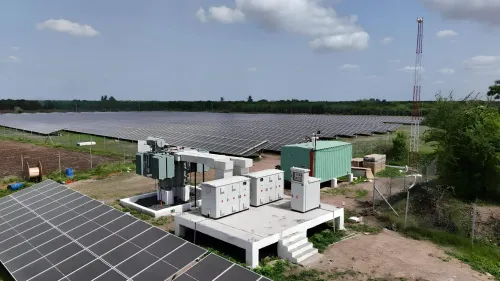
PM-KUSUM , launched in 2019 , also allows farmers to sell surplus solar electricity to distribution companies, offering an additional income stream.
Karade is now encouraging other farmers in Korchi tehsil to enrol in the scheme, describing the application process as hassle-free.
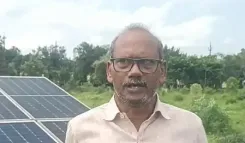
A solar pump installed under the PM-KUSUM scheme has fundamentally changed the fortunes of Ashok Karade, a farmer from Korchi tehsil in Maharashtra's Gadchiroli district — enabling him to cultivate two crops a year and push his annual agricultural income beyond ₹3.5 lakh, up from a fraction of that figure before the intervention. Karade's story offers a ground-level snapshot of how the Centre's flagship solar irrigation programme is playing out in one of Maharashtra's most remote and agrarian districts.
From Rain Dependency to Solar-Powered Irrigation
Before enrolling in the scheme, Karade cultivated a single crop annually, entirely dependent on rainfall. Although his farm had a formal electricity connection, erratic power supply made electric pumping unreliable, leaving his fields vulnerable to dry spells.
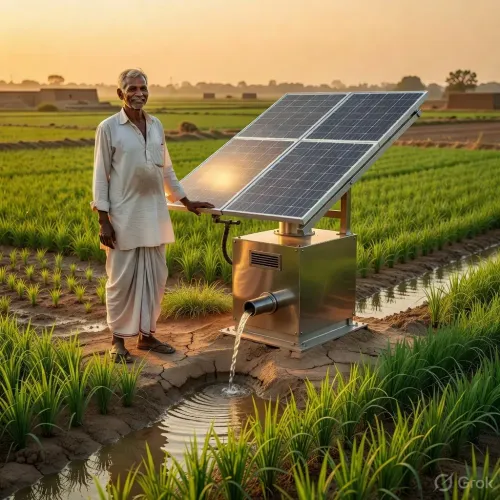
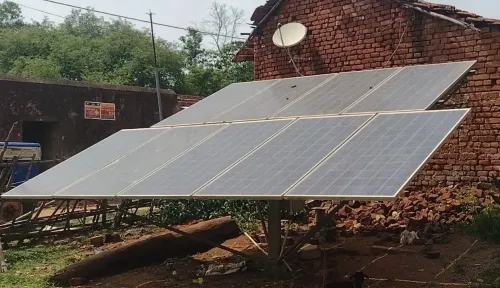
The installation of a 3 HP solar motor, solar panels, and a borehole — provided as a complete kit under PM-KUSUM — changed that equation. Karade now irrigates his fields consistently using solar energy, independent of grid availability or monsoon timing. 'We simply had to submit the necessary documents at the time of application and pay a fee of around ₹11,000. Subsequently, the department conducted a land survey, and the solar panels were installed shortly thereafter,' he said.
Crop Diversification and Rising Earnings
With reliable irrigation secured, Karade has diversified his agricultural output significantly. He cultivates paddy on five acres of his eight-acre landholding. The remaining land hosts an orchard with approximately six varieties of mango trees, along with other fruit-bearing trees — a shift that has broadened his income base beyond a single staple crop.
His annual agricultural earnings have now crossed ₹3.5 lakh, according to his own account. The elimination of electricity bills has further reduced his operational costs, improving the overall economic viability of his farm.
What the PM-KUSUM Scheme Offers
Launched in 2019, the Pradhan Mantri Kisan Urja Suraksha evam Utthan Mahabhiyan (PM-KUSUM) scheme was designed with four objectives: providing energy and water security to farmers, boosting farm incomes, reducing the agriculture sector's dependence on diesel, and cutting environmental pollution.
Under the scheme, farmers can install solar pumps for irrigation and, notably, also have the option to sell surplus electricity to electricity distribution companies — creating a potential secondary income stream. The programme is administered through state agricultural and energy departments, with beneficiaries required to contribute a nominal share of the installation cost.
A Local Champion for the Scheme
Having experienced the benefits firsthand, Karade is now actively encouraging fellow farmers in Korchi tehsil to explore the scheme's eligibility criteria and application process. He has described the enrolment process as straightforward, noting that documentation requirements were manageable and the installation followed swiftly after a departmental land survey.
His advocacy at the grassroots level underscores a pattern seen in several Central welfare schemes — early adopters becoming informal ambassadors — that can accelerate uptake in remote, information-scarce communities like those in Gadchiroli.
Broader Context: Gadchiroli's Agricultural Challenges
Gadchiroli, a predominantly tribal district in eastern Maharashtra, has historically faced challenges including poor infrastructure, limited irrigation coverage, and low agricultural productivity. The district's geography makes grid-based power supply particularly unreliable, making solar solutions especially well-suited to its conditions.
Karade's experience suggests that targeted Central schemes, when implemented effectively, can meaningfully alter outcomes even in structurally disadvantaged regions. Whether similar results are being replicated at scale across Gadchiroli's other tehsils remains to be assessed through independent data.
Point of View
However vivid, cannot substitute for district-wide data on PM-KUSUM uptake, subsidy disbursement rates, and post-installation crop yield changes. The scheme's design is sound — solar pumps genuinely address the dual problems of erratic grid power and diesel dependency — yet implementation quality varies sharply across states. The more pressing question is whether Maharashtra's agricultural department is tracking outcomes systematically or relying on anecdote to measure success. If Karade's results are representative, PM-KUSUM deserves rapid scale-up in Gadchiroli; if they are exceptional, the bottlenecks need equal scrutiny.
NationPress
16 Sept 2026
Frequently Asked Questions
What is the PM-KUSUM scheme and how does it help farmers?
PM-KUSUM, short for Pradhan Mantri Kisan Urja Suraksha evam Utthan Mahabhiyan, is a Central government scheme launched in 2019 to provide solar-powered irrigation to farmers. It supplies solar pumps, panels, and borewells, freeing farmers from dependence on the electricity grid and reducing diesel use. Beneficiaries can also sell surplus solar power to distribution companies for additional income.
How much did Ashok Karade's income increase under PM-KUSUM?
Ashok Karade's annual agricultural income has crossed ₹3.5 lakh after installing a solar pump under PM-KUSUM, compared to a significantly lower income when he depended on rainfall and an unreliable grid connection. He now grows two crops a year instead of one, and has diversified into fruit cultivation.
What does a farmer need to do to avail the PM-KUSUM scheme?
According to Karade's account, the application process involves submitting the required documents and paying a fee of approximately ₹11,000. The state department then conducts a land survey and arranges installation of the solar equipment. He described the process as straightforward and hassle-free.
Why is the PM-KUSUM scheme particularly relevant for Gadchiroli?
Gadchiroli is a remote, predominantly tribal district in eastern Maharashtra where grid-based electricity supply is especially erratic, making solar irrigation an ideal solution. Farmers in the district traditionally relied on monsoon rainfall for cultivation, limiting them to a single crop cycle per year. Solar pumps address both the power reliability problem and the seasonal water dependency.
Can farmers earn money by selling electricity under PM-KUSUM?
Yes. Under the PM-KUSUM scheme, farmers have the option to sell surplus solar electricity generated by their panels back to electricity distribution companies, creating a secondary income stream beyond crop production. This feature is part of the scheme's design to make farms energy self-reliant and financially more viable.