Ramaswamy Campaigns with Running Mate McColley in Northwest Ohio
Synopsis
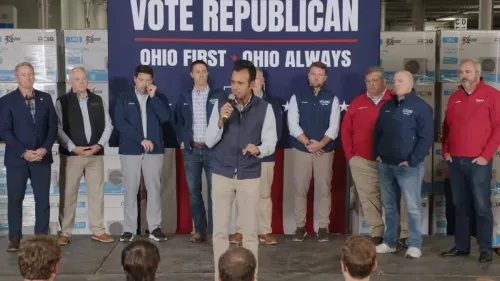
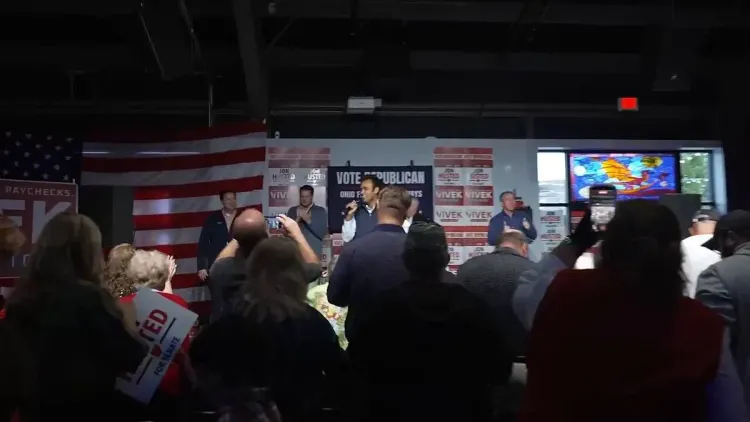
Entrepreneur Vivek Ramaswamy visited northwest Ohio on October 30, 2026, campaigning alongside running mate and Ohio State Senator Rob McColley, highlighting the personal toll of running for office while raising young families.
Key Takeaways
Vivek Ramaswamy visited northwest Ohio on October 30, 2026 as part of an active fall campaign push.
His running mate, Ohio State Senator Rob McColley , represents districts in northwest Ohio, making the visit to his political home base strategically significant.
Ramaswamy emphasised a personal bond with McColley, noting both men are raising young families while campaigning for statewide office.
Northwest Ohio is a key Republican stronghold, blending rural and small-manufacturing communities that reward direct candidate engagement.
The ticket is moving through regional strongholds ahead of a November 2026 Ohio election.
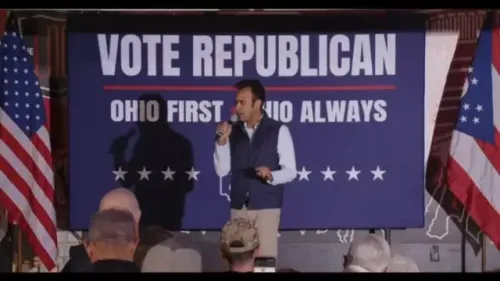
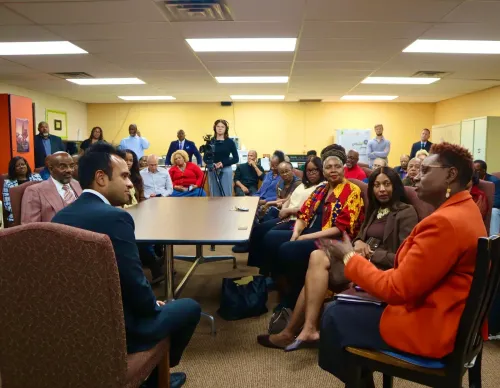
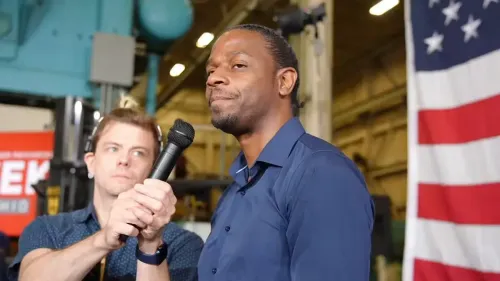
The grind of a statewide campaign — early mornings, relentless travel, and a young family waiting at home — is a pressure few voters see. Entrepreneur Vivek Ramaswamy put that reality front and centre on Friday, October 30, 2026, as he visited northwest Ohio alongside his running mate, Ohio State Senator Rob McColley, who calls that corner of the state home.
Ramaswamy wrote that he knows 'how hard it is to go through this process with a young family,' adding that it has been 'an honor' to run alongside McColley, whom he described as being 'in the same stage of life.' The visit to McColley's home turf was both a campaign stop and, by Ramaswamy's own account, a personal gesture of solidarity between two candidates navigating parenthood and politics simultaneously.
McColley's Northwest Ohio Base and What It Means Electorally
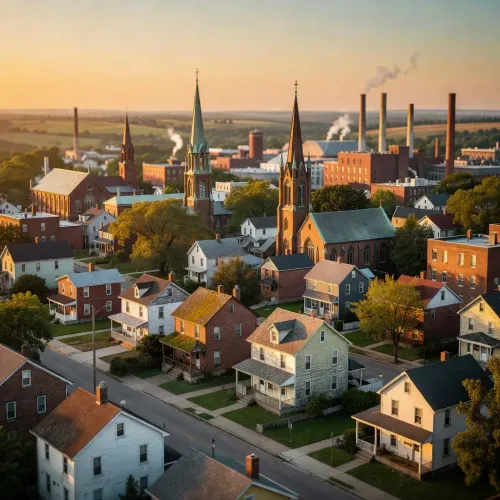
Rob McColley represents districts in northwest Ohio in the state Senate — a region defined by its mix of rural farmland, small manufacturing towns, and tight-knit communities that have featured prominently in Republican statewide strategies. Showing up in a running mate's home territory signals both organisational depth and an effort to energise a base that expects candidates to earn their votes in person.
Northwest Ohio voters have historically rewarded candidates who demonstrate a physical presence rather than relying solely on media advertising. For a ticket pairing a nationally prominent figure like Ramaswamy with a regionally rooted legislator like McColley, the visit underscores a deliberate geographic division of labour — Ramaswamy brings the profile, McColley brings the local trust.
The Personal Politics of Campaigning with Young Children
Ramaswamy's framing of the campaign through the lens of family life is a deliberate humanising note. Both men, by his account, are raising young children while pursuing statewide office — a shared circumstance that, in his telling, creates a bond beyond the purely political. It is a reminder that the logistical and emotional cost of modern campaigns falls not just on candidates but on spouses and children who rarely appear on the ballot.
With Ohio's fall campaign calendar pushing toward a November 2026 election, the ticket appears to be moving through regional strongholds, building the kind of grassroots energy that statewide races in competitive states ultimately turn on. Northwest Ohio was a stop; there will be many more to come.
Point of View
And the northwest Ohio visit makes the geographic logic explicit. The emphasis on shared personal circumstances rather than policy positions suggests the campaign is in a voter-connection phase rather than a contrast phase, typical of the final sprint to a November election. Whether the Ramaswamy-McColley ticket can translate personal relatability into a statewide majority will depend on whether that energy extends beyond Republican base counties.
NationPress
31 Oct 2026
Frequently Asked Questions
Who is Vivek Ramaswamy running with in Ohio 2026?
Vivek Ramaswamy is running with Rob McColley , a Republican Ohio State Senator who represents districts in northwest Ohio, as his running mate in the 2026 Ohio race.
Who is Rob McColley?
Rob McColley is a Republican member of the Ohio State Senate representing northwest Ohio districts, a region known for its rural farmland and small manufacturing communities.
Why is Vivek Ramaswamy campaigning in northwest Ohio?
Ramaswamy visited northwest Ohio because it is the home region of his running mate Rob McColley , and the area is an important Republican base in any statewide Ohio race.
What is Vivek Ramaswamy doing in 2026?
In 2026 , Vivek Ramaswamy is running for statewide office in Ohio , campaigning across the state alongside his running mate Rob McColley ahead of the November election.
Has Vivek Ramaswamy talked about family during the campaign?
Yes. Ramaswamy has openly discussed the difficulty of running for office while raising young children, noting that he and McColley are both in the same stage of family life, which he says has strengthened their partnership on the campaign trail.