PM-KUSUM scheme powers solar irrigation for tribal farmers in Gujarat
Synopsis
In Gujarat's tribal heartland, a government solar scheme is quietly rewriting the farming calendar. With 2.97 lakh pumps solarised, 22,787 standalone units deployed in off-grid forest areas, and tribal farmers paying zero out-of-pocket under a 30+70 subsidy split, PM-KUSUM is delivering what decades of grid extension could not — reliable, round-the-clock irrigation for India's most water-stressed smallholders.
Key Takeaways
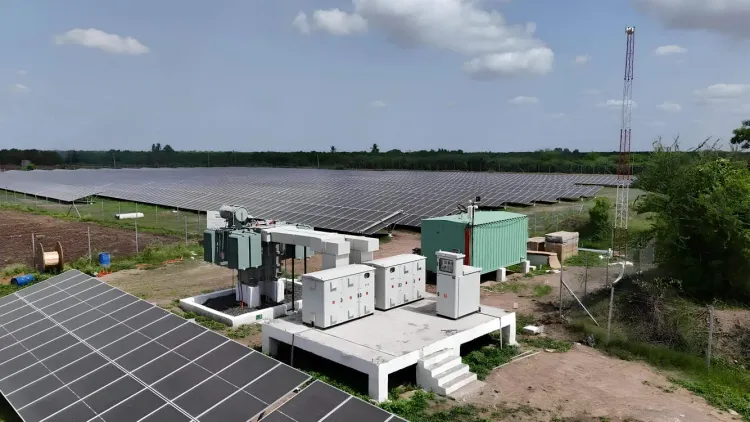
256 solar power plants with 695 MW combined capacity are operational under PM-KUSUM Component-C in Gujarat, solarising approximately 2.97 lakh agricultural pumps .
Rajkot district leads the state with 81 MW of installed solar capacity.
22,787 solar pumps commissioned under Component-B in off-grid and forest areas; PPAs for 163 MW executed under Component-A .
Tribal and forest-area farmers receive a 30% central + 70% state subsidy , requiring zero farmer contribution for pumps up to 7.5 HP .
Farmers in Narmada , Dang , and Tapi districts report shift from single monsoon crop to two to three crops annually , with supplementary livestock income.
Solar-powered irrigation under the Pradhan Mantri Kisan Urja Suraksha evam Utthan Mahabhiyan (PM-KUSUM) scheme is transforming agricultural livelihoods across Gujarat's tribal and remote districts, with thousands of farmers in Narmada, Dang, and Tapi reporting year-round water access, reduced diesel dependence, and the ability to cultivate multiple crops each season. The scheme has reached significant scale in the state, with 256 solar power plants totalling 695 MW of capacity now operational under PM-KUSUM Component-C.
Scale of Implementation in Gujarat
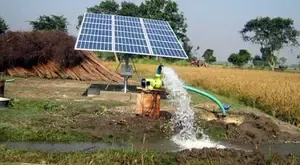
The solarisation drive has brought approximately 2.97 lakh agricultural pumps under solar coverage across the state. Rajkot district leads with the highest installed capacity at 81 MW. In parallel, more than 21,000 solar water pumps are operational statewide, including in remote tribal belts where conventional irrigation infrastructure has historically been sparse or absent.
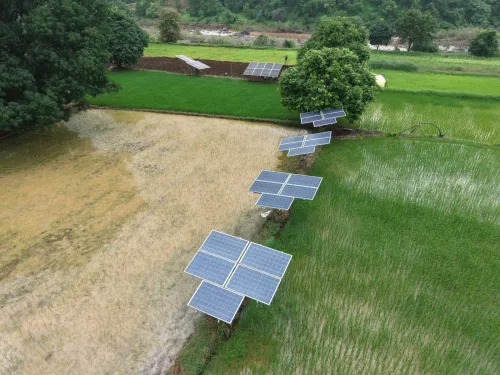
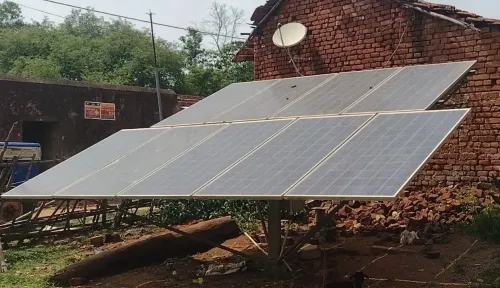
Under Component-B, standalone solar pumps are being deployed in forest and off-grid areas where grid electricity is either unavailable or not economically viable. A total of 22,787 solar pumps have been commissioned under this component so far. Under Component-A, Power Purchase Agreements (PPAs) for 163 MW have been executed and related work is currently under way.
Farmers Describe the On-Ground Change
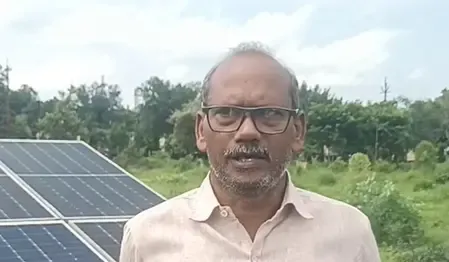
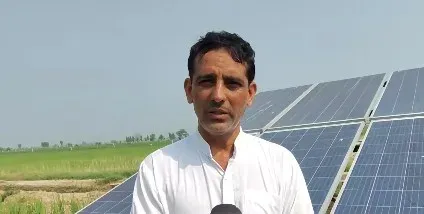
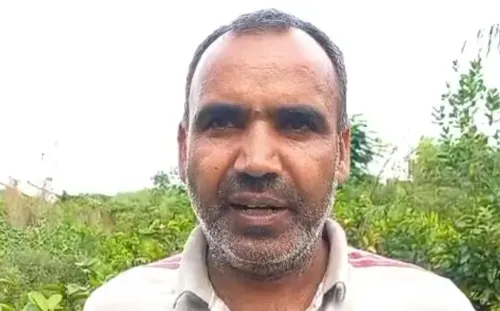
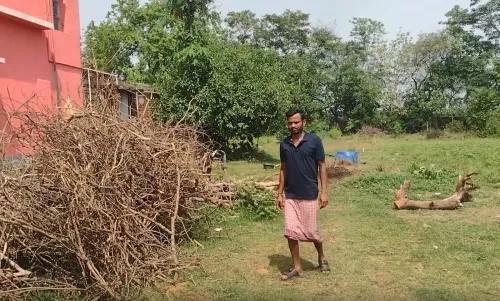
Ramu Waghmare of Umarpada village in Dang district recalled that farming was once entirely monsoon-dependent. 'A favourable rainy season meant a successful harvest, while poor rainfall often resulted in financial hardship. Irrigation required visiting fields during the night because of unreliable electricity supply, while water scarcity remained a persistent challenge,' he said. With a solar pump now installed, water is available continuously from sunrise to sunset, enabling multi-crop cultivation and eliminating the need for night visits to fields.
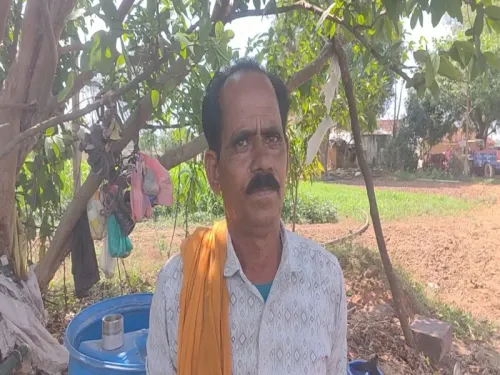
In Tapi district, Gavji Vasava of Gavan village said farming was previously confined to the monsoon window. Solar-powered irrigation has since allowed farmers to grow crops throughout the year. 'Many farmers are now cultivating fodder crops and earning additional income through livestock rearing,' he said. In Narmada district, Ishwar Vasava of Juna Mosda village said insufficient farm income had earlier compelled him to seek labour work in cities. Reliable irrigation under the scheme now allows him to harvest three crops annually, substantially improving his family's economic condition.
Subsidy Structure and Special Provisions
According to Gujarat State Energy Minister Rushikesh Patel, beneficiaries under Component-B receive 30 per cent Central Financial Assistance (CFA) from the Union government and a 30 per cent subsidy from the state government, with the remaining 40 per cent borne by the farmer. This support applies to pump sets up to 7.5 horsepower (HP).
For farmers in forest areas, the state has introduced enhanced provisions. Tribal and forest-area farmers receive 30 per cent subsidy from the Centre and 70 per cent from the state government, meaning they bear no financial contribution. Non-tribal farmers in forest areas receive the same subsidy split but are required to pay only a nominal fixed charge. Patel noted that the scheme is also making 'an important contribution to environmental conservation by reducing diesel consumption.'
Broader Impact on Tribal Agriculture
Across Gujarat's tribal districts, the expansion of solar irrigation is addressing longstanding structural challenges — erratic grid power, high diesel costs, and rainfall variability — that have historically constrained agricultural productivity. Crop diversification, fodder cultivation, and supplementary livestock income are emerging as downstream benefits. This comes amid a wider national push under PM-KUSUM to solarise 35 lakh agricultural pumps across India, making Gujarat one of the more advanced implementing states. The scheme's trajectory in the state will be closely watched as a replicable model for other tribal and rain-shadow regions.
Point of View
Nearly three lakh pumps converted — but the more significant signal is the zero-cost access model for tribal farmers. Past irrigation schemes in forest districts routinely failed on last-mile delivery because upfront costs excluded the poorest cultivators. The 30+70 subsidy structure removes that barrier. What remains untracked is whether crop diversification gains translate into sustained income improvements or remain seasonal. Independent outcome data, not just pump-installation tallies, will determine whether this is a transformative programme or a well-executed infrastructure rollout.
NationPress
19 Sept 2026
Frequently Asked Questions
What is the PM-KUSUM scheme and how does it work in Gujarat?
PM-KUSUM (Pradhan Mantri Kisan Urja Suraksha evam Utthan Mahabhiyan) is a Union government programme that solarises agricultural pumps and installs standalone solar water pumps for farmers. In Gujarat, it operates across three components — A (grid-connected solar plants), B (standalone pumps in off-grid areas), and C (solarisation of existing pumps) — with 695 MW operational under Component-C and 22,787 pumps commissioned under Component-B.
What subsidy do tribal farmers in Gujarat receive under PM-KUSUM?
Tribal and forest-area farmers in Gujarat receive a 30 per cent subsidy from the Union government and a 70 per cent subsidy from the state government, covering the full system cost and requiring no financial contribution from the farmer. Non-tribal farmers in forest areas receive the same subsidy split but pay a nominal fixed charge.
Which districts in Gujarat have benefited most from the scheme?
Farmers in Narmada, Dang, and Tapi districts — predominantly tribal and rain-dependent areas — have reported the most visible impact, shifting from single monsoon-season cultivation to two or three crops annually. Rajkot district leads the state in installed solar capacity at 81 MW under Component-C.
How has solar irrigation changed farming practices in tribal Gujarat?
Before the scheme, farmers in districts like Dang and Tapi were entirely dependent on monsoon rainfall and faced unreliable grid electricity that forced night-time irrigation visits. Solar pumps now provide water from sunrise to sunset, enabling year-round cultivation, fodder crop production, and supplementary livestock income.
How many solar pumps have been installed under PM-KUSUM in Gujarat?
More than 21,000 solar water pumps are operational across Gujarat under the scheme, including 22,787 units commissioned specifically under Component-B in remote and forest areas. Approximately 2.97 lakh existing agricultural pumps have been solarised under Component-C.