PM-KUSUM: Narmada leads Gujarat with 14,989 solar pumps, ₹618 crore spent
Synopsis
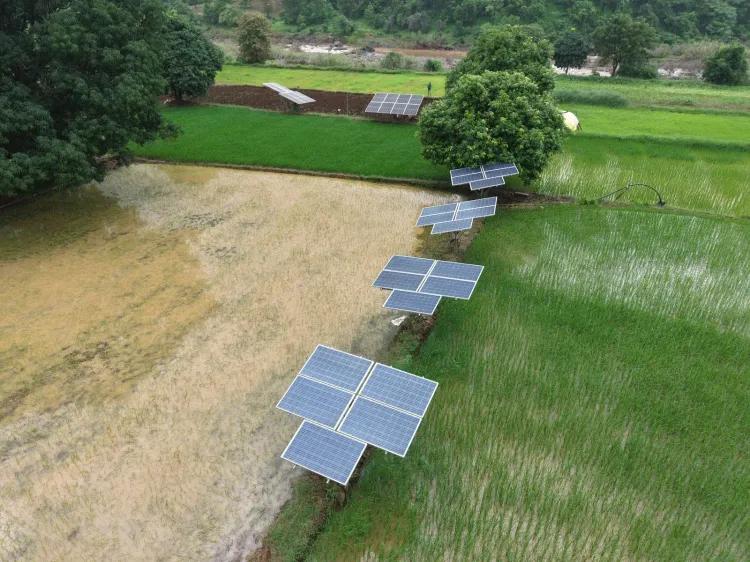
Narmada district has quietly become the national poster child for PM-KUSUM's off-grid push — nearly two-thirds of Gujarat's entire solar pump allocation has landed in one tribal district, converting monsoon-only farmers into three-season cultivators. With ₹618.41 crore spent and 14,989 pumps installed, the Shoolpaneshwar belt shows what full-subsidy, grid-free solar irrigation can do where the electricity grid cannot reach.
Key Takeaways
Narmada district has installed 14,989 off-grid solar pumps under PM-KUSUM — the highest in Gujarat — at a cost of ₹618.41 crore .
Gujarat has sanctioned 22,792 solar agricultural pumps over five years , benefiting 22,787 farmers statewide.
Nationally, 11,49,988 pumps have been installed against a target of 14 lakh , achieving approximately 88% of the goal.
Tribal and forest-area beneficiaries in Gujarat receive 100% subsidy — 60% Centre, 40% state — with no out-of-pocket cost to farmers.
Farmers in Dediapada , Sagbara , and Chikda have moved from single monsoon-season cultivation to farming across all three seasons .
The off-grid design has minimised ecological disturbance around the Shoolpaneshwar Wildlife Sanctuary by eliminating the need for new power lines and substations.
Narmada district has become Gujarat's top-performing district under the Pradhan Mantri Kisan Urja Suraksha evam Utthan Mahabhiyan (PM-KUSUM) scheme, with 14,989 off-grid solar agricultural pumps installed at a total expenditure of ₹618.41 crore. The installations have enabled thousands of tribal farmers across the district's hilly and forested terrain to move from monsoon-dependent farming to year-round irrigation.
Narmada's Record in Gujarat
According to official data released on Monday, 3 August, Gujarat has sanctioned 22,792 solar agricultural pumps under PM-KUSUM over the past five years, benefiting 22,787 farmers statewide. Of this total, Narmada district alone accounts for 14,989 pumps — the highest share of any district in the state, representing roughly 66% of Gujarat's sanctioned units.
The district's outsized share reflects both its acute need and the scale of targeted intervention. Around 1.06 lakh hectares of Narmada's total geographical area of 2.81 lakh hectares comprise forests and hills, making conventional electricity infrastructure difficult and costly to deploy.
Why Remote Tribal Areas Were Prioritised
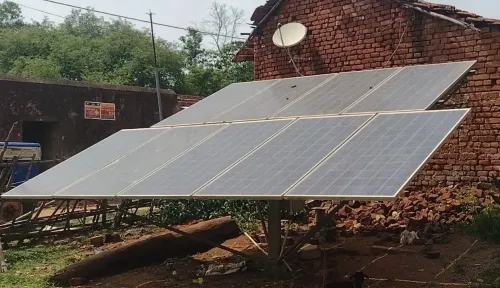
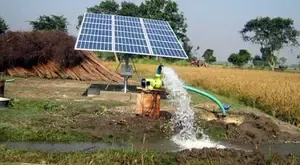
Farmers in remote blocks such as Dediapada and Sagbara had historically depended on monsoon rainfall for cultivation, constrained by limited grid connectivity, eco-sensitive zone restrictions, and the high operating cost of diesel-powered irrigation. Under PM-KUSUM Component-B, off-grid standalone solar pumps allow farmers to irrigate fields during daylight hours without relying on electricity supply or diesel fuel.
Notably, the absence of new power lines, poles, and substations has helped minimise ecological disturbance around the Shoolpaneshwar Wildlife Sanctuary, reducing both diesel consumption and associated pollution in a sensitive biodiversity corridor.
Full Subsidy for Tribal and Forest-Area Beneficiaries
Under a special arrangement for tribal and forest areas in Gujarat, beneficiaries receive 100% financial assistance — structured as 60% funding from the Central government and 40% from the state government. This arrangement allows small and marginal farmers to install systems without any out-of-pocket expenditure.
Launched in 2019, PM-KUSUM targets the installation of 14 lakh off-grid solar agricultural pumps nationally. According to official figures, 13,07,190 pumps have been sanctioned and 11,49,988 installed so far, representing approximately 88% of the national target achieved.
Impact on Farmers: Three Seasons, Rising Incomes
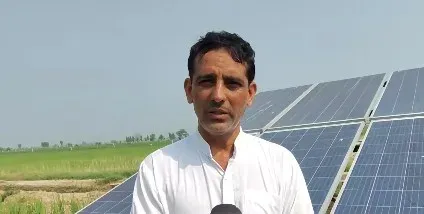
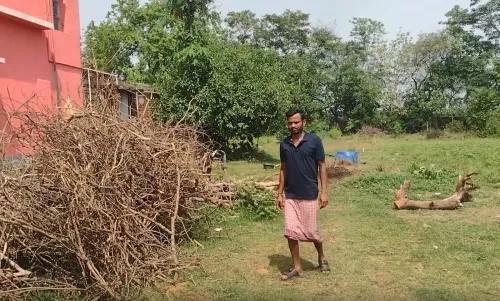
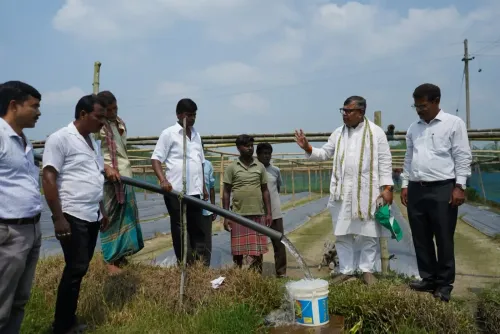
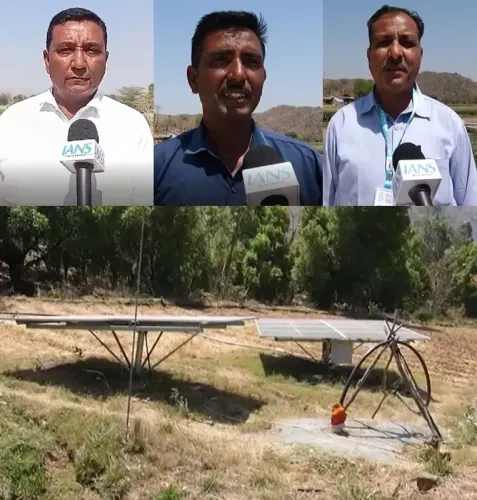
Rakesh Vasava, a farmer from Samot village in Dediapada, said the scheme had fundamentally changed his agricultural calendar. 'Earlier, we could cultivate only one crop during the monsoon. After receiving the benefit of the PM-KUSUM scheme, we now farm in all three seasons of the year. Our income has increased through crops such as maize, paddy, pulses and vegetables,' he said.
Vasava added that his selection as a scheme beneficiary earned him an invitation to the Republic Day celebrations in New Delhi on 26 January this year, where he had the opportunity to interact with President Droupadi Murmu.
B.B. Patel, Executive Engineer at DGVCL, Rajpipla, said farmers in Dediapada, Sagbara, and Chikda were now cultivating crops across the Kharif, Rabi, and summer seasons. 'As a result, agricultural income has increased, migration in search of employment has declined, animal husbandry has received a boost, and farmers have gained an additional source of income,' he said.
What Comes Next
With Gujarat's PM-KUSUM implementation accelerating, attention will turn to whether the remaining sanctioned pumps statewide are installed on schedule and whether the model from Narmada — full subsidy, off-grid design, eco-sensitive compliance — can be replicated in other tribal districts across the country.
Point of View
Yet the same model's replicability in non-tribal districts remains unproven. Nationally, 88% of the 14-lakh target has been sanctioned but not yet installed, which means the gap between paperwork and working pumps is still over 1.5 lakh units. The Narmada model's real test is whether reduced seasonal migration and increased farm income hold up over multiple crop cycles — data the government has not yet published.
NationPress
18 Sept 2026
Frequently Asked Questions
What is the PM-KUSUM scheme and what does it offer farmers?
PM-KUSUM (Pradhan Mantri Kisan Urja Suraksha evam Utthan Mahabhiyan) is a Central government scheme launched in 2019 to provide farmers with solar-powered irrigation pumps, reducing dependence on diesel and grid electricity. In tribal and forest areas of Gujarat, beneficiaries receive 100% financial assistance — 60% from the Centre and 40% from the state — at no cost to the farmer.
Why does Narmada district have the highest number of PM-KUSUM pumps in Gujarat?
Narmada district's geography — with over 1.06 lakh hectares of forests and hills — makes conventional grid infrastructure difficult and expensive to deploy. Remote blocks like Dediapada and Sagbara had limited electricity access, making off-grid solar pumps under PM-KUSUM Component-B the most practical solution for year-round irrigation.
How many solar pumps have been installed under PM-KUSUM nationally?
Nationally, 13,07,190 pumps have been sanctioned and 11,49,988 installed under PM-KUSUM against a target of 14 lakh off-grid solar agricultural pumps, representing approximately 88% of the target achieved, according to official figures.
What has been the impact on tribal farmers in Narmada?
Farmers who previously cultivated only one crop during the monsoon season are now farming across Kharif, Rabi, and summer seasons. According to officials, agricultural income has risen, seasonal migration for employment has declined, and animal husbandry has received a boost in the district.
How has the scheme affected the Shoolpaneshwar Wildlife Sanctuary area?
Because PM-KUSUM Component-B uses standalone off-grid solar pumps, no new power lines, poles, or substations were required in or around the Shoolpaneshwar Wildlife Sanctuary. This has minimised ecological disturbance in the eco-sensitive zone while also cutting diesel consumption and associated pollution.