Puri Credits Modi's Diplomacy for Navigating Global Energy Crisis
Synopsis
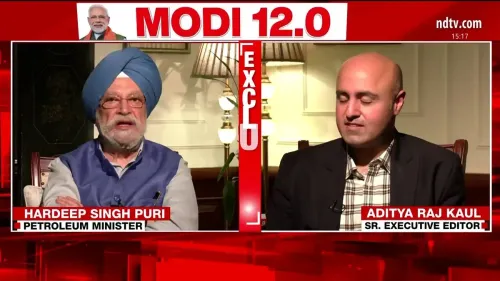
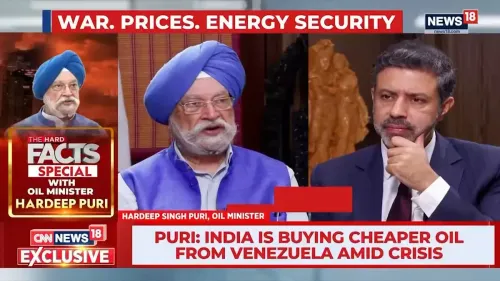
Union Petroleum Minister Hardeep Singh Puri praised PM Modi's leadership and diplomatic acumen for navigating India through the 21st century's worst global energy crisis, citing supply diversification, strategic reserve management, and proactive diplomacy as key instruments.
Key Takeaways
Petroleum Minister Hardeep Singh Puri credited PM Narendra Modi with steering India through the biggest global energy crisis of the 21st century.
Puri cited five pillars of the government's response: early crisis assessment, new supply sources, balanced resource use, strategic reserve management, and diplomatic outreach.
India significantly increased Russian crude imports after 2022 to stabilise domestic fuel prices amid global supply disruptions.
The government's Strategic Petroleum Reserve infrastructure at Mangalore and Padur played a central role in buffering supply shocks.
Puri directly criticised opposition figures for 'spreading rumours and seeking political advantage' during the crisis period.
The minister's post signals the BJP will continue positioning its energy-crisis management as a key governance credential.
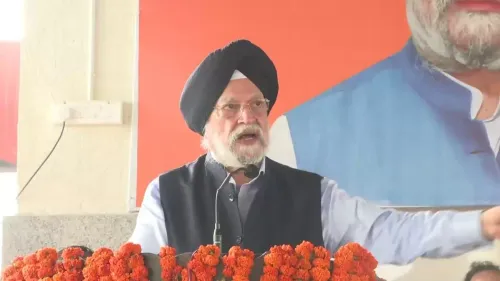
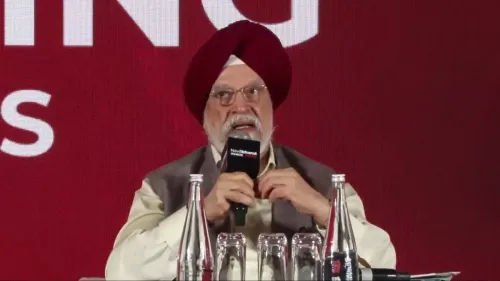
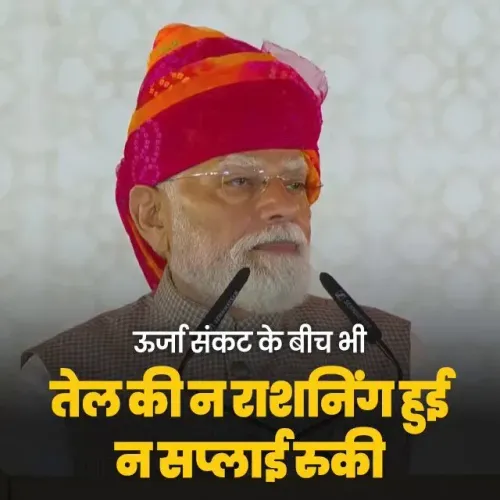
Union Petroleum Minister Hardeep Singh Puri on Saturday, 4 July 2026, credited Prime Minister Narendra Modi's leadership, decisive policy choices, and diplomatic outreach for steering India through what he described as the biggest global energy crisis of the 21st century, asserting that the country's efforts ultimately prevailed.
Context
Puri's post, addressed jointly to the Prime Minister's Office, was written in Hindi and carried a pointed political edge. Translated, it reads: 'इतिहास केवल संकटों को नहीं, बल्कि संकट के समय लिए गए साहसिक निर्णयों को भी याद रखता है' ('History remembers not only crises, but also the bold decisions taken during them'). The minister argued that India succeeded by assessing the crisis early, securing new energy supply sources, balancing domestic resource use, managing strategic reserves effectively, and deploying diplomatic relationships constructively.
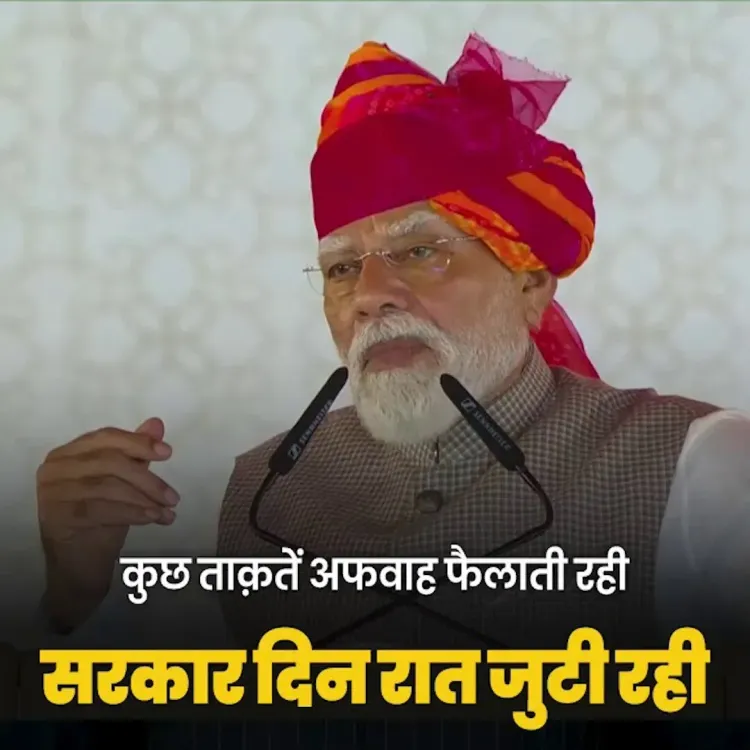
Puri also took a direct swipe at political opponents, stating that while 'some people were busy spreading rumours, stoking fears, and seeking political advantage,' the Modi government worked round the clock to protect the interests of 140 crore Indians.
Policy Backdrop
The post draws on a well-documented policy shift that accelerated after the 2022 global energy disruption triggered by the conflict in Ukraine. India sharply increased imports of discounted Russian crude, diversifying away from its traditional dependence on West Asian suppliers. This move helped stabilise domestic fuel prices at a time when energy costs surged across much of the world.
Simultaneously, the government leaned on its Strategic Petroleum Reserve (SPR) infrastructure — emergency crude stockpiles maintained at sites including Mangalore and Padur — to buffer supply shocks. Successive Union Budgets since 2015 had reiterated the goal of expanding SPR capacity to cover 90 days of consumption, laying the groundwork for the crisis-management response Puri now highlights.
India's broader energy diplomacy under the Modi government has involved long-term contracts and spot purchases across a widened supplier base, reducing vulnerability to any single region's instability. Puri, a former career diplomat, has been a key figure in conducting that outreach as Petroleum Minister.
Stakeholders and Impact
Indian households and oil marketing companies (OMCs) were the most directly affected stakeholders during the energy price shock. For OMCs, the pressure to absorb international price volatility without passing the full burden to consumers created significant balance-sheet stress, making the government's supply diversification and reserve management critical to their financial stability.
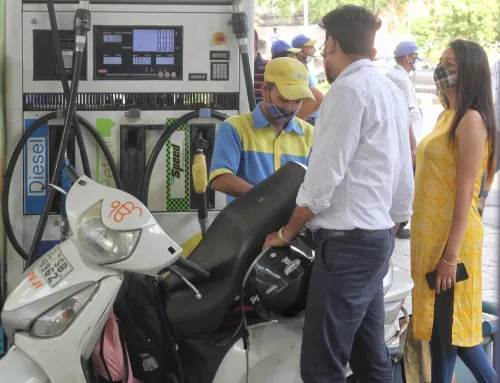
For ordinary consumers, the government's stated objective was to prevent the kind of fuel-price spiral that affected many economies. Puri's framing positions these outcomes as a vindication of the administration's proactive approach versus what he characterises as opposition obstructionism during a national emergency.
What's Next
Attention will now turn to the next Union Budget, where further announcements on SPR capacity additions and new long-term LNG or crude supply agreements are anticipated. Puri's post signals that the government intends to keep its energy-crisis management record at the centre of its political narrative, framing it as evidence of governance competence ahead of any electoral cycle. The minister's emphasis on 'courageous decisions' and 'effective diplomacy' suggests the BJP will continue to use energy security as a distinguishing policy credential.
Point of View
' he frames routine policy execution as statecraft under fire — a narrative device common to ruling parties seeking to convert administrative outcomes into electoral capital. The timing suggests the BJP is moving to consolidate its energy-security story ahead of budget season, when fuel prices and supply policy will return to public scrutiny. Puri's diplomat-turned-minister profile gives the message a technocratic credibility that purely political voices would lack.
NationPress
3 Oct 2026
Frequently Asked Questions
What did Hardeep Singh Puri say about India's energy crisis response?
Puri credited PM Modi's leadership, early crisis assessment, supply diversification, strategic reserve management, and diplomatic outreach for successfully navigating India through what he called the 21st century's biggest global energy crisis.
How did India manage the global energy crisis after 2022?
India sharply increased imports of discounted Russian crude after the 2022 Ukraine conflict, diversified its supplier base beyond West Asia, and activated its Strategic Petroleum Reserve infrastructure at sites like Mangalore and Padur to stabilise domestic fuel prices.
What is India's Strategic Petroleum Reserve and where is it located?
India's Strategic Petroleum Reserve is a government-managed emergency crude stockpile designed to buffer supply shocks. Key facilities are located at Mangalore and Padur, and the government has targeted expanding capacity to cover 90 days of consumption.
Why did India increase Russian oil imports?
India increased Russian crude imports from 2022 onwards to take advantage of discounted prices following Western sanctions on Russia after the Ukraine conflict, helping stabilise domestic fuel costs during a period of global energy price volatility.
Who is Hardeep Singh Puri?
Hardeep Singh Puri is a senior BJP leader and Union Minister of Petroleum and Natural Gas. A former career diplomat, he has served in multiple cabinet roles and is a key figure in India's energy policy and international energy diplomacy.