Puri: India Now Exports 1 Million Barrels of Refined Oil Daily
Synopsis
Union Petroleum Minister Hardeep Singh Puri has announced that India's refining capacity has reached nearly 290 MMTPA and the country now exports about 1 million barrels a day of refined products, marking India's shift from energy consumer to global energy supplier.
Key Takeaways
India's refining capacity has reached nearly 290 MMTPA , up from roughly 215 MMTPA in 2014.
India is exporting approximately 1 million barrels per day of refined petroleum products.
Minister Hardeep Singh Puri declared India is now a 'global energy supplier', not merely a consumer.
Global supply disruptions after 2022 created export opportunities that India's coastal refineries were positioned to capture.
The shift leverages competitive crude sourcing and higher-value refined product sales to generate foreign exchange.
Further refining capacity additions are anticipated for the late 2020s , with quarterly export data as the near-term watch metric.
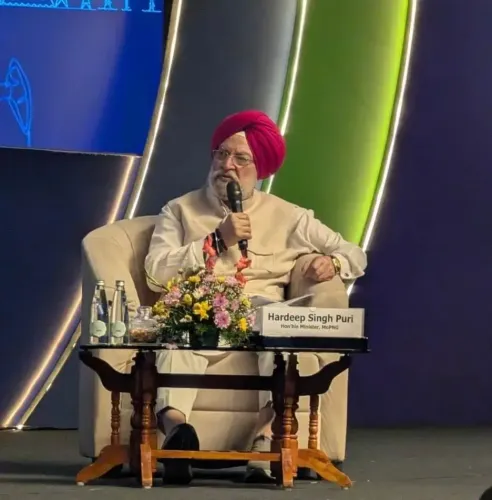
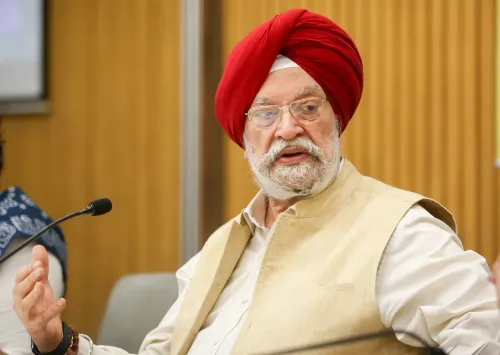
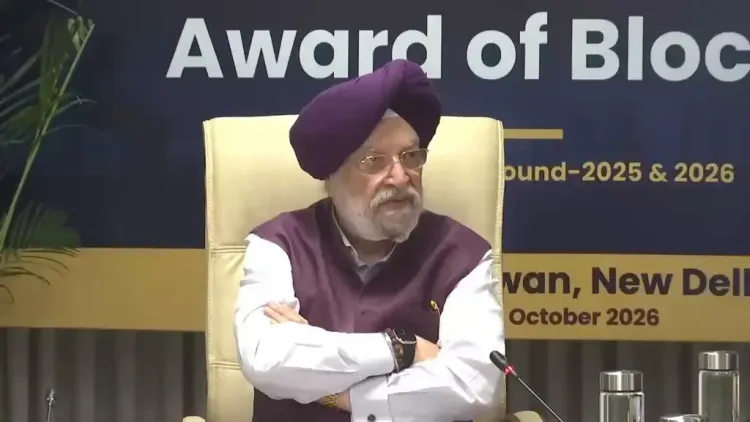
India's refining story has quietly rewritten the global energy map. Union Petroleum Minister Hardeep Singh Puri declared on Thursday, October 15, 2026, that the country's refining capacity has surged to nearly 290 million metric tonnes per annum (MMTPA) — and that India is now shipping out roughly 1 million barrels a day of refined petroleum products to the world.
That is not a statistic. That is a structural shift. For decades, India was the country that bought crude and worried about import bills. Today, it is the country selling refined product into global markets — even as geopolitical turbulence rattles supply chains everywhere else.
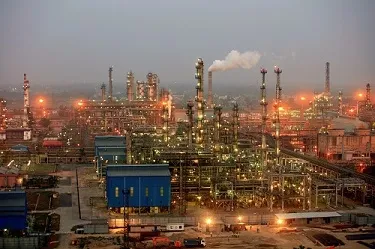
From 215 MMTPA to 290 MMTPA: The Refinery Build-Out
The numbers tell the arc clearly. When the Narendra Modi government took office in 2014, India's nameplate refining capacity stood at roughly 215 MMTPA. Projects approved through the mid-2010s — expansions at coastal facilities and greenfield additions — steadily added throughput. The minister's figure of 290 MMTPA represents a capacity jump of more than a third in just over a decade.
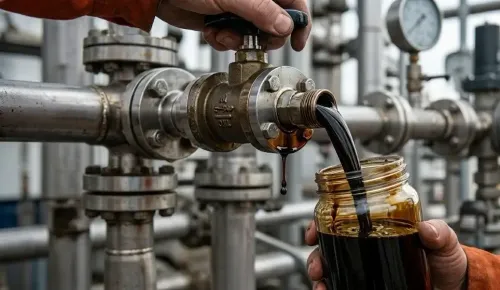
The logic was always industrial: import cheap crude, refine it into higher-value products — diesel, petrol, jet fuel, naphtha — and sell the difference. India's coastal geography makes this especially powerful. Refineries sitting on the western and eastern seaboards can receive Very Large Crude Carriers (VLCCs) and dispatch product tankers in the same port cycle, keeping logistics lean.
The Post-2022 Tailwind: Global Disruption, Indian Opportunity
The acceleration after 2022 is no coincidence. Global supply disruptions — sanctions, rerouting, the reshuffling of energy trade flows — created gaps in refined product markets that well-positioned refiners rushed to fill. India, with competitive crude sourcing arrangements and spare refining headroom, was placed to capture exactly that trade.
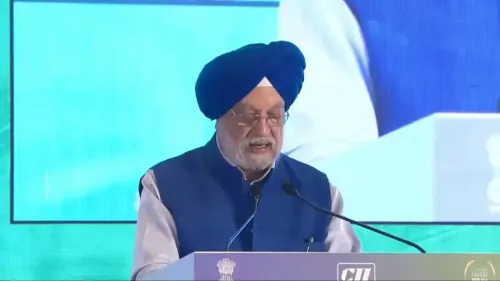
Puri framed it pointedly: 'Bharat is not just a major energy consumer anymore, we are a global energy supplier.' The rhetorical pivot from 'consumer' to 'supplier' is deliberate diplomacy — it repositions India at the high table of energy geopolitics, not as a buyer haggling over prices but as a seller with leverage.
What the Export Milestone Means Beyond the Barrels
One million barrels a day of refined exports earns foreign exchange, offsets part of the crude import bill, and builds trade relationships with buyer nations that need reliable product supply. For the Ministry of Petroleum and Natural Gas, it also validates the downstream investment thesis: that India's refining advantage is durable, not cyclical.
The next tests are already taking shape. Ministry export data for upcoming quarters will show whether the 1 million barrels per day figure holds as global demand patterns shift. And announcements on further capacity additions planned for the late 2020s will determine whether 290 MMTPA is a ceiling — or just another milestone on the way up.
From import anxiety to export ambition: India did not just expand its refineries. It rewired its position in the world's most consequential commodity market.
Point of View
Giving the ruling BJP a tangible industrial achievement to anchor its energy narrative. For India's foreign policy, exporter status changes negotiating dynamics: product-buyer nations now have a stake in India's refinery health, not just its crude import demand. The real test is whether this capacity edge survives a potential global demand slowdown or a reversal in the crude-price spread that makes Indian refining margins attractive.
NationPress
15 Oct 2026
Frequently Asked Questions
What is India's current oil refining capacity?
According to Petroleum Minister Hardeep Singh Puri, India's refining capacity has reached nearly 290 million metric tonnes per annum (MMTPA) as of October 2026, up from roughly 215 MMTPA in 2014.
How much refined petroleum does India export per day?
India is exporting approximately 1 million barrels per day of refined petroleum products, according to Minister Hardeep Singh Puri's statement on October 15, 2026.
Is India a net exporter of petroleum products?
India remains a large importer of crude oil but has become a significant net exporter of refined petroleum products, processing imported crude into higher-value fuels and chemicals for global markets.
Which ministry oversees India's oil refining and export policy?
The Ministry of Petroleum and Natural Gas, currently headed by Union Minister Hardeep Singh Puri, is responsible for India's refining capacity, crude imports, and petroleum product export policy.
Why did India's petroleum exports increase after 2022?
Global supply disruptions after 2022 created gaps in refined product markets worldwide. India's coastal refineries, competitive crude sourcing, and spare refining capacity allowed it to step in as a reliable supplier to regional and global buyers.