Is India Set to Become a Global Oil Refining and Energy Hub?
Synopsis
In a bold announcement, Petroleum Minister Hardeep Singh Puri highlighted India's ambitious plans to enhance its oil refining capacity to 310 MMTPA by 2030, aiming for a staggering 400-450 MMTPA in the long run. This move positions India as a key player in the global energy market, fostering growth and innovation in renewable energy.
Key Takeaways
India's refining capacity is set to grow significantly.
Green hydrogen is crucial for the energy transition.
India aims to become a leading global energy hub.
Innovation and sustainability are at the forefront of energy strategies.
Natural gas share in energy mix will increase dramatically.
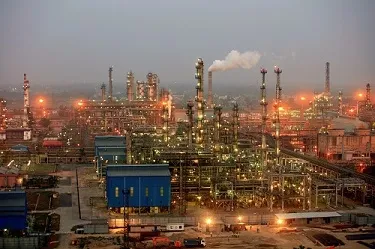
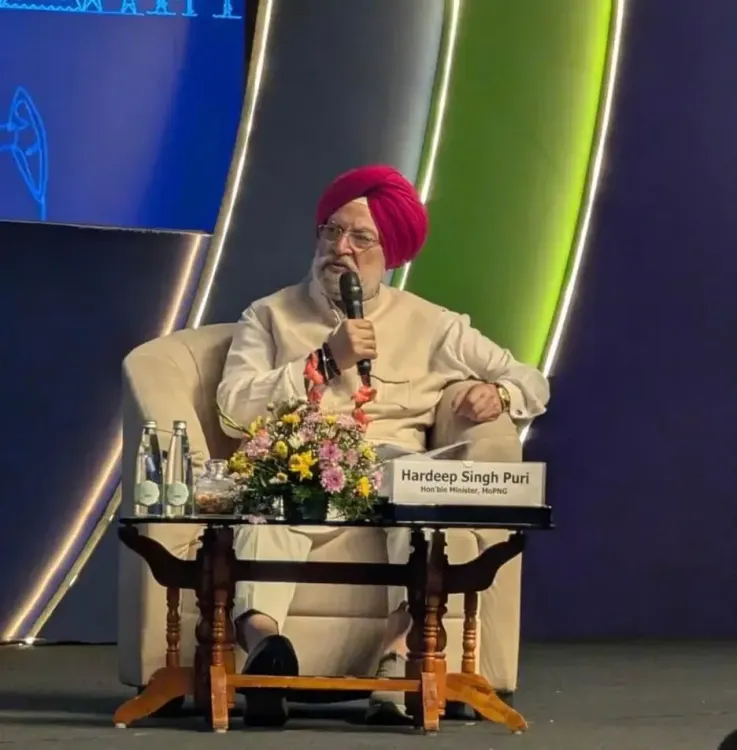
Hyderabad, Oct 28 (NationPress) Petroleum Minister Hardeep Singh Puri announced on Tuesday that India's oil refining capacity is currently at approximately 258 million metric tonnes per annum (MMTPA). This capacity is projected to increase to around 310 MMTPA by 2030, with aspirations to further expand to 400-450 MMTPA in the long run, positioning India as a global refining and energy hub.
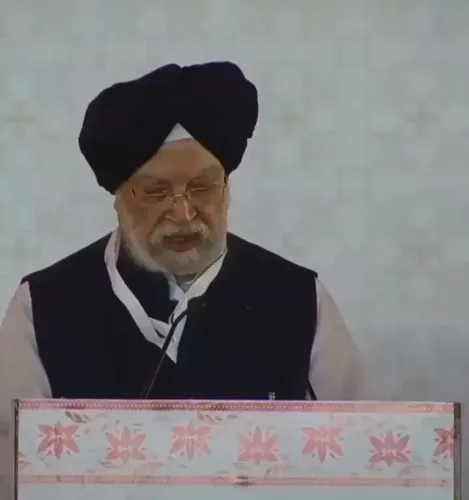
During the inaugural session of the Energy Technology Meet, the minister emphasized that this expansion will solidify India’s status among the top three refining hubs worldwide. Notably, around 20 percent of the global refining capacity faces possible shutdowns by 2035, with over 100 refineries expected to close around the globe.
While the global energy market is anticipated to grow at a subdued rate, India is projected to be a standout contributor, expected to account for nearly 30-33 percent of the growth in global energy demand in the coming years.
Puri highlighted that India's refineries are world-class, globally integrated, and ready for exports. Currently, India ranks as the fourth-largest refining nation and is among the top seven exporters of petroleum products, supplying to over 50 countries and generating revenue exceeding $45 billion in FY 2024-25.
The Minister stressed the significance of innovation and indigenisation within India's energy sector, achieving nearly 80 percent import substitution across the energy value chain.
Furthermore, he noted promising advancements in green hydrogen, revealing that recent tenders from Indian Oil and Hindustan Petroleum have decreased the price of green hydrogen from about $5.5/kg to nearly $4/kg, marking progress toward commercial viability.
He stated that green hydrogen, natural gas, and biofuels will play pivotal roles in India’s energy transition, with the Global Biofuels Alliance poised to facilitate international trade and the adoption of biofuels, including Sustainable Aviation Fuel.
Puri emphasized that India's energy strategy will encompass both fuel and petrochemical advancement as part of a measured move towards sustainability. While traditional fuels will gradually decrease in share, they will remain significant for decades as India works towards its 2047 goals.
At the same time, the share of natural gas in the energy mix is set to rise from 6 percent to 15 percent. The expansion of green hydrogen and renewables is rapidly progressing, reflecting India’s commitment to achieving its climate targets while ensuring energy security.
The Minister noted that reforms and ecosystem enhancements post-2014 have ushered in a new era of growth and innovation. He highlighted ongoing initiatives such as the Barmer Refinery and Andhra Refinery as prime examples of the sector’s forward momentum.
With over 100 biogas plants already operational and an additional 70 more in the development phase, India is cultivating an ecosystem that interlinks technology, investment, and sustainability.
Puri concluded by stating that as India progresses towards becoming a $10 trillion economy, its energy sector will not only satisfy domestic needs but also cater to global markets.
The Minister expressed optimism that by 2035, India will transition from being the world’s fourth-largest to potentially the second-largest refining power.
He underscored that India’s youthful population, growing energy demands, and proactive policy landscape will guarantee the country's active participation in shaping the future of global energy.
Point of View
India's strategic advancements in the energy sector highlight its commitment to not only meet domestic energy demands but also to significantly contribute to global markets. The ambitious plans outlined by Minister Puri reflect a proactive approach to positioning India as a leader in refining and renewable energies, which is critical for sustainable development.
NationPress
3 Oct 2026
Frequently Asked Questions
What is India's current oil refining capacity?
India's current oil refining capacity stands at approximately 258 million metric tonnes per annum (MMTPA).
What are the future projections for India's refining capacity?
India is on track to increase its refining capacity to around 310 MMTPA by 2030, with long-term plans to reach 400-450 MMTPA.
How does India rank in global refining capacities?
India is currently the fourth-largest refining nation in the world.
What role will green hydrogen play in India's energy transition?
Green hydrogen is expected to be a central element in India's energy transition, with significant price reductions making it more commercially viable.
How is India preparing for future energy demands?
India is focusing on innovations, indigenisation, and increasing the share of natural gas, green hydrogen, and renewables in its energy mix.