Puri engages 70 young leaders on India's energy rise
Synopsis
Union Petroleum Minister Hardeep Singh Puri addressed nearly 70 young professionals at the Rising Leaders Programme run by ILead Global Foundation and Konrad Adenauer Stiftung, outlining India's rise as the world's third-largest energy consumer and projecting India will drive 25 per cent of global energy demand growth over the next two decades.
Key Takeaways
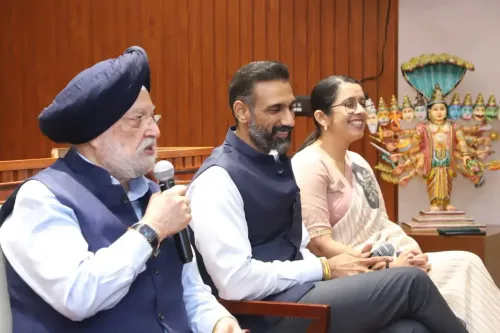
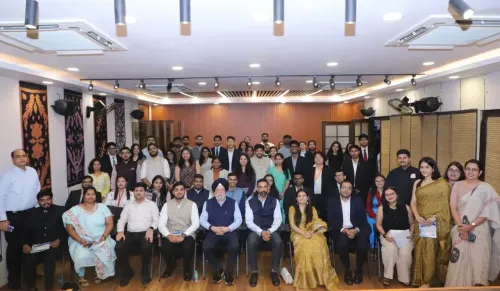
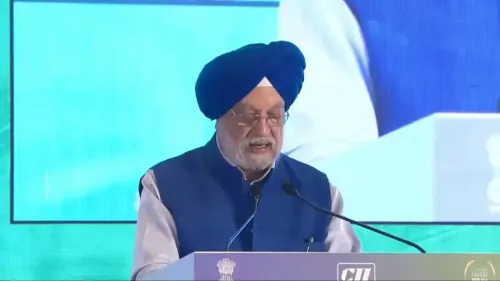
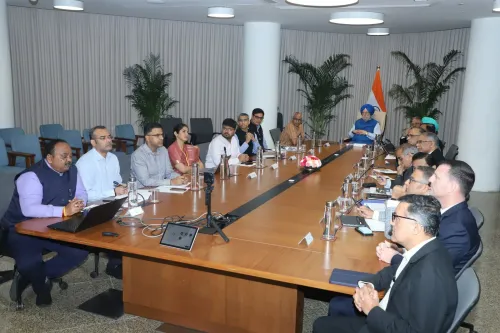
Union Petroleum Minister Hardeep Singh Puri engaged with nearly 70 young professionals and researchers at the Rising Leaders Programme on 27 September 2026 .
The event was jointly organised by ILead Global Foundation and the India office of Konrad Adenauer Stiftung .
India is currently the world's 3rd largest energy consumer , 3rd largest crude oil importer , and 4th largest refiner .
Nearly 25 per cent of global energy demand growth over the next two decades is projected to come from India.
Puri highlighted the Modi government's energy milestones including Pradhan Mantri Ujjwala Yojana , the National Biofuels Policy revision, and the International Solar Alliance .
The dialogue focused on energy resilience and India's growing role in shaping the global energy landscape amid geopolitical uncertainties.
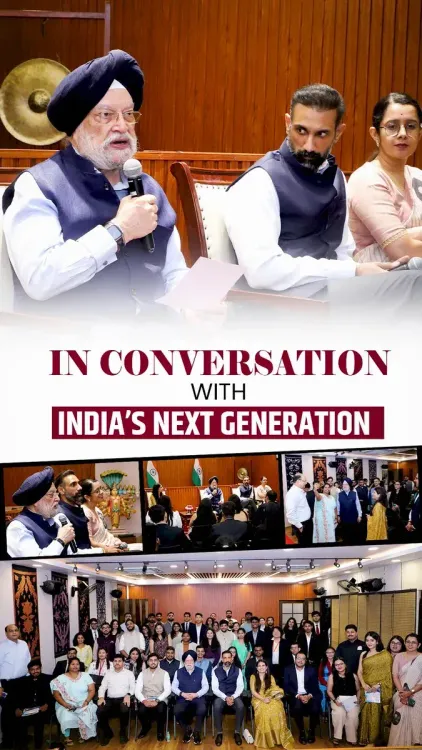
Seventy young professionals, researchers, and policy thinkers got a rare front-row seat to India's energy story on Sunday, 27 September 2026 — and Union Petroleum Minister Hardeep Singh Puri made sure the numbers did the talking. Speaking at an event organised by ILead Global Foundation and the India office of Konrad Adenauer Stiftung as part of their Rising Leaders Programme, Puri laid out the scale of India's position in the global energy order and what it means for the next generation.
The three numbers that frame India's energy moment
Puri anchored his address around a trio of statistics that are hard to argue with. India is now the world's 3rd largest energy consumer, the 3rd largest crude oil importer, and the 4th largest refiner — a convergence of rankings that places it squarely at the centre of global energy markets. He added a forward-looking figure that sharpens the stakes further: nearly 25 per cent of global energy demand growth over the next two decades is expected to originate from India.
That single projection — drawn from the kind of modelling that international energy bodies have long been flagging — reframes India not as a passive consumer scrambling to secure supply, but as an active force whose choices will shape prices, infrastructure and emissions trajectories worldwide. Puri's framing was deliberate: India is 'emerging as a key force shaping the global energy landscape,' not merely reacting to it.
From Ujjwala to supply security — the policy journey Puri mapped
The minister traced what he described as India's 'remarkable energy journey' under Prime Minister Narendra Modi, pointing to the twin goals of diversifying the energy basket and securing uninterrupted supplies — all while keeping energy affordable and sustainable for ordinary citizens amid geopolitical turbulence. The policy lineage runs deep: the Pradhan Mantri Ujjwala Yojana, launched in 2016, extended clean cooking fuel to millions of low-income households; the revised National Biofuels Policy of 2018 pushed ethanol blending targets as a lever against import dependence; and the International Solar Alliance, co-launched by India and France in 2015, signalled India's ambition to lead, not just participate in, the global renewables conversation.
Running in parallel has been a quiet but consequential build-out of refining capacity and strategic petroleum reserves — a hedge against the kind of supply shocks that have rattled energy markets repeatedly since 2021.
Why a German foundation is helping train India's next energy thinkers
The venue for this exchange is itself a signal. Konrad Adenauer Stiftung, the German Christian Democratic political foundation with a wide international footprint, has maintained an India office focused on governance and policy dialogue. Its partnership with ILead Global Foundation on the Rising Leaders Programme fits a well-worn template: use Track-II style forums to build a generation of policymakers who think in terms of international frameworks and bilateral partnerships — not just domestic imperatives. India and Germany have deepening energy ties, with intergovernmental consultations on energy cooperation forming a regular fixture in the bilateral calendar.
For Puri, a career diplomat before he entered electoral politics, this format is second nature. His audience — drawn from 'diverse disciplines' — heard not a minister defending a ministry's record, but a former UN official making the case for why India's energy choices are a global story.
What young India's future policymakers are being asked to own
The closing note of Puri's post was pointed: these are 'young minds who will help shape the India of tomorrow.' That is not rhetorical filler. With 25 per cent of global demand growth projected to flow from India over two decades, the decisions this cohort of researchers and professionals eventually influences — on storage, on grid infrastructure, on import contracts, on green hydrogen or biofuels — will reverberate well beyond India's borders.
The next test of that ambition may come sooner than expected: India-Germany intergovernmental energy consultations and any fresh targets in the forthcoming National Energy Policy update will be the real measure of whether dialogue converts into durable policy direction.
Point of View
Not just at the intergovernmental table. By foregrounding India's ranking as the world's third-largest consumer and importer alongside the 25-per-cent demand-growth projection, Puri is framing India's negotiating posture in global energy forums — a message as much for international partners as for the domestic audience. The real policy test will be whether India's National Energy Policy update translates this rhetorical confidence into binding targets.
NationPress
27 Sept 2026
Frequently Asked Questions
What did Hardeep Singh Puri say at the Rising Leaders Programme?
Puri outlined India's energy journey under PM Modi, highlighting that India is the world's 3rd largest energy consumer and 3rd largest crude oil importer, and that nearly 25 per cent of global energy demand growth over the next two decades is expected to originate from India.
What is the Rising Leaders Programme organised by ILead and Konrad Adenauer Stiftung?
The Rising Leaders Programme is a capacity-building initiative co-organised by ILead Global Foundation and the India office of Konrad Adenauer Stiftung, a German political foundation, designed to engage young professionals and researchers on governance and policy themes.
What is India's rank in global energy consumption and crude oil imports?
India is the world's 3rd largest energy consumer, 3rd largest crude oil importer, and 4th largest oil refiner.
What is India's projected share of global energy demand growth?
India is projected to account for nearly 25 per cent of global energy demand growth over the next two decades, according to figures cited by Petroleum Minister Hardeep Singh Puri.
What are key energy schemes launched under PM Modi that Puri referenced?
Puri's address drew on milestones including the Pradhan Mantri Ujjwala Yojana (2016) for clean cooking fuel access, the revised National Biofuels Policy (2018) raising ethanol blending targets, and the International Solar Alliance co-launched with France in 2015.