Kishan Reddy visits Anganwadis in Secunderabad for Aangan Milan Sewa
Synopsis
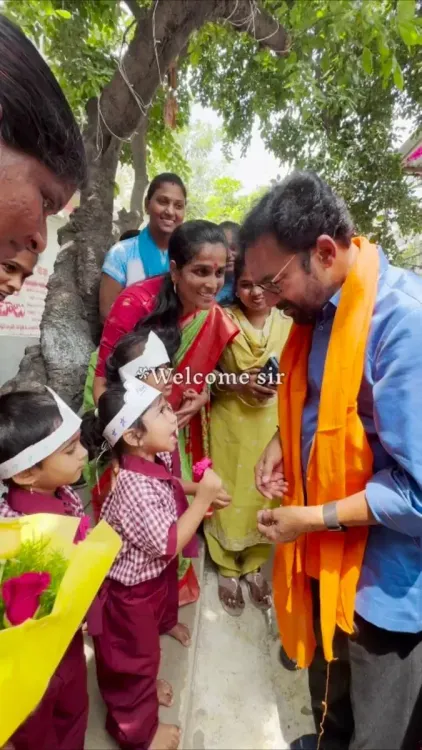
Union Minister G. Kishan Reddy visited three Anganwadi centres in Secunderabad on 26 Sep 2026 under the Aangan Milan Sewa initiative, interacting with mothers, children and workers to promote Poshan Abhiyaan and PM Matru Vandana Yojana.
Key Takeaways
Kishan Reddy visited Anganwadi centres at BJJR Nagar , Subhash Nagar , and B.K.
Guda in Secunderabad on 26 September 2026 .
The visits were part of the ' Aangan Milan Sewa ' initiative under the Seva Sankalp Abhiyan outreach programme.
Reddy highlighted Poshan Abhiyaan (launched 2018 ) — India's national nutrition convergence mission targeting stunting, undernutrition, and anaemia.
PM Matru Vandana Yojana (launched 2017 ), which provides conditional cash transfers to pregnant and lactating women, was also a key focus of awareness.
Reddy interacted directly with Anganwadi workers , mothers , and children — the frontline stakeholders of the ICDS system.
The outreach underscores BJP's strategy of amplifying central welfare messaging in opposition-governed Telangana through direct constituency engagement.
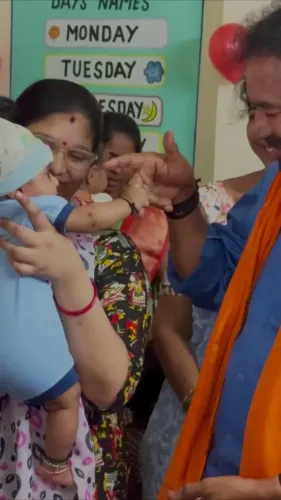
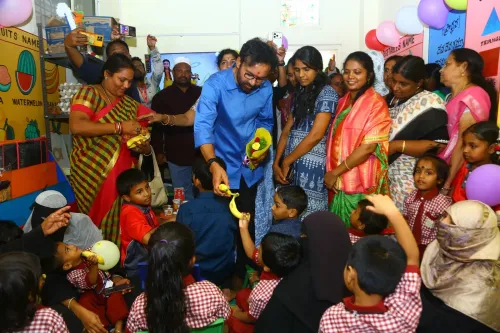
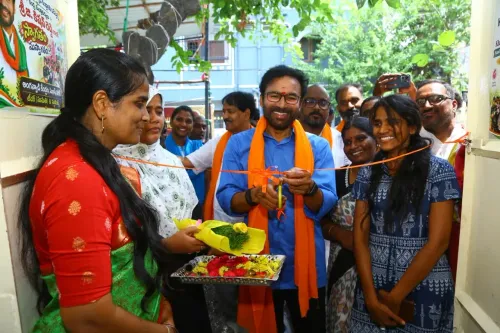
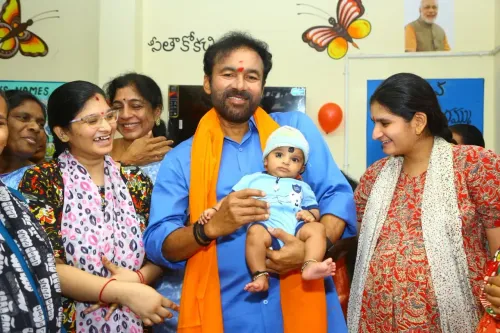
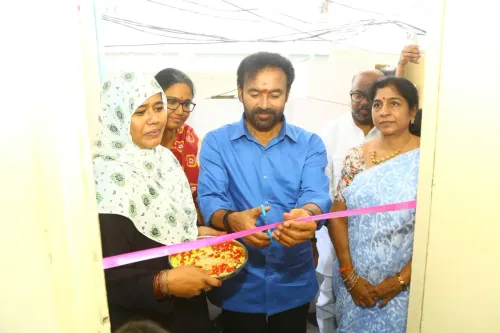
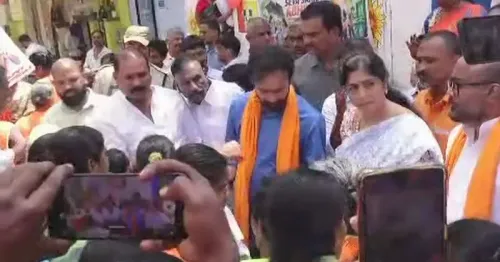
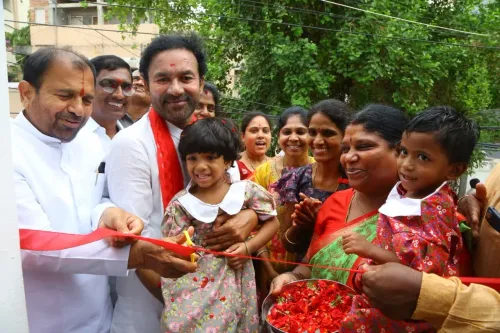
Union Coal and Mines Minister G. Kishan Reddy stepped into the everyday world of mothers, toddlers, and frontline workers on Saturday, 26 September 2026, visiting Anganwadi centres at BJJR Nagar, Subhash Nagar, and B.K. Guda across his Secunderabad Parliamentary Constituency — taking the government's nutrition message directly to the ground level.
The visits were conducted under the 'Aangan Milan Sewa' initiative, part of the broader Seva Sankalp Abhiyan outreach drive. Reddy interacted with children, mothers, and Anganwadi workers, spotlighting two central welfare pillars: Poshan Abhiyaan, the national nutrition mission, and the PM Matru Vandana Yojana, which delivers direct cash transfers to pregnant and lactating women.
What Anganwadis actually deliver — and why ministers show up
Anganwadi centres are the frontline infrastructure of India's Integrated Child Development Services (ICDS) — providing supplementary nutrition, pre-school education, and basic health services to some of the country's most vulnerable households. They are often the first point of contact between a rural or semi-urban family and any government welfare architecture.
Poshan Abhiyaan, launched in 2018, aimed to drive convergence across nutrition-linked schemes to cut stunting, undernutrition, and anaemia in children and women. PM Matru Vandana Yojana, rolled out in 2017, offers conditional cash incentives to encourage antenatal care and institutional deliveries — improving maternal and infant health outcomes at scale.
Reddy's role: BJP's bridge between Delhi policy and Telangana ground
As both a Union Minister and BJP Telangana state president, G. Kishan Reddy occupies a dual position — he must translate central scheme intent into visible local action in a state governed by the opposition. Constituency-level Anganwadi visits serve that purpose precisely: they keep the party's welfare narrative alive at the ward level and push scheme awareness where it matters most.
Such engagements have become a consistent pattern for BJP ministers in non-BJP states, where formal state-government channels may not amplify central programme messaging as actively. In Telangana, ongoing state-central coordination on health and nutrition delivery makes on-the-ground visibility particularly pointed.
The Anganwadi workers themselves — largely women, often underpaid, and chronically stretched — remain the hinge on which both schemes turn. No policy reaches a child or a mother without them. That Reddy chose to meet them directly, not just the beneficiaries, is the detail worth noting.
Point of View
Keeping central scheme branding alive at the ward level where state governments have little incentive to amplify it. The dual hat — Union minister and Telangana BJP chief — makes him particularly well-suited for precisely this kind of ground-level optics. The move also arrives at a moment when nutrition outcomes remain a politically sensitive metric nationally, keeping Poshan Abhiyaan in the public eye serves both a policy and an electoral purpose. Analysts tracking BJP's Telangana strategy will note these visits as part of a sustained pre-cycle constituency presence, not a one-off.
NationPress
27 Sept 2026
Frequently Asked Questions
What is the Aangan Milan Sewa initiative?
Aangan Milan Sewa is an initiative under the Seva Sankalp Abhiyan through which leaders visit Anganwadi centres to interact with beneficiaries and promote nutrition and maternal welfare schemes. G. Kishan Reddy conducted such visits in Secunderabad on 26 September 2026.
What is Poshan Abhiyaan and when was it launched?
Poshan Abhiyaan is India's national nutrition mission, launched in 2018 , aimed at reducing stunting, undernutrition, and anaemia among children and women by converging multiple nutrition-related government schemes.
What benefits does PM Matru Vandana Yojana provide?
PM Matru Vandana Yojana, launched in 2017 , provides conditional cash transfers to pregnant and lactating women to encourage antenatal care, institutional deliveries, and improved maternal and child health outcomes.
Which Anganwadi centres did Kishan Reddy visit in Secunderabad?
Kishan Reddy visited Anganwadi centres at BJJR Nagar, Subhash Nagar, and B.K. Guda — all located within his Secunderabad Parliamentary Constituency in Telangana.
What is Kishan Reddy's role in the BJP in Telangana?
G. Kishan Reddy serves as both the Union Minister of Coal and Mines in the central government and as the BJP's Telangana state president, making him the party's primary face in the state.