CM Dhami: Uttarakhand's Anti-Cheating Law Sent 100+ to Jail
Synopsis
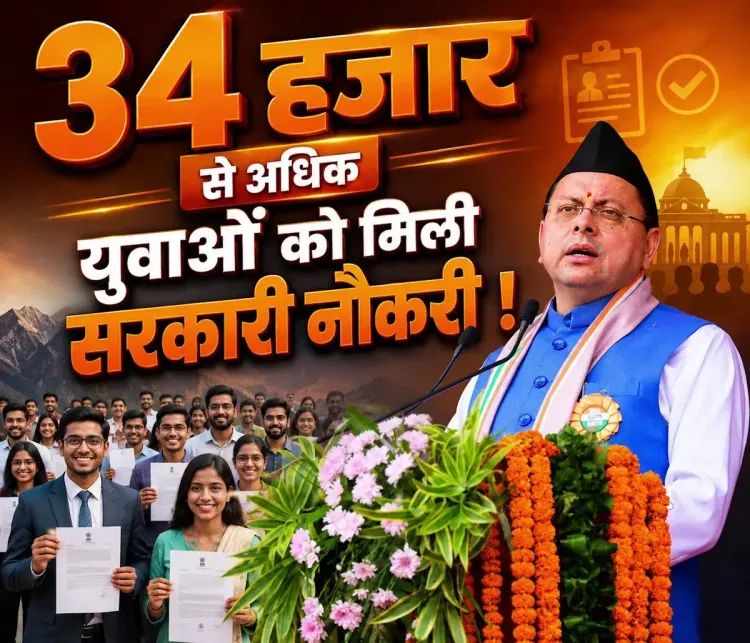
Uttarakhand CM Pushkar Singh Dhami marked Independence Day 2026 by claiming the state's strict anti-cheating law has jailed over 100 paper-leak operatives and enabled more than 34,000 transparent government appointments in five years, positioning Uttarakhand as a national model for clean recruitment.
Key Takeaways
Uttarakhand CM Pushkar Singh Dhami announced on Independence Day, August 15, 2026 that the state enforces what he calls India's strictest anti-copying law.
Over 100 individuals linked to paper-leak networks have been sent to jail under the law's enforcement.
More than 34,000 government jobs have been filled through transparent recruitment processes over the past five years .
The law directly targets organised paper-leak gangs, addressing a crisis that has undermined examination credibility across multiple Indian states.
Uttarakhand's approach is being positioned as a potential model ahead of similar legislative debates at the national and other state levels.
On Independence Day, August 15, 2026, Uttarakhand Chief Minister Pushkar Singh Dhami declared that the state's landmark anti-cheating law — billed as the strictest of its kind in the country — has fundamentally redrawn the map of government recruitment in the hills. Over 100 paper-leak mafias are behind bars. More than 34,000 young people have secured government jobs through clean, transparent processes in five years. Two numbers. One very loud message.
The Law That Targeted the Leak Networks
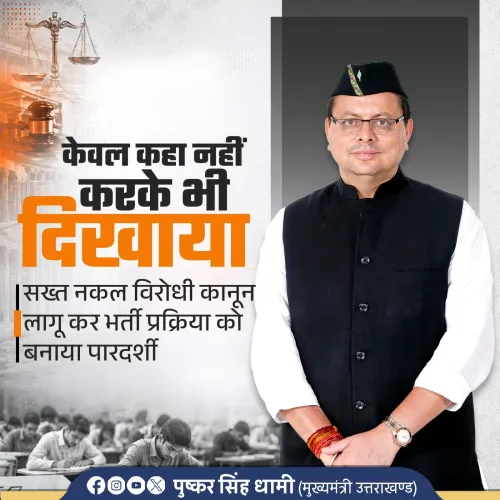
Dhami posted in Hindi on Saturday, stating: 'पेपर लीक गिरोहों पर कड़ा प्रहार करते हुए देश का सबसे सख्त नकल विरोधी कानून लागू किया गया है' — 'Striking hard at paper-leak gangs, the country's strictest anti-copying law has been enforced.' The framing is deliberate: this is not a routine administrative update, but a claim of supremacy — that Uttarakhand has gone further than any other Indian state in legislating against examination fraud.
Paper leaks have been a slow-burning crisis across India, corroding public faith in competitive examinations that determine careers for millions of aspirants. States from Rajasthan to Bihar have faced recurring scandals, and the political cost of inaction has grown steep. Uttarakhand's move to enact and enforce a dedicated anti-cheating statute fits a broader state-level trend — but Dhami's government is explicitly positioning its version as the benchmark.
34,000 Jobs and What They Represent
The 34,000-plus government appointments cited by the Chief Minister over the past five years are presented as the direct dividend of cleaning up the recruitment pipeline. For a relatively small hill state, that figure carries weight — each posting represents a family whose breadwinner did not have to bribe, leak, or wait for a rigged result. The state's recruitment bodies, long viewed with suspicion, are being recast as credible institutions.
The claim that over 100 individuals linked to cheating networks have been jailed signals that enforcement has moved beyond warnings. Prosecuting organised leak syndicates — which often involve insiders, printers, and middlemen — requires both legal teeth and political will. Dhami's Independence Day timing is pointed: framing anti-corruption governance as an act of national service.
A Template Other States Are Watching
India has no single national anti-paper-leak statute that covers all state-level examinations, making each state's legislative choice consequential. As more state governments face pressure from job-seeking youth — one of the most politically mobilised demographics in the country — Uttarakhand's model is likely to be scrutinised closely. The next test will come with upcoming state recruitment cycles: whether the numbers hold, and whether the courts validate the prosecutions already underway.
For Dhami, the post is also a political ledger entry — five years of governance distilled into two clean statistics on a day the nation is listening.
The real verdict, though, will be written by the next batch of aspirants who sit for a Uttarakhand government exam — and find the paper exactly where it should be: sealed until the moment it is opened.
Point of View
000 jobs, 100+ arrests), the BJP government is attempting to convert anti-corruption legislation into an electoral asset ahead of future state polls. The broader significance lies in the absence of a national framework: with no central anti-paper-leak law covering all state exams, each state's legislation becomes its own political and policy experiment, and Uttarakhand is now staking a claim to lead that conversation.
NationPress
30 Sept 2026
Frequently Asked Questions
What is Uttarakhand's anti-cheating law?
Uttarakhand has enacted what Chief Minister Pushkar Singh Dhami describes as India's strictest anti-copying law, designed to penalise paper-leak gangs and ensure fair, transparent government recruitment examinations in the state.
How many paper-leak mafias have been jailed in Uttarakhand?
According to CM Dhami's Independence Day 2026 statement, over 100 individuals linked to cheating and paper-leak networks have been sent to jail under the enforcement of the state's anti-cheating legislation.
How many government jobs were given in Uttarakhand in the last 5 years?
CM Dhami stated that more than 34,000 young people have received government jobs through transparent and fair recruitment processes in Uttarakhand over the past five years.
Is there a national anti-paper-leak law in India?
India does not have a single comprehensive national law covering all state-level competitive examinations. Individual states, including Uttarakhand, have enacted their own legislation, making state-level frameworks the primary defence against paper-leak fraud.
Why did CM Dhami post about the anti-cheating law on Independence Day?
Dhami chose Independence Day, August 15, 2026 to highlight the law's outcomes — a deliberate framing that presents clean governance and anti-corruption action as a form of national service, amplifying the message to a wider audience on a day of heightened public attention.