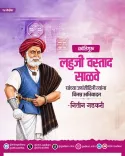
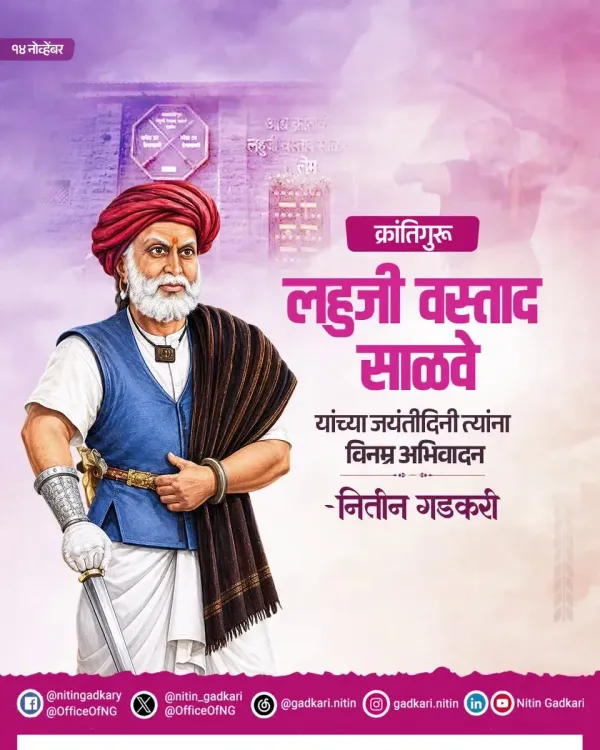
Gadkari pays tribute to Lahuji Vastad Salve on birth anniversary
Synopsis
Union Minister Nitin Gadkari marked the birth anniversary of Lahuji Vastad Salve, the 19th-century Maharashtrian wrestler and revolutionary mentor who trained anti-colonial fighters including Vasudev Balwant Phadke, calling him the 'Guru of Revolution' in a Marathi post on X.
Key Takeaways
Nitin Gadkari paid tribute to Lahuji Vastad Salve on his birth anniversary on 14 November 2026 .
Gadkari referred to Salve as क्रांतिगुरू — the Guru of Revolution — in his Marathi post on X.
Lahuji Vastad Salve was a 19th-century Maharashtrian wrestler and martial arts trainer who mentored early anti-colonial fighters.
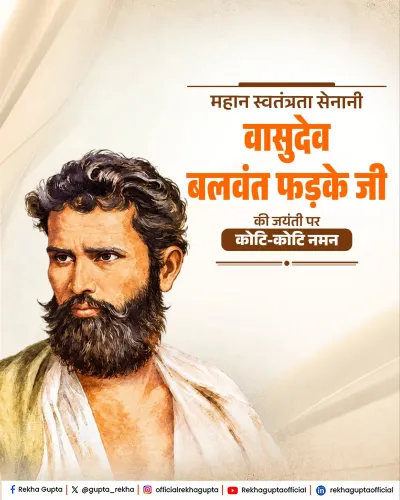
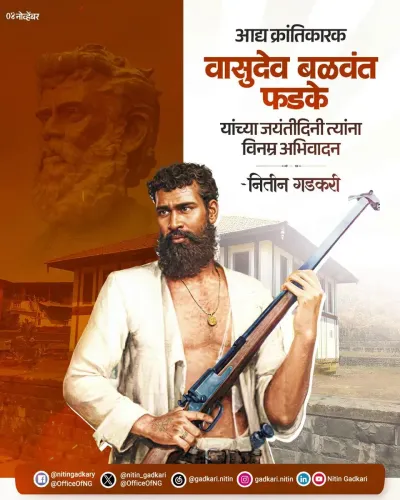
His most noted student was Vasudev Balwant Phadke , one of India's earliest armed resisters against British rule.
Senior BJP leaders regularly mark birth anniversaries of regional revolutionaries as part of a broader cultural-nationalist outreach in Maharashtra .
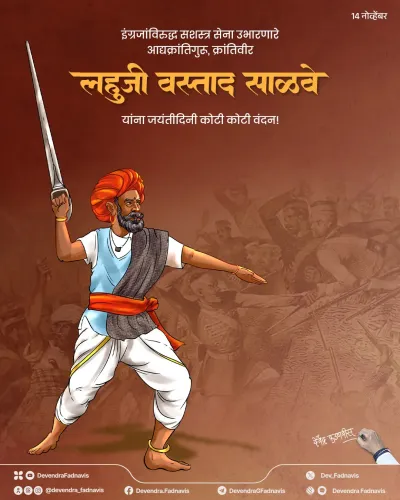
A 19th-century wrestler who trained revolutionaries in both body and spirit gets his moment in the national conversation — Union Road Transport and Highways Minister Nitin Gadkari on Saturday, 14 November 2026, offered a respectful salute to Lahuji Vastad Salve on his birth anniversary, calling him 'क्रांतिगुरू' — the Guru of Revolution.
Posting in Marathi on X, Gadkari wrote: 'On the birth anniversary of Lahuji Vastad Salve, the revolutionary guide who shaped many warriors of the freedom struggle, I offer my humble tribute.' The hashtags #लहुजी_वस्ताद_साळवे and #LahujiVastadSalve accompanied the post, signalling an effort to amplify the name beyond Maharashtra's borders.
Who was Lahuji Vastad Salve — and why he still matters
Lahuji Vastad Salve was a Maharashtrian wrestler, martial arts guru, and anti-colonial mentor whose influence stretched far beyond the wrestling pit. Active in the period following 1857, Salve is credited with training figures such as Vasudev Balwant Phadke — one of the earliest armed resisters against British rule — in physical combat and the ideology of defiance. His akhada was not merely a gymnasium; it was a school for revolution. In an era when colonial administrators worked systematically to disarm and demobilise Indian society, Salve's insistence on physical culture and martial readiness carried a quietly radical charge. He belongs to that category of freedom-struggle figures whose contributions were local, embodied, and deeply community-rooted — and therefore frequently overlooked in national-level history writing.Maharashtra's revolutionary roster and BJP's cultural-nationalist messaging
Gadkari's tribute fits a recognisable pattern. Senior BJP leaders from Maharashtra regularly mark birth anniversaries of 19th-century regional revolutionaries and physical-culture icons on social media. These posts serve a dual purpose: honouring genuine historical figures, and reinforcing a cultural-nationalist narrative that foregrounds Maharashtra's specific, grassroots contribution to the independence movement. Salve's story — a lower-caste wrestling master whose students went on to pick up arms against the British Empire — resonates across multiple fault lines of contemporary Indian politics: caste assertion, anti-colonial pride, and the valorisation of indigenous martial traditions. That layered resonance makes his anniversary a moment politicians across the spectrum have reason to acknowledge. Expect school programmes and state government events in Maharashtra to mark lesser-known revolutionary figures around November each year, as local administrations increasingly seek to weave regional heroes into the broader national narrative of the freedom struggle. Lahuji Vastad Salve's legacy, long confined to Maharashtrian cultural memory, is slowly finding a wider stage — and posts like Gadkari's are part of how that happens.Point of View
BJP leaders are quietly contesting the dominant Brahmin-centric memory of Maharashtra's revolutionary history. The pattern points to a longer arc: the party is investing in cultural memory as much as in infrastructure or governance to consolidate its position in the state.
NationPress
14 Nov 2026
Frequently Asked Questions
Who was Lahuji Vastad Salve?
Lahuji Vastad Salve was a 19th-century Maharashtrian wrestler, martial arts trainer, and anti-colonial mentor who trained revolutionary figures including Vasudev Balwant Phadke in physical combat and anti-British ideology after 1857.
Why is Lahuji Vastad Salve called Krantigurun?
Lahuji Vastad Salve earned the title 'Krantigurun' — Guru of Revolution — because his akhada (wrestling school) served as a training ground not just for physical fitness but for the spirit of armed resistance against British colonial rule.
What is the connection between Lahuji Vastad Salve and Vasudev Balwant Phadke?
Vasudev Balwant Phadke, one of India's earliest armed resisters against British rule, is counted among the notable figures trained by Lahuji Vastad Salve in both martial arts and anti-colonial thought.
Why did Nitin Gadkari pay tribute to Lahuji Vastad Salve?
Nitin Gadkari paid tribute on 14 November 2026 to mark the birth anniversary of Lahuji Vastad Salve, calling him the Guru of Revolution in a Marathi post on X as part of a broader BJP practice of honouring regional freedom fighters from Maharashtra.
When is Lahuji Vastad Salve's birth anniversary celebrated?
Lahuji Vastad Salve's birth anniversary is commemorated in November, with politicians, cultural organisations, and state government bodies in Maharashtra marking the occasion each year, though the exact verified birth date is not conclusively established in historical records.