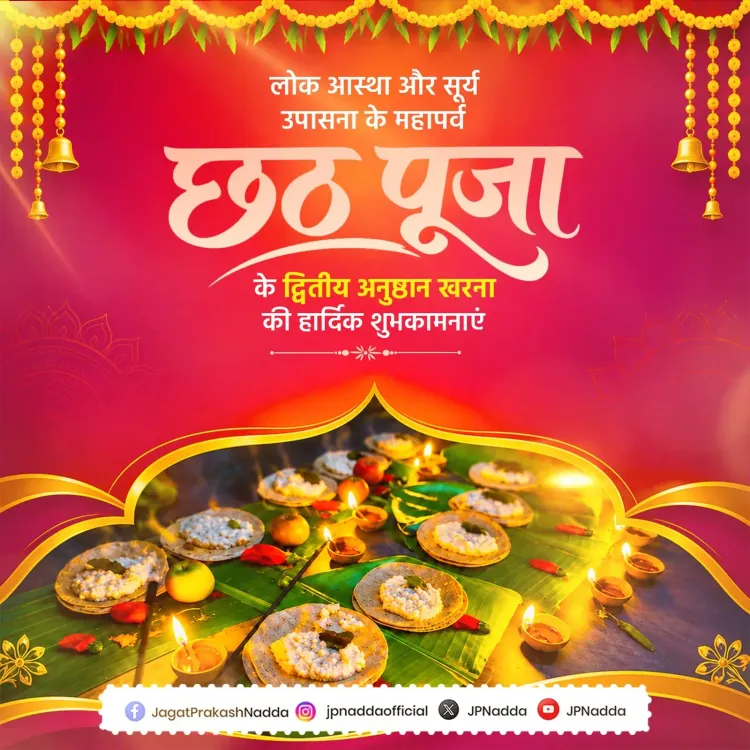
Nadda extends Kharna greetings on Chhath Puja
Synopsis
Union Health Minister and BJP president J. P. Nadda marked the Kharna ritual of Chhath Puja on 14 November 2026, greeting fasting devotees and invoking the blessings of Chhathi Maiya and Lord Suryadev for health, peace and prosperity.
Key Takeaways
Nadda , Union Health Minister and BJP national president, posted Kharna greetings on 14 November 2026 .
Kharna is the second ritual of four-day Chhath Puja , marking the beginning of a strict waterless fast for devotees.
Nadda described Chhath as a festival of 'faith, dedication and gratitude towards nature' and invoked Chhathi Maiya and Lord Suryadev .
He specifically prayed for uttam swasthya (good health) — a natural resonance with his role as Health Minister .
Chhath Puja draws its core following from Bihar , eastern Uttar Pradesh , Jharkhand and parts of Nepal , with large observances in metro cities too.
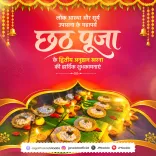
As millions of devotees across Bihar, eastern Uttar Pradesh, Jharkhand and beyond observed Kharna — the second and deeply austere ritual of Chhath Puja — Union Health Minister J. P. Nadda extended warm wishes to all vratis (fasting devotees) on Saturday, 14 November 2026.
Posting on X in Hindi, Nadda offered his greetings with the words: 'प्रकृति के प्रति आस्था, समर्पण और कृतज्ञता का प्रतीक महापर्व छठ पूजा' — describing Chhath Puja as a great festival symbolising 'faith, dedication and gratitude towards nature.' He invoked the blessings of Chhathi Maiya and Lord Suryadev, praying that happiness, peace, prosperity and good health flow into every devotee's life. His post closed with a resounding 'Jai Chhathi Maiya!'
What Kharna means and why it matters
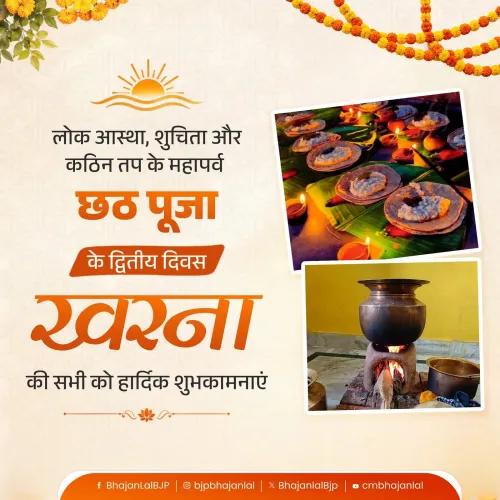
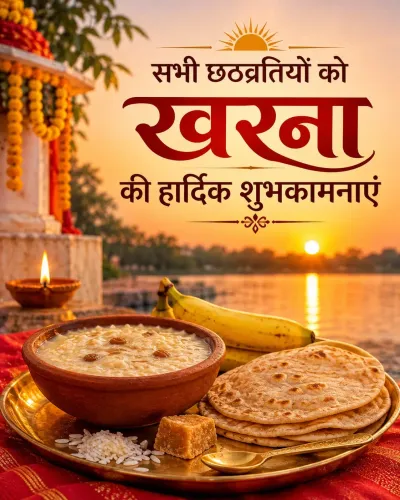
Chhath Puja is a four-day Hindu festival unique in its rigour and its direct, priest-free communion with nature. The Kharna ritual — observed on the second day — marks the point at which vratis conclude a day-long fast by preparing and consuming a sacred prasad of rice pudding and jaggery, then committing to a waterless, foodless fast that stretches until the festival's final sunset or sunrise arghya. It is considered among the most demanding votive observances in the Hindu calendar.
The festival draws its largest following from Bihar, eastern Uttar Pradesh, Jharkhand and parts of Nepal, but its reach has grown with migrant communities into cities as far as Delhi, Mumbai and beyond — making it one of India's most widely visible open-air celebrations.
A health minister's message with a natural resonance
That Nadda — in his capacity as Union Minister of Health and Family Welfare — specifically invoked 'good health' (uttam swasthya) alongside peace and prosperity is a detail worth noting. Chhath Puja's ethos of clean riverbanks, fasting, and direct solar worship is itself deeply intertwined with ideas of physical and spiritual purification. The overlap between the festival's core symbolism and a health minister's portfolio gives the greeting an organic, rather than merely ceremonial, weight.
As BJP national president, Nadda's outreach to the vast Chhath-observing electorate of the Gangetic belt — a politically consequential demographic — is also consistent with the party's sustained cultural engagement across major festivals.
The devotees standing waist-deep in rivers at dawn, offerings held skyward, do not need a minister's tweet to feel the moment's power. But a nation watching them does.
Point of View
But its political geometry is deliberate: Chhath Puja commands enormous social and electoral weight across the Gangetic belt — a region central to the BJP's national arithmetic. By framing the festival through the lens of nature, gratitude and health — aligning with his ministerial identity — Nadda avoids a purely transactional outreach. The pattern of cabinet ministers posting festival greetings on X reflects a broader BJP strategy of continuous cultural visibility between election cycles, keeping the party present in everyday emotional moments of its core voter communities.
NationPress
14 Nov 2026
Frequently Asked Questions
What is Kharna in Chhath Puja?
Kharna is the second day of Chhath Puja on which devotees observe a full day's fast, then break it in the evening with a sacred prasad of rice pudding and jaggery before beginning a strict waterless fast that lasts until the final arghya offering.
Why did JP Nadda post Chhath Puja greetings?
As Union Health Minister, BJP national president and a prominent leader with a large public following, Nadda routinely marks major Indian religious festivals on X to extend wishes to devotees and communities across the country.
Which states celebrate Chhath Puja the most?
Chhath Puja is observed most intensely in Bihar, eastern Uttar Pradesh, Jharkhand and parts of Nepal, with significant celebrations also held in Delhi, Mumbai and other cities with large migrant communities from these regions.
Who are Chhathi Maiya and Suryadev in Chhath Puja?
Chhathi Maiya is the folk deity — believed to be the sixth form of Shakti — to whom devotees offer prayers during Chhath, while Suryadev is the Sun God. The festival is fundamentally a solar worship tradition tied to gratitude for life and nature.
What does JP Nadda do as BJP national president?
As BJP national president, J. P. Nadda is the chief organisational head of the Bharatiya Janata Party, overseeing party affairs, elections and cadre coordination across India, while simultaneously serving as Union Minister of Health and Family Welfare and Minister of Chemicals and Fertilizers.