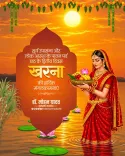
CM Rekha Gupta greets Delhi on Chhath Puja's Kharna day
Synopsis
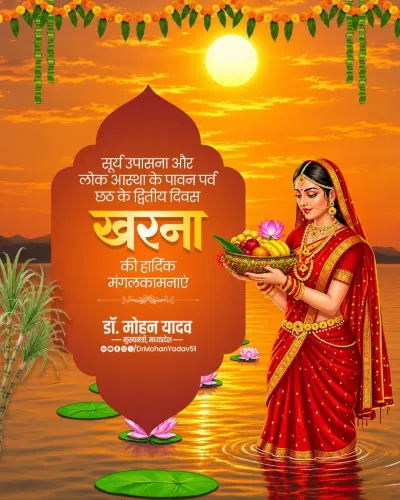
Delhi Chief Minister Rekha Gupta extended warm greetings on Kharna, the second sacred ritual of Chhath Mahapurv, praying that Chhathi Maiya's blessings bring peace and prosperity to every family in the capital.
Key Takeaways
Kharna — the second ritual of Chhath Mahapurv — was observed across Delhi on 14 November 2026 .
CM Rekha Gupta posted greetings in Hindi on X, praying for peace, prosperity, and happiness for all devotees.
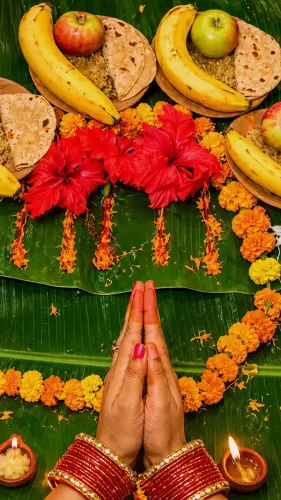
Kharna involves a sunset fast-break on kheer and roti , followed by a waterless fast until the final sunrise offering.
Chhath Puja is dedicated to Surya Dev and Chhathi Maiya , with roots in Bihar and eastern Uttar Pradesh .
Delhi hosts one of India's largest Chhath-observing communities, making the festival a significant civic and cultural event for the capital.
Millions of families across Delhi began the sacred Kharna ritual on Saturday, 14 November 2026, the second and deeply observant day of Chhath Mahapurv — and Delhi Chief Minister Rekha Gupta marked the occasion with a heartfelt message to devotees across the capital.
Posting in Hindi on the morning of Kharna, CM Gupta wrote: 'आज दिल्ली के लाखों परिवारों में छठी मैया के प्रति अटूट श्रद्धा और भक्ति के साथ खरना का पावन अनुष्ठान संपन्न होगा' — 'Today, in lakhs of families across Delhi, the sacred Kharna ritual will be observed with unwavering faith and devotion towards Chhathi Maiya.' She prayed that the blessings of Chhathi Maiya bring peace, prosperity, and happiness to every home.
What Kharna means — and why it matters
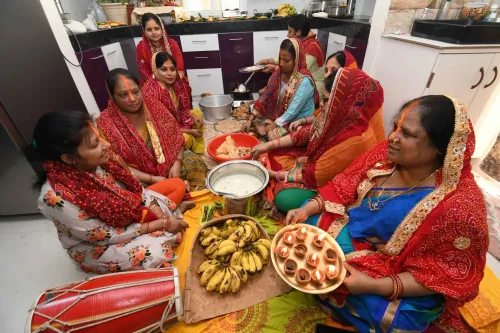
Kharna is the second of Chhath Puja's four main rituals. On this day, the fasting devotee — the vrati — breaks a day-long fast after sunset by consuming kheer (rice pudding) and roti, prepared with strict ritual purity, before beginning a waterless fast that lasts until the final offering to the rising sun. It is considered among the most physically demanding phases of the festival, a test of spiritual resolve as much as bodily endurance.
Chhath Puja is dedicated to Surya Dev (the Sun God) and Chhathi Maiya, the folk goddess believed to protect children and families. The festival's roots run deep in Bihar and eastern Uttar Pradesh, and it has travelled with migrant communities to become one of Delhi's most visible public celebrations.
Delhi's Chhath — a city-wide affair
Delhi is home to one of the largest Chhath-observing populations outside the festival's heartland, drawn from Bihar and Purvanchal communities that have made the capital their home over generations. In the days surrounding Kharna, the city's river ghats, parks, and water bodies transform into congregation points where vratis stand waist-deep in water offering arghya — the ritual offering of water and fruit — to the setting and rising sun.
For Delhi's political leadership, Chhath carries unmistakable civic weight. Public arrangements at designated ghats, clean water access, and crowd management are closely watched, making the festival as much a governance signal as a cultural one.
Point of View
Visible solidarity with the Purvanchal diaspora in Delhi is a consistent strand of political outreach. The festival also doubles as a governance test: the quality of ghat arrangements and public infrastructure signals administrative intent to a large and organised voter base. Expect public engagement at the ghats in the days ahead to be watched closely.
NationPress
14 Nov 2026
Frequently Asked Questions
What is Kharna in Chhath Puja?
Kharna is the second ritual of Chhath Puja, observed on the evening of the third day of the festival. The vrati (devotee) breaks a day-long fast after sunset by eating kheer (rice pudding) and roti , then begins a strict waterless fast until the final sunrise arghya .
What did Delhi CM Rekha Gupta say on Chhath Puja Kharna 2026?
CM Rekha Gupta posted a Hindi message on X wishing all devotees on Kharna, noting that lakhs of Delhi families were observing the ritual with deep faith, and praying that Chhathi Maiya bless every home with peace, prosperity, and happiness.
Why is Chhath Puja important in Delhi?
Delhi has a very large community with roots in Bihar and eastern Uttar Pradesh — regions where Chhath Puja is the most significant annual festival. This makes it one of the capital's most widely observed and publicly visible celebrations.
Who is Chhathi Maiya?
Chhathi Maiya is a folk goddess worshipped during Chhath Puja, believed to protect children and grant family wellbeing. The festival also venerates Surya Dev , the Sun God, through ritual water offerings at sunrise and sunset.
What are the four rituals of Chhath Puja?
The four main rituals of Chhath Puja are: Nahay Khay (ritual bath and meal), Kharna (sunset fast-break and start of waterless fast), Sandhya Arghya (evening offering to the setting sun), and Usha Arghya (morning offering to the rising sun).