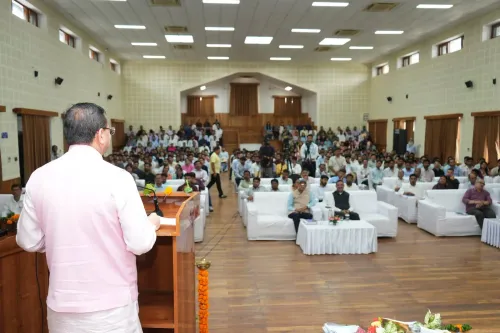
CM Dhami Touts Anti-Cheating Law as Shield for Uttarakhand Youth
Synopsis
Uttarakhand Chief Minister Pushkar Singh Dhami has invoked the state's strict anti-cheating law as a landmark step for youth aspirants, framing it as protection for hardworking students against examination malpractice. The move aligns with a national legislative trend following repeated paper-leak scandals.
Key Takeaways
CM Pushkar Singh Dhami credited Uttarakhand's anti-cheating law with giving 'new wings' to the dreams of hardworking youth aspirants.
The statement was made on 22 May 2026 via a Hindi-language post on X.
The Public Examinations (Prevention of Unfair Means) Act was passed by the Indian Parliament in 2024 , prompting several states to enact parallel legislation.
Uttarakhand has enacted its own anti-cheating statute, though its specific title and date remain unconfirmed.
The law is aimed at protecting competitive exam aspirants from organised cheating networks and paper-leak syndicates.
Enforcement mechanisms, penalty structures, and the first major exams held under the law will be key indicators of its real-world impact.
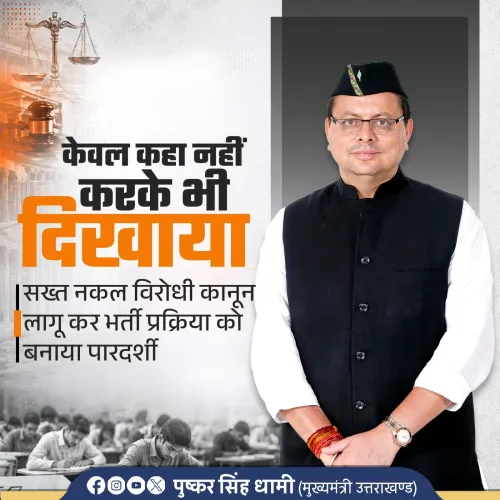
Uttarakhand Chief Minister Pushkar Singh Dhami on Friday, 22 May 2026, credited his government's strict anti-cheating legislation with giving a fresh lease of hope to young aspirants working hard to secure their futures through competitive examinations.
In a post on X, CM Dhami wrote in Hindi: 'Sakht nakal virodhi kanoon laagu kar hamari sarkar ne un yuvaon ke sapnon ko nayi udaan dene ka karya kiya hai, jo athak parishram, nirantar prayas aur atoot pratibaddhataa ke saath apne bhavishy ko sanvaarne mein jute hain.' Translated: 'By implementing a strict anti-cheating law, our government has given new wings to the dreams of those youth who are engaged in shaping their future with tireless hard work, continuous effort and unwavering commitment.'
Context
Uttarakhand, like many Indian states, has a large population of young aspirants competing for limited government jobs and educational seats. Repeated paper-leak incidents across the country have eroded confidence in public examinations, leaving meritorious students at a disadvantage. CM Dhami's statement positions the state's anti-cheating statute as a direct response to that grievance.
Policy Backdrop
At the national level, the Indian Parliament passed the Public Examinations (Prevention of Unfair Means) Act in 2024, establishing a federal framework to deter cheating and paper leaks in recruitment tests. Several states have since enacted or strengthened parallel legislation of their own, reflecting a broader pattern of legislative action to protect merit-based selection. Uttarakhand's law sits within this wider movement, though the specific title and enactment date of the state statute have not been independently confirmed.
The push for tougher anti-cheating measures gained urgency after high-profile examination scandals disrupted recruitment cycles and triggered protests by aspirants in multiple states. Legislators across party lines have acknowledged that systemic vulnerabilities in high-stakes testing processes demand structural fixes, not just administrative patches.
Stakeholders and Impact
The primary beneficiaries of such legislation are competitive exam aspirants — students who invest years preparing for government recruitment tests and university entrance examinations. For many families in Uttarakhand, a government job represents a critical pathway to economic stability, making the integrity of these exams a deeply personal issue. Honest candidates who have lost opportunities to organised cheating networks stand to gain the most from stricter enforcement.
Examination boards, coaching institutes, and invigilating agencies are also directly affected, as stiffer penalties and tighter protocols reshape how tests are conducted and monitored. Critics of such laws have, in other state contexts, called for equally robust enforcement machinery to ensure the statutes are not merely symbolic.
What's Next
Attention will now turn to how Uttarakhand enforces the law in practice — including the penalty structures for offenders, the oversight mechanisms for examination bodies, and the first major recruitment or entrance tests conducted under the new regime. Any state assembly debates on potential amendments or expansions of the statute will also be closely watched by aspirants and civil society groups. The credibility of the law will ultimately be tested not by its passage but by its deterrent effect on examination malpractice.
Point of View
The BJP government signals it wants to be judged on institutional reform, not just rhetoric. The framing mirrors a broader national BJP strategy of positioning the party as a guardian of merit and youth opportunity, particularly after paper-leak controversies damaged public trust in examination systems. Whether the law's enforcement record matches its political promise will determine how durable this narrative proves to be.
NationPress
6 Oct 2026
Frequently Asked Questions
What is the anti-cheating law CM Dhami is referring to?
CM Dhami is referring to an anti-cheating statute enacted by the Uttarakhand government to prevent malpractice and paper leaks in competitive examinations. At the national level, Parliament passed the Public Examinations (Prevention of Unfair Means) Act in 2024, and several states including Uttarakhand have introduced parallel legislation.
Why is an anti-cheating law important for Uttarakhand youth?
Uttarakhand has a large number of young aspirants competing for government jobs and educational seats through competitive exams. Paper leaks and organised cheating have repeatedly disadvantaged honest candidates, making a strong legal deterrent critical for ensuring merit-based selection.
What does India's national anti-cheating law cover?
The Public Examinations (Prevention of Unfair Means) Act, passed by Parliament in 2024, establishes a federal framework to penalise cheating, impersonation, and paper leaks in national-level recruitment and entrance examinations, with provisions for criminal prosecution of offenders.
Which other Indian states have passed anti-cheating laws?
Multiple Indian states have enacted or strengthened anti-cheating statutes in recent years following repeated paper-leak scandals. These state-level laws complement the central legislation and are part of a wider effort to restore trust in public examination systems across the country.
What happens next after Uttarakhand's anti-cheating law is in place?
The focus will shift to enforcement — including how penalties are applied, how examination bodies are monitored, and how the first major exams are conducted under the new rules. State assembly debates on potential amendments and the law's deterrent effect on malpractice will also be closely watched.