White House Vows to Dismantle Cybercrime Syndicates Targeting Americans
Synopsis
The White House declared the Trump administration will work tirelessly to recover stolen funds and dismantle cybercrime syndicates, calling itself the most aggressive U.S. administration ever to confront online fraud networks that target American citizens.
Key Takeaways
The White House posted a direct warning to cybercrime syndicates on 22 October 2026 , pledging to recover stolen funds.
The statement claims the Trump administration has done more against cybercrime syndicates than any previous U.S. administration.
The closing declaration — 'The scams must end' — frames online fraud as a national-security-level priority.
Executive Order 13800 , signed by Trump in 2017 , established the interagency cybersecurity architecture underlying such enforcement efforts.
No specific syndicates, dollar figures, or operational details were disclosed, suggesting a policy signal rather than an operational announcement.
Possible follow-on actions include Justice Department indictments and Treasury sanctions targeting specific criminal cyber groups.
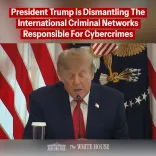
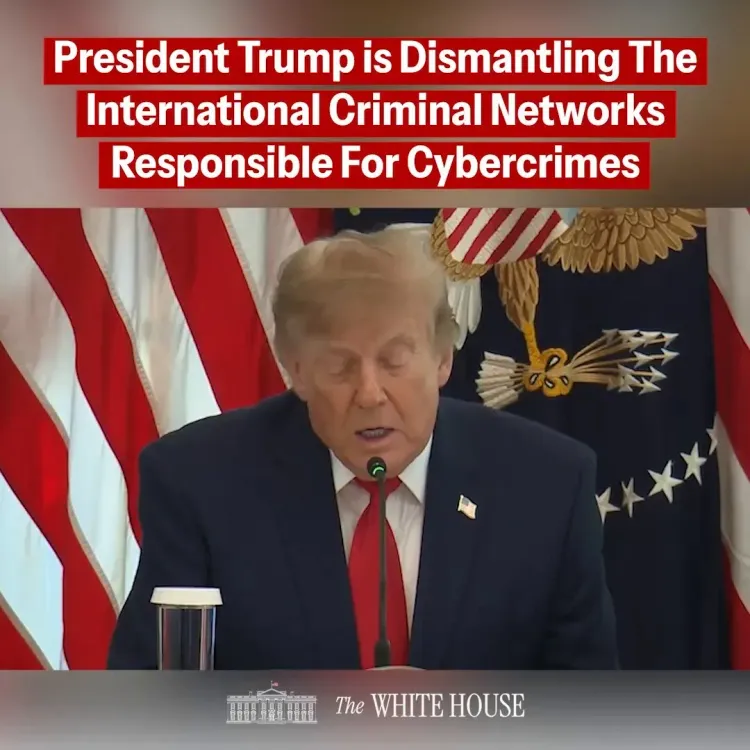
With a blunt promise to recover stolen money and tear down the criminal networks behind it, The White House on Wednesday, 22 October 2026, issued a sharp warning to cybercrime syndicates — framing the Trump administration as the most aggressive force against online fraud in U.S. history.
The warning shot from Pennsylvania Avenue
The post quoted directly: 'We will work tirelessly to help recover what has been stolen and dismantle the criminal networks that prey on our people.' The statement then escalated into a sweeping claim — that no previous administration has confronted cybercrime syndicates that 'terrorize the American people' with the same intensity. The closing line was unambiguous: 'The scams must end.'
The language signals an enforcement posture, not a legislative one. Statements of this kind from the executive office typically precede or accompany Justice Department indictments, Treasury Department sanctions, or the unsealing of multi-agency operations targeting transnational fraud networks.
What cybercrime syndicates actually cost Americans
Transnational cybercrime networks — running operations ranging from romance scams and crypto fraud to ransomware attacks on hospitals and local governments — have become one of the most consequential financial threats facing ordinary American households and institutions. These groups often operate from jurisdictions with limited extradition cooperation, making prosecution a diplomatic as much as a law-enforcement challenge.
The Trump administration's earlier tenure established a foundation: in 2017, President Trump signed Executive Order 13800, directing federal agencies to harden cybersecurity across critical infrastructure. That order set the bureaucratic architecture for the interagency coordination that major cyber prosecutions require.
Recovery of stolen funds — the harder half of the promise
The explicit pledge to 'recover what has been stolen' is the more ambitious half of the statement. Clawing back funds from cybercriminals demands real-time blockchain tracing, rapid court orders to freeze crypto wallets, and coordination with foreign financial regulators. It is technically possible — the Justice Department has previously recovered hundreds of millions of dollars in ransomware payments — but it is the exception, not the rule, in most fraud cases.
No specific syndicates, recovery figures, or operational timelines were named in the post, leaving the announcement squarely in the category of public commitment rather than operational disclosure. What follows — indictments, sanctions designations, or congressional testimony — will determine whether this moment becomes a milestone or a message.
Point of View
' the administration is setting a measurable standard that will be easy to scrutinise if prosecutions or sanctions do not follow. Framing this as a historic first — no administration has done more — is also a political marker, positioning cybercrime enforcement as a Trump-era achievement heading into a period when transnational fraud has reached unprecedented scale. The absence of any specific targets, however, keeps the statement in the realm of intent rather than action for now.
NationPress
22 Oct 2026
Frequently Asked Questions
What did the White House say about cybercrime syndicates?
The White House on 22 October 2026 vowed to 'work tirelessly to help recover what has been stolen and dismantle the criminal networks that prey on our people,' calling the Trump administration the most aggressive ever against cybercrime syndicates.
What are cybercrime syndicates and how do they target Americans?
Cybercrime syndicates are transnational criminal networks that run operations including romance scams, crypto fraud, ransomware attacks, and identity theft, often from jurisdictions where extradition is difficult, costing American individuals and institutions billions of dollars annually.
Has the Trump administration taken any earlier cybersecurity actions?
Yes. During his first term, President Trump signed Executive Order 13800 in 2017, directing federal agencies to strengthen cybersecurity across critical infrastructure — a move that established the interagency coordination framework used in major cyber prosecutions.
Can the U.S. government actually recover money stolen by cybercriminals?
It is technically possible — the Justice Department has previously recovered hundreds of millions of dollars in ransomware payments through blockchain tracing and court-ordered crypto wallet freezes — but large-scale recovery remains the exception rather than the norm in most fraud cases.
What could follow the White House cybercrime warning?
Analysts expect possible Justice Department indictments or Treasury Department sanctions targeting specific cybercriminal groups, as well as potential congressional hearings on new cybercrime legislation, in the weeks following this statement.