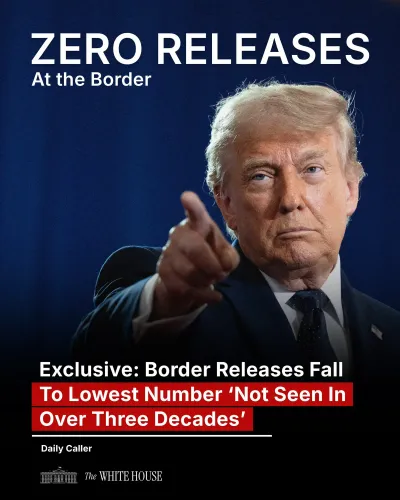
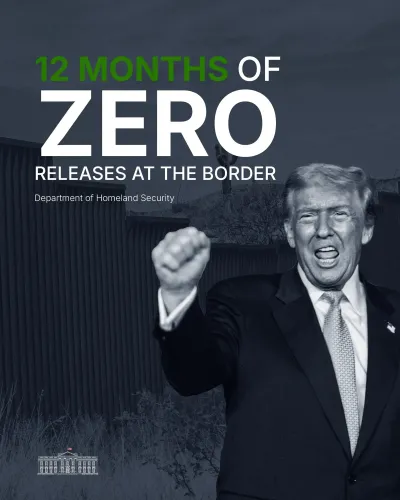
White House Claims Zero Illegal Aliens Released at Southern Border
Synopsis
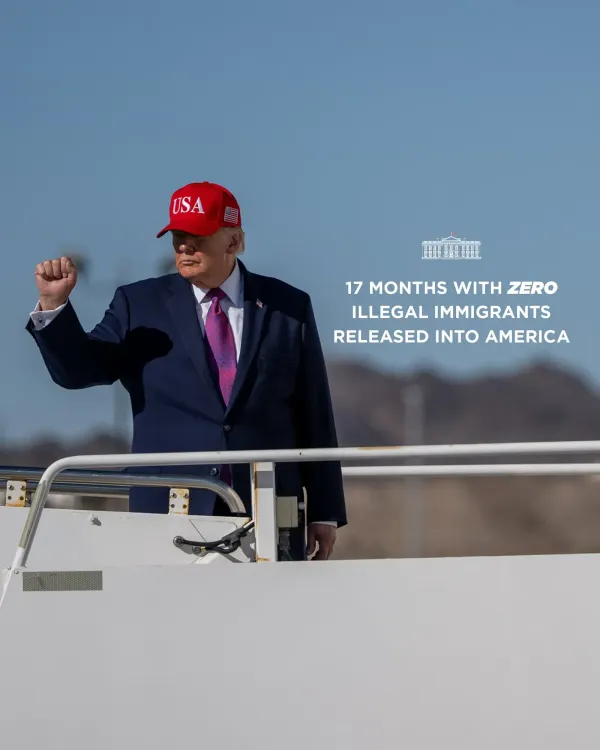
The White House claimed on 22 October 2026 that zero illegal aliens are being released into the United States through its southern border, calling it a historic first. The assertion sets a high-stakes enforcement benchmark that DHS monthly data will swiftly test.
Key Takeaways
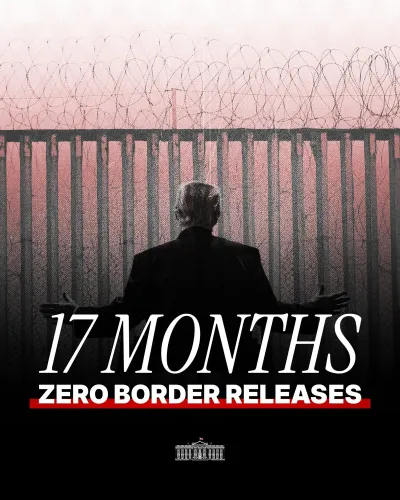
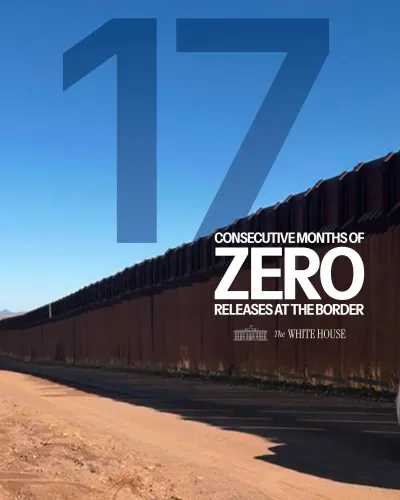
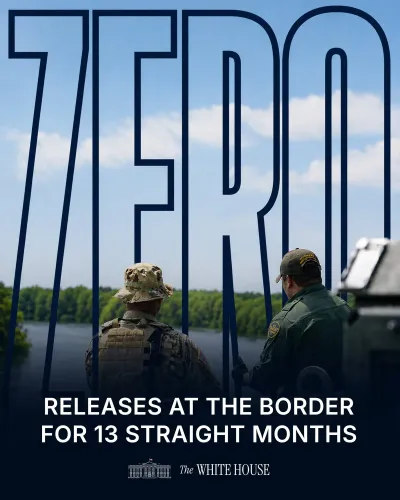
The White House officially claimed on 22 October 2026 that zero illegal aliens are being released into the US through its southern border.
The statement frames the outcome as historically unprecedented, surpassing all previous administrations.
The US-Mexico southern border has long been the central arena of American immigration enforcement debates.
The Migrant Protection Protocols (Remain in Mexico) , introduced in 2019 , were an earlier benchmark in restricting releases of asylum claimants pending hearings.
Department of Homeland Security monthly encounter statistics will be the key data point to verify or challenge the claim.
Immigration enforcement remains one of the most politically charged domestic issues in the United States, with the 'zero releases' claim carrying both policy and electoral implications.
A bold claim from the heart of American power: The White House declared on Wednesday, 22 October 2026, that no illegal aliens are being released into the United States through its southern border — asserting it is an achievement 'no President has ever' matched.
The Claim and What It Means
The official White House account posted: 'No President has ever achieved anything like this — ZERO illegal aliens are being released into the United States through our southern border.' The language is maximalist and deliberate — a superlative framing designed to stake out historic ground on one of America's most contested domestic policy battlegrounds.
The US-Mexico southern border has for decades been the centrepiece of American immigration politics. Successive administrations have swung between strict enforcement — including expedited removals and the Migrant Protection Protocols (Remain in Mexico) programme introduced in 2019 — and more permissive processing frameworks that permitted releases pending immigration hearings. The White House's claim positions the current administration at the hardest end of that enforcement spectrum.
The Policy Machinery Behind the Claim
Border enforcement at this scale typically relies on a combination of executive orders, Department of Homeland Security operational directives, international agreements with transit and origin countries, and physical infrastructure. The 'zero releases' benchmark, if accurate, would represent a near-total shutdown of the administrative release pipeline — a pipeline that, during peak migrant surge years, processed hundreds of thousands of encounters annually.
Border Patrol agents, asylum seekers, and border communities are all directly affected by how the federal government handles encounters at ports of entry and between them. Stricter enforcement reduces the administrative burden on agents but raises acute humanitarian questions about the treatment of asylum claimants under international law.
The Politics of a Superlative
Immigration enforcement has consistently ranked among the top two or three voter concerns in recent US electoral cycles. By framing this as something 'no President has ever achieved,' the White House is not merely reporting a policy outcome — it is writing a campaign-ready narrative. Superlatives carry political risk: they invite scrutiny, demand verification, and set a benchmark that opponents will immediately challenge with data.
The DHS publishes monthly encounter statistics, and those figures will be the first test of whether the claim holds up in the granular detail of official records. Any divergence between the White House's 'zero releases' assertion and published encounter data is likely to become the next flashpoint in an already incendiary debate.
Whether the numbers ultimately confirm the claim or complicate it, the White House has drawn a clear line in the sand — and the southern border is once again at the centre of the American political story.
Point of View
The claim raises an immediate verification question: DHS encounter data, published monthly, will either corroborate or undercut it. Historically, every administration that has staked out maximalist border rhetoric has faced the gap between political narrative and operational reality. The broader arc here is a years-long conservative drive to pivot the US immigration system from processing-and-release to enforce-and-return — and this claim, if substantiated, would mark its most complete expression yet.
NationPress
22 Oct 2026
Frequently Asked Questions
What did the White House say about the southern border in October 2026?
The White House posted on 22 October 2026 that 'ZERO illegal aliens are being released into the United States through our southern border,' calling it an achievement no previous president has ever matched.
What does 'zero releases at the southern border' mean?
It means the US government is claiming that no undocumented migrants or asylum claimants encountered at the US-Mexico border are being released into the country pending hearings or processing — a near-total shutdown of the administrative release pipeline.
What were the Migrant Protection Protocols and how do they relate?
The Migrant Protection Protocols , also known as 'Remain in Mexico,' were introduced in 2019 to require asylum seekers to wait in Mexico for their US immigration hearings rather than being released inside the United States. The current claim goes further, asserting no releases at all.
How will this southern border claim be verified?
The Department of Homeland Security publishes monthly border encounter and processing statistics. Those figures will be the primary independent measure against which the White House's 'zero releases' assertion can be tested.
Why is the southern border such a major political issue in the United States?
The US-Mexico border has been the focal point of immigration enforcement debates for decades, with voter polling consistently ranking immigration among the top domestic concerns. Administrations have alternated between strict enforcement and more permissive processing policies, making it one of the sharpest partisan dividing lines in American politics.