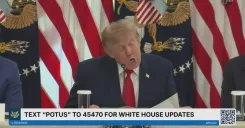
Trump Hunts Down Hundreds of Thousands of Migrant Kids

Synopsis
President Trump has launched a federal effort to locate hundreds of thousands of unaccompanied migrant children placed with sponsors across the US during the Biden years, reigniting debate over ORR's sponsor-vetting failures and the scale of post-release tracking gaps.
Key Takeaways
The Trump administration says it is actively tracking hundreds of thousands of unaccompanied migrant children who entered the US under President Biden.
CBP recorded record-high encounters of unaccompanied children at the southwest border during fiscal years 2021–2023.
The Office of Refugee Resettlement (ORR) — the HHS division responsible for placing children with sponsors — faced documented failures in post-release welfare checks.
Concerns about trafficking and labour exploitation of unplaced or lost children surfaced in congressional hearings as early as 2023.
The White House framing positions Trump as rescuing children from a broken system — a contrast to the family-separation controversy of his 2018 'zero-tolerance' policy.
Watch for new HHS or DHS guidance on tracking protocols and congressional funding requests that will determine operational scope.
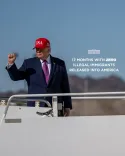
A sweeping federal effort to locate hundreds of thousands of unaccompanied migrant children who entered the United States during the Biden years is now underway, with President Donald J. Trump directing the operation — one of the most ambitious child-welfare and border-enforcement undertakings in recent American history.
The scale of the missing-children problem
During fiscal years 2021 through 2023, U.S. Customs and Border Protection recorded record-high southwest border encounters of unaccompanied children — minors who crossed without a parent or legal guardian. Under federal law, those children were transferred to the Office of Refugee Resettlement (ORR), the Health and Human Services division responsible for placing them with sponsors — typically relatives or vetted community members — across the country.
The system cracked under the volume. Post-release welfare checks, meant to confirm children were safe with sponsors, revealed significant follow-up gaps: case managers were unable to reach tens of thousands of children after placement. Concerns about trafficking and labour exploitation followed, triggering congressional hearings and internal HHS reviews as early as 2023.
Trump's renewed push and what it means
The White House announcement signals that the Trump administration is treating the location of these children as an active enforcement and welfare priority — not a bureaucratic backlog. The phrase 'tracking down' is deliberate: it frames the effort as an active search, not a passive audit.
This is not the first time the Trump administration has made unaccompanied children a centrepiece of border policy. During Trump's first term in 2018, the 'zero-tolerance' prosecution policy led to family separations that drew global condemnation and were eventually reversed by executive order. The current approach positions the administration differently — as a rescuer of children lost in a broken system — rather than as the architect of separation.
How ORR's sponsor pipeline became a vulnerability
The Office of Refugee Resettlement was designed for a far smaller caseload. As arrivals surged, vetting of sponsors — the adults to whom children were released — came under scrutiny. Reports surfaced of children placed with individuals who were not adequately screened, with some minors ending up in exploitative work situations in warehouses, farms, and factories across multiple U.S. states.
The scale of the task now facing federal agencies is significant: locating children who may have moved, changed sponsors, aged into adulthood, or deliberately avoided contact with authorities — across a country of 330 million people.
What Indian observers should watch
India is among the top source countries of migrants to the United States, and the policy reverberations of U.S. immigration enforcement are closely followed in South Asia. Any new HHS or DHS guidance on expanded tracking protocols — and the congressional funding requests likely to accompany them — will define whether this announcement translates into operational reality or remains a political signal.
The children at the centre of this effort are not abstractions. They are individuals — and the outcome of this search will test whether the American immigration system can be both firm on enforcement and faithful to child welfare at the same time.
Point of View
Giving the effort a factual foundation that goes beyond messaging. Yet the operational challenge of locating hundreds of thousands of children dispersed across the country is immense, and the credibility of this push will ultimately rest on verifiable results — names found, children safeguarded — not just the announcement itself. For Washington's immigration debate, this reframes the conversation from 'who was tougher at the border' to 'who was responsible for the children already inside.'
NationPress
22 Oct 2026
Frequently Asked Questions
How many unaccompanied migrant children entered the US under Biden?
The White House has cited 'hundreds of thousands.' CBP recorded record-high southwest border encounters of unaccompanied children during fiscal years 2021 through 2023, though the precise total of children subsequently lost to follow-up has not been independently verified.
What is the Office of Refugee Resettlement and why is it under scrutiny?
The Office of Refugee Resettlement (ORR), a division of the US Department of Health and Human Services, is responsible for placing unaccompanied migrant children with sponsors. Post-release welfare check failures — documented from 2023 — showed the agency was unable to reach tens of thousands of children after placement, raising trafficking and exploitation concerns.
Did Trump separate migrant families before? How is this different?
Yes — in 2018, Trump's 'zero-tolerance' policy led to family separations that were reversed by executive order after intense criticism. The current effort is framed differently: as locating and protecting children already inside the US who were placed under Biden-era policies, rather than separating new arrivals.
What happens to unaccompanied migrant children in the US?
Under US law, unaccompanied children apprehended at the border are transferred to ORR, which places them with sponsors — usually relatives or vetted community members — while their immigration cases are processed. The system faced severe strain during the 2021–2023 surge.
What will determine whether Trump's tracking effort succeeds?
New HHS or DHS guidance on expanded tracking protocols, along with congressional funding to support case managers and investigators, will be the key indicators. Without additional resources and legal authority, the scale of the task — locating children dispersed across all 50 states — makes the effort extremely difficult to execute.