MP Cabinet Clears ₹27,050 Cr Development Proposals Under CM Mohan Yadav
Synopsis
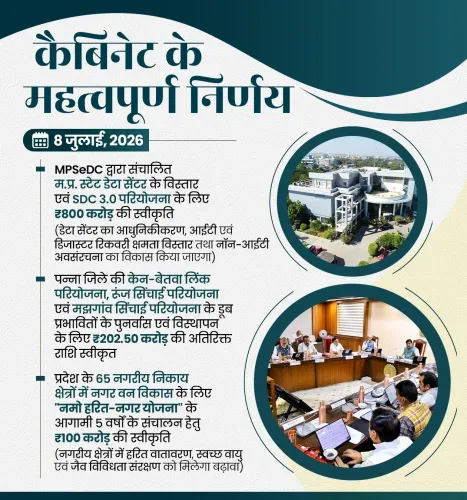
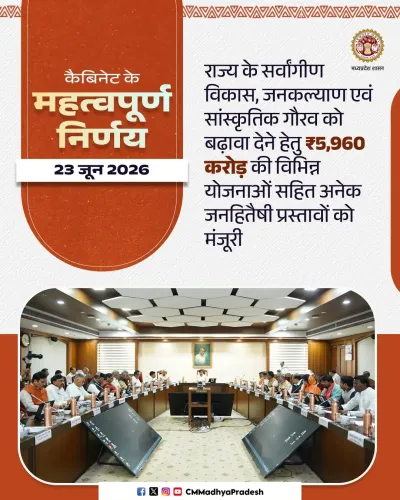
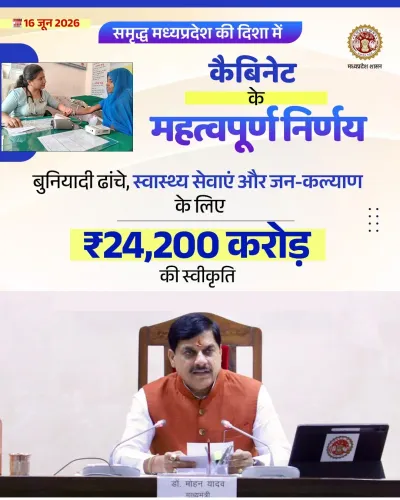
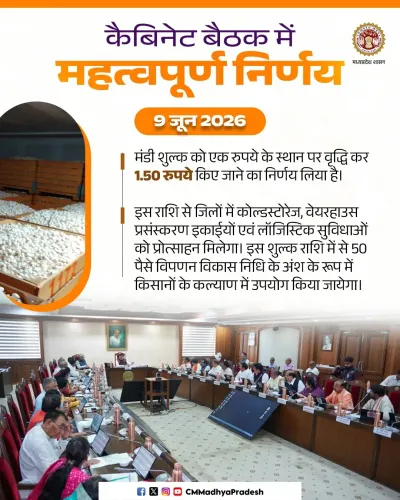
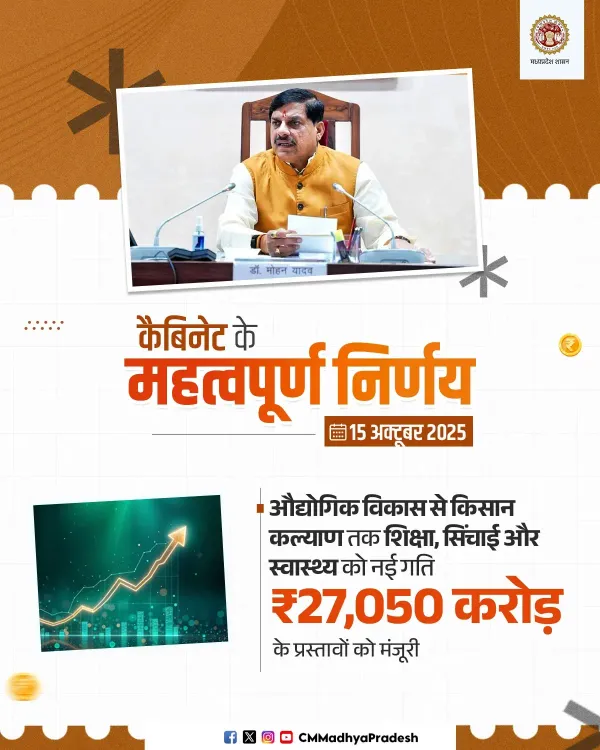
The Madhya Pradesh Council of Ministers, chaired by CM Dr. Mohan Yadav, approved proposals worth ₹27,050 crore on October 15, 2026, in a single cabinet sitting aimed at accelerating all-round development across the state.
Key Takeaways
₹27,050 crore in development proposals approved by the Madhya Pradesh Cabinet in a single sitting on October 15, 2026 .
Mohan Yadav chaired the Council of Ministers meeting that sanctioned the package.
The approvals are aimed at accelerating all-round development across Madhya Pradesh, the BJP-governed state in central India.
A detailed sector-wise breakup and project timelines are awaited in official government orders.
The move fits a pattern of large bundled cabinet approvals used by MP governments to drive state-level growth with administrative speed.
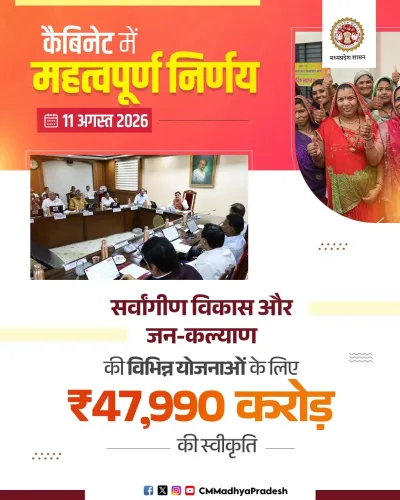
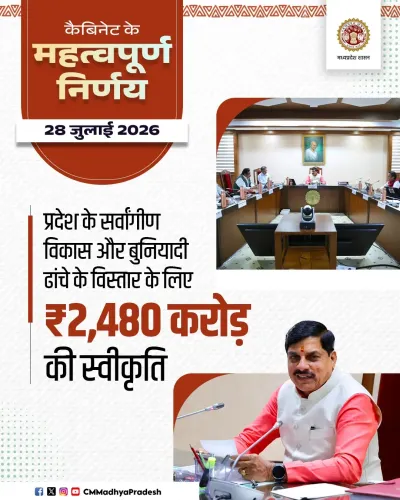
A single cabinet meeting. One sweeping mandate. The Madhya Pradesh Council of Ministers, chaired by Chief Minister Dr. Mohan Yadav on Thursday, October 15, 2026, approved proposals worth ₹27,050 crore aimed at accelerating all-round development across the state.
What the cabinet approved — and why the scale matters
The Chief Minister's Office of Madhya Pradesh announced the decisions via an official post on X, describing the approvals as giving 'sarvangeen vikas ko nayi gati' — 'a new momentum to all-round development' — of the state. The ₹27,050 crore package, sanctioned in one sitting, signals that the state government is moving to compress its annual spending pipeline into high-visibility, high-velocity tranches rather than piecemeal clearances.
For context, Madhya Pradesh has followed a pattern under successive governments of bundling infrastructure, welfare, and economic-growth proposals into large cabinet packages — a practice that gives both administrative clarity and political momentum to the ruling dispensation's development narrative.
Dr. Mohan Yadav's governance push since December 2023
Dr. Mohan Yadav has led the BJP-led state government since December 2023, positioning his administration around industrial growth, agricultural reform, and infrastructure expansion in central India's largest state by area. Cabinet meetings of this scale are a key instrument — they generate formal government orders that departments can act on immediately, bypassing the delays of case-by-case approvals.
The sheer quantum — ₹27,050 crore in a single session — places this among the more ambitious single-day approval tranches the state has seen. The detailed sector-wise breakup and project timelines are expected to be released through official government orders in the days ahead, and those specifics will be the real test of implementation intent.
What Madhya Pradesh's residents are watching for next
The announcement is significant for residents across the state's 55 districts, where development spending translates directly into roads, power supply, welfare disbursements, and job creation. Whether these proposals skew toward urban infrastructure, rural welfare, or industrial corridors will define who feels the impact first — and how quickly.
For now, the cabinet has set the direction. The clock on delivery starts today.
Point of View
050 crore single-session cabinet approval is a deliberate governance signal — it compresses annual planning into high-profile tranches that are easier to communicate and politically harder to ignore. For Dr. Mohan Yadav, now approaching three years as Chief Minister, large cabinet packages serve a dual purpose: they generate binding government orders that speed up departmental action, and they reinforce the BJP's 'development state' narrative ahead of future electoral cycles. The real test, as with all such approvals, lies in the sector-wise breakup and the speed of implementation orders — both of which remain to be disclosed. Madhya Pradesh's track record of converting cabinet sanctions into ground-level outcomes will determine whether this headline number translates into tangible growth.
NationPress
15 Oct 2026
Frequently Asked Questions
What did the Madhya Pradesh cabinet approve on October 15, 2026?
The Madhya Pradesh Council of Ministers, chaired by Chief Minister Dr. Mohan Yadav, approved development proposals worth ₹27,050 crore in a single cabinet meeting held on October 15, 2026.
Who is the Chief Minister of Madhya Pradesh in 2026?
Dr. Mohan Yadav is the Chief Minister of Madhya Pradesh, having assumed office in December 2023 as head of the BJP-led state government.
What sectors will benefit from the ₹27,050 crore MP cabinet decisions?
The official sector-wise breakup has not yet been released; the government is expected to publish detailed project lists and timelines through official government orders in the coming days.
How significant is a ₹27,050 crore cabinet approval for Madhya Pradesh?
It is among the larger single-session approval tranches in the state's recent history, covering infrastructure, welfare, and economic development projects across all 55 districts of Madhya Pradesh.
What is the Cabinet meeting process in Madhya Pradesh?
The Madhya Pradesh Council of Ministers meets periodically under the Chief Minister's chairmanship to approve major policy and expenditure proposals, which then become binding government orders for departments to implement.