MP Cabinet Clears ₹5,960 Cr Schemes Under CM Mohan Yadav
Synopsis
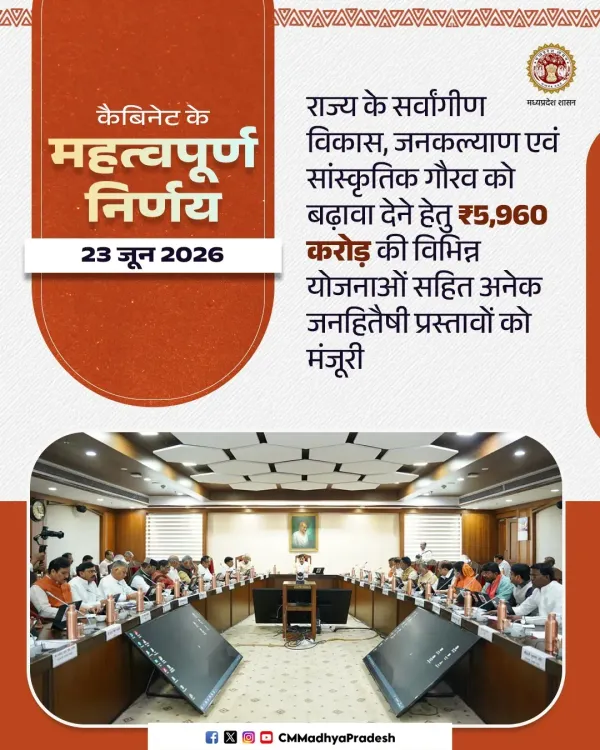
The Madhya Pradesh Cabinet chaired by Chief Minister Dr. Mohan Yadav on 23 June 2026 approved proposals worth ₹5,960 crore covering infrastructure, social security, education, agriculture, and cultural heritage conservation, signalling a broad multi-sector welfare and development push for the state.
Key Takeaways
The Madhya Pradesh Cabinet met on 23 June 2026 under the chairmanship of CM Dr.
Proposals worth ₹5,960 crore across multiple development and welfare schemes were approved in a single sitting.
Key sectors covered include infrastructure , social security , education , agriculture , and cultural heritage conservation .
The approvals are intended to accelerate all-round development and public welfare across Madhya Pradesh .
The package continues the BJP -led government's pattern of bundling large welfare and development allocations since the 2023 assembly elections .
Detailed department-wise and district-wise breakdowns are expected to follow through official government orders.
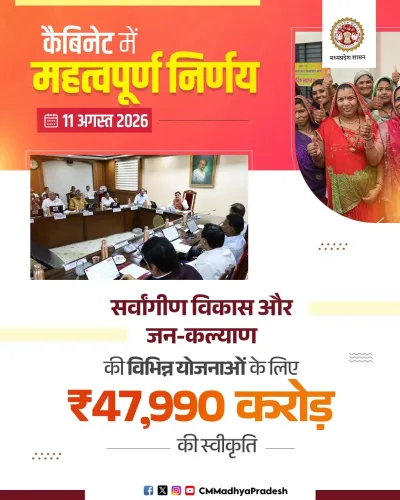
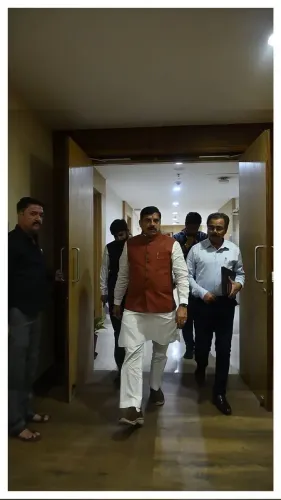
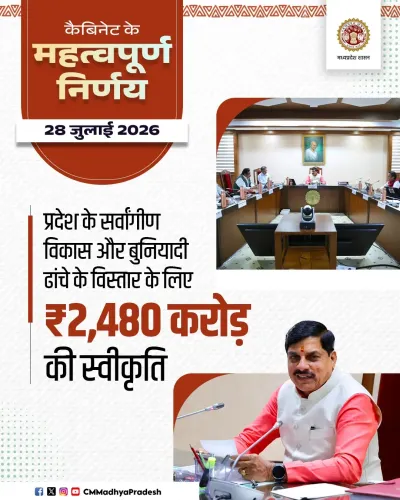
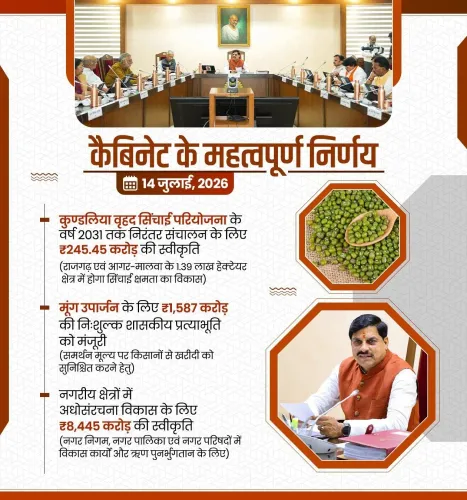
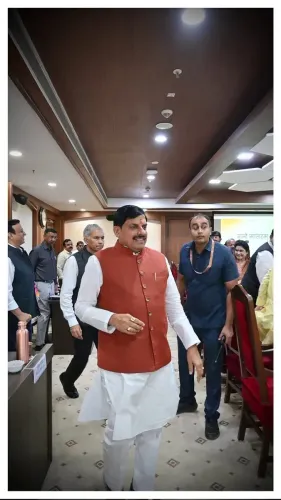
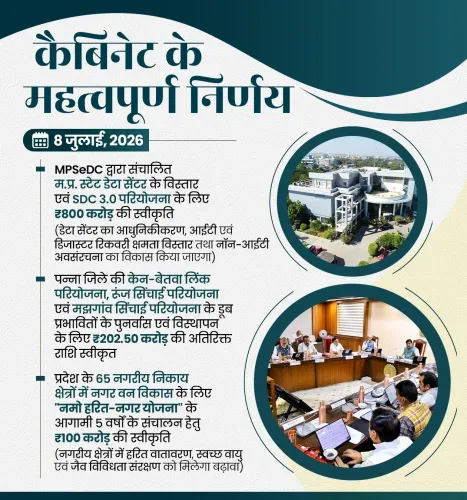
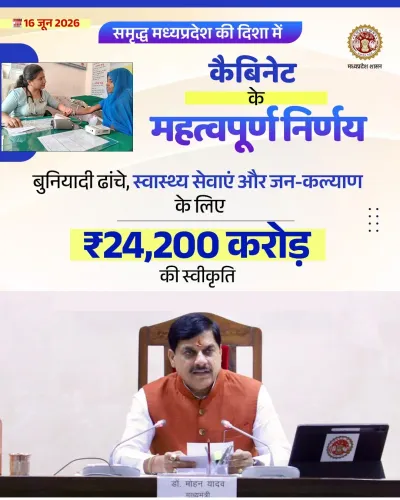
The Chief Minister's Office of Madhya Pradesh announced on Tuesday, 23 June 2026 that a cabinet meeting chaired by Chief Minister Dr. Mohan Yadav approved proposals worth ₹5,960 crore spanning development, welfare, education, agriculture, and cultural heritage conservation across the state.
The official post stated that the council of ministers meeting, held under the chairmanship of Dr. Mohan Yadav, took decisions aimed at giving 'new momentum' — nayi gati — to the all-round development, public welfare, and protection of cultural heritage of the state. The approved package covers infrastructure development, social security, education, agriculture, and cultural advancement.
Context
The Madhya Pradesh Cabinet functions as the apex executive body of the state government and meets periodically to sanction major policy decisions and financial allocations. Tuesday's meeting produced approvals described by the government as janhitaishi prastaav — 'public-interest proposals' — across multiple sectors. The combined outlay of ₹5,960 crore signals a broad-based spending push rather than a single flagship initiative.
Dr. Mohan Yadav has served as Chief Minister since December 2023, leading a BJP-governed administration that has emphasised welfare delivery alongside infrastructure investment. The cabinet meeting on 23 June 2026 is consistent with the government's pattern of periodically bundling multiple scheme approvals into single sittings for administrative efficiency.
Policy Backdrop
Since the 2023 Madhya Pradesh assembly elections, the state government has expanded its welfare architecture, most notably through schemes such as the Ladli Behna Yojana, which provides monthly financial support to eligible women. Tuesday's approvals extend that welfare orientation into additional domains including education and social security. Madhya Pradesh has a large rural and agrarian population, making agriculture-linked allocations particularly consequential for the state's economic base.
The inclusion of cultural heritage conservation in the package reflects a long-standing emphasis by successive Madhya Pradesh governments on protecting the state's rich historical and archaeological legacy, which includes multiple UNESCO-recognised sites. Aligning welfare spending with cultural investment has become a signature of the current administration's communications strategy.
Stakeholders and Impact
The primary beneficiaries of the approved schemes are the residents of Madhya Pradesh, with particular relevance for farmers, students, women, and communities dependent on social security transfers. Infrastructure allocations are expected to benefit both urban and rural constituencies, while education investments target the state's large student population. Cultural institutions stand to gain from the heritage conservation component of the package.
Indian state governments routinely use cabinet approvals of this nature to operationalise both centrally sponsored schemes and state-funded programmes. The ₹5,960 crore envelope, while significant, will be distributed across several departments, meaning the per-sector impact will depend on the eventual allocation breakdown released by the state government.
What's Next
The government is expected to release department-wise and district-wise breakdowns of the approved schemes through official orders and budget documents in the coming days. Progress on implementation will likely be tracked through subsequent assembly sessions and state budget reviews. Observers will watch for rollout timelines, tender notifications, and beneficiary registration processes as indicators of how quickly the ₹5,960 crore package translates into on-ground activity.
With the state's focus on balancing economic development and cultural identity, Tuesday's cabinet decisions set the legislative and financial groundwork for a multi-sector push that will define Madhya Pradesh's governance agenda through the remainder of 2026.
Point of View
960 crore multi-sector package is a textbook instance of the Mohan Yadav government using bundled cabinet decisions to signal administrative momentum ahead of the state's budget cycle. By weaving together welfare, infrastructure, and cultural heritage in a single announcement, the BJP-led administration reinforces its dual pitch of development and identity politics that has defined Madhya Pradesh's political positioning since 2023. The scale of the outlay is notable, but the absence of a detailed scheme-wise breakdown leaves the actual policy substance open to scrutiny. The real test will lie in implementation timelines and whether the approved allocations reach intended beneficiaries — farmers, students, and women — before the next electoral cycle.
NationPress
22 Sept 2026
Frequently Asked Questions
What decisions were taken in the Madhya Pradesh Cabinet meeting on 23 June 2026?
The Madhya Pradesh Cabinet approved proposals worth ₹5,960 crore covering infrastructure development, social security, education, agriculture, and cultural heritage conservation, aimed at accelerating all-round development and public welfare in the state.
Who chaired the MP Cabinet meeting on 23 June 2026?
Chief Minister Dr. Mohan Yadav chaired the council of ministers meeting held on 23 June 2026 in which the ₹5,960 crore package was approved.
What is the total value of schemes approved by the MP Cabinet in June 2026?
The Madhya Pradesh Cabinet approved various development and welfare schemes worth a combined ₹5,960 crore in its meeting on 23 June 2026 .
Which sectors will benefit from the Madhya Pradesh Cabinet's June 2026 decisions?
The approved schemes are expected to benefit sectors including infrastructure , social security , education , agriculture , and cultural heritage conservation across Madhya Pradesh .
What is the Madhya Pradesh government's focus under CM Mohan Yadav?
CM Dr. Mohan Yadav , who took office in December 2023 , has focused the BJP -led government on welfare delivery — including schemes like Ladli Behna Yojana — alongside infrastructure investment and cultural heritage conservation.