CM Hemant Soren clears ₹10L grant for 6-yr-old's ear surgery in Vellore
Synopsis
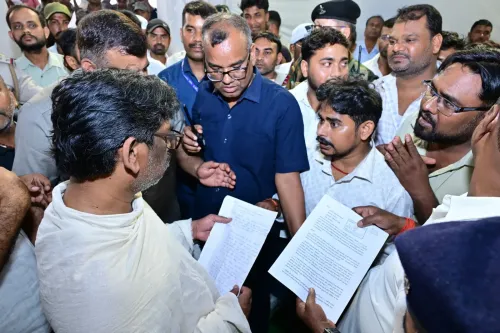
Jharkhand CM Hemant Soren approved a medical grant of ₹10 lakh for six-year-old Anoop Besra of Ramgarh to receive ear treatment in Vellore — all within 48 hours, even as the CM was attending his mother's last rites at Nemra.
Key Takeaways
Anoop Besra , aged six , from Ramgarh district, Jharkhand , will receive specialised ear treatment at Vellore, Tamil Nadu .
The medical grant of approximately ₹10 lakh was approved under the Mukhyamantri Gambhir Bimari Upchar Yojana .
Approval was granted in under 48 hours , reportedly while CM Hemant Soren was attending his late mother's last rites at Nemra .
The scheme is designed to fund treatment at advanced out-of-state facilities when local hospitals are insufficient.
The case highlights the gap in tertiary-care infrastructure in districts like Ramgarh and the role of state welfare schemes in bridging it.
Even in the middle of his mother's last rites, Jharkhand Chief Minister Hemant Soren found time to clear a medical grant for a six-year-old boy — and that single decision may restore the child's hearing. The Chief Minister's Office of Jharkhand announced on Thursday, 15 October 2026 that Anoop Besra, a young resident of Ramgarh district, will now receive specialised ear treatment at Vellore — home to one of India's most advanced medical institutions — fully funded by the state.
A 48-hour approval during personal grief
The post from the Chief Minister's Office captures the moment plainly: 'नेमरा में अपनी दिवंगत माता के श्राद्धकर्म के बीच मुख्यमंत्री श्री Hemant Soren की संवेदनशीलता और त्वरित निर्णय' — ('Amid the last rites of his departed mother in Nemra, the sensitivity and swift decision of Chief Minister Hemant Soren'). The grant was approved in just 48 hours under the state's dedicated welfare scheme. The speed of the clearance, under circumstances of personal bereavement, is being highlighted as emblematic of administrative responsiveness.
What the 'Mukhyamantri Gambhir Bimari Upchar Yojana' covers
The financial assistance comes under the Mukhyamantri Gambhir Bimari Upchar Yojana — Jharkhand's scheme designed specifically for residents who require treatment of serious illnesses at advanced facilities, particularly when local hospitals cannot provide the required care. The scheme exists to bridge exactly this gap: a family in a district like Ramgarh that cannot afford out-of-state specialist care at centres like CMC Vellore in Tamil Nadu.
The medical grant cited in the announcement is ₹10 lakh — a sum that can cover complex surgical procedures and post-operative care. For six-year-old Anoop Besra and his family, the approval means a journey to Vellore is now financially possible. Without it, specialist paediatric ear treatment of this nature would have been out of reach.
Ramgarh's long road to Vellore
The case underlines a structural reality in Jharkhand's healthcare landscape. Districts like Ramgarh lack tertiary-care infrastructure for complex conditions — hearing disorders, cardiac cases, neurological conditions — that require treatment at national-level centres. The state has maintained schemes like this one specifically to ensure that geography and income do not determine whether a child receives care. Vellore, a roughly 1,800 km journey from Jharkhand, has long served as a destination of last resort for families across eastern India who need advanced medical intervention.
The broader pattern of such approvals being publicised reflects a deliberate communication strategy: individual cases, approved quickly and named publicly, serve as proof-of-function for welfare architecture that often goes unnoticed.
A six-year-old now has a fighting chance at hearing his world clearly. That outcome — not the politics around it — is the story worth watching.
Point of View
Spotlighting the Mukhyamantri Gambhir Bimari Upchar Yojana through a child's story reinforces a pro-poor health narrative ahead of any electoral cycle. The real policy question, however, is systemic: how many similar cases remain unapproved because they lack the visibility of a social media moment.
NationPress
15 Oct 2026
Frequently Asked Questions
What is the Mukhyamantri Gambhir Bimari Upchar Yojana?
It is a Jharkhand government scheme that provides financial assistance to residents requiring treatment for serious illnesses at advanced medical facilities, including hospitals outside the state, when local facilities are inadequate.
Who is Anoop Besra and why is he in the news?
Anoop Besra is a six-year-old boy from Ramgarh district in Jharkhand who was approved a medical grant within 48 hours to receive specialised ear treatment at a hospital in Vellore, Tamil Nadu.
How much grant was approved for Anoop Besra's treatment?
The Chief Minister's Office announced a medical grant of ₹10 lakh under the Mukhyamantri Gambhir Bimari Upchar Yojana for his ear treatment in Vellore.
Where is Nemra and why is it mentioned?
Nemra is the location where Chief Minister Hemant Soren was attending the last rites ( shraadh karm ) of his late mother when he approved the grant, making the swift decision notable.
Why does Anoop Besra need to go to Vellore for treatment?
Vellore in Tamil Nadu is home to advanced medical institutions offering specialised care not available in Ramgarh or within Jharkhand, making it a common destination for complex cases from eastern India.